

How to – Glow in the Dark Concrete
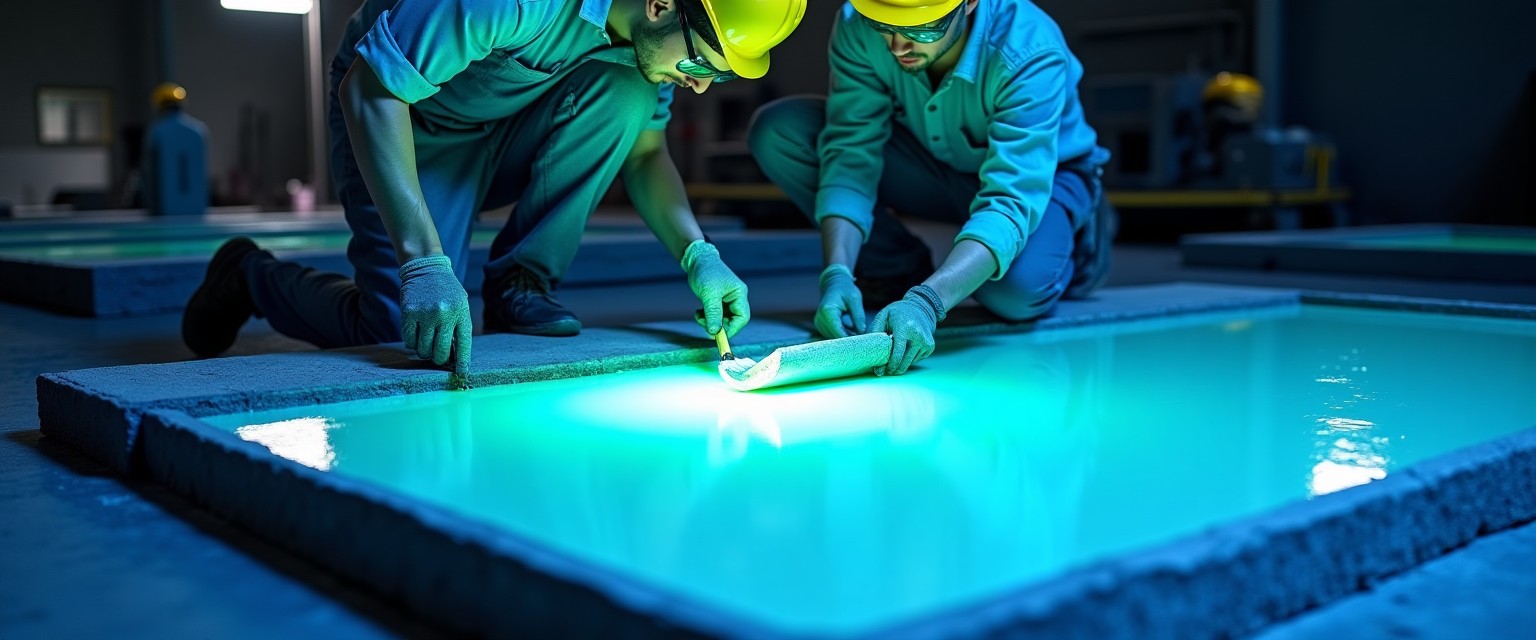
Making Glow in the Dark Concrete involves integrating phosphorescent materials into or onto the concrete surface. These materials absorb light during the day and emit it in the dark. Here are the most common and effective methods:
Decide on integration method
There are 2 main ways to add the glow effect:
A. Full Mix Integration (bulk mix)
-
Mix pigment into the entire batch of precast concrete.
-
Easy but less efficient — much of the pigment ends up buried too deep (no glow).
B. Top Layer / Facing Mix (recommended)
-
Make a thin “facing layer” (2–5 mm) rich in pigment at the mold surface.
-
Back it up with standard concrete (cheaper, stronger).
-
Ensures most pigment is at/near the surface, maximizing glow.
(This is how commercial glow pavers/tiles are usually made.)
Practical ways to apply glow-in-the-dark powder over concrete
🔨 Method 1: Glow Epoxy Layer in the Mold
1. Prepare the Mold
-
Clean mold thoroughly, free from dust/oil.
-
Optionally apply a thin mold release agent (non-stick, but compatible with epoxy).
2. Apply Glow Epoxy Layer
-
Mix epoxy resin + glow-in-the-dark powder (20–30% pigment by weight of epoxy).
-
Pour or brush a thin coat (1–2 mm) evenly at the bottom of the mold (this will become the top surface of the finished slab).
-
Use a roller/brush to eliminate bubbles.
3. Cure to Semi-Hard Stage
-
Allow epoxy to partially cure until it is hard enough to resist mixing with the wet concrete (usually 4–8 hours, depending on resin type).
-
It should be firm but still capable of bonding chemically/mechanically.
4. Pour Concrete Backing
-
Pour the concrete mix over the epoxy glow layer.
-
Vibrate/compact gently so concrete bonds without breaking the epoxy layer.
-
Cure as normal.
5. Demold
-
Flip out after curing. The glow epoxy is now fused as a surface layer of the concrete slab.
✅ Advantages of Glow Epoxy-in-Mold
-
Stronger & consistent glow: epoxy holds pigment evenly.
-
Durability: glow epoxy is harder and resists abrasion better than loose powder.
-
Bonding: concrete backing gives strength, epoxy provides glow face.
-
Custom finishes: you can stencil, swirl, or multi-color the epoxy glow layer before pouring concrete.
🔨 Method 2: Facing Mix – Glow Powder with Clear Acrylic/Epoxy/PU (Paint-On Coating)
This gives much more control and durability.
Steps:
- Prepare surface
-
For precast, demold concrete and cure 7+ days.
-
Sand or acid-etch lightly for adhesion.
-
Clean and dry completely.
-
- Mix glow paint
-
Combine glow powder with clear binder:
-
Acrylic (water-based) = easy, breathable, cheaper, less durable outdoors.
-
Epoxy (solvent-based or water-based clear) = strong adhesion, high clarity, indoor/outdoor use.
-
Polyurethane (PU) = best UV stability outdoors.
-
-
Pigment loading: 20–30% by weight for strong glow (mixture looks creamy but spreads well).
-
- Application
-
Roll or brush 1–2 coats onto the surface.
-
Allow first coat to tack-dry before second application.
-
- Optional Topcoat
-
-
Seal with clear PU/epoxy to lock pigment in and add abrasion resistance.
-
✅ Pros: Strong glow, uniform finish, higher durability, easier to reapply.
❌ Cons: Uses more pigment, more costly binder, requires periodic recoating.
📏 Coverage for 1 kg of Glow Powder
Using epoxy binder, 25% pigment loading:
-
A 1 mm epoxy glow layer needs ~1.1–1.2 kg of epoxy + 0.3 kg glow powder per m².
-
That means 1 kg glow powder = ~3–4 m² coverage at strong brightness.
-
If layer is 2 mm thick, coverage is ~1.5–2 m².
🛡️ Surface Protection and Lifespan
Glow powder is brittle if unsealed. To maximize life:
-
Always apply a clear UV-stable topcoat (acrylic sealer indoors, PU or outdoor epoxy + PU topcoat outdoors).
-
PU clear coats last 3–5 years outdoors before re-coating.
- Epoxy coats last 5–8 years outdoors before re-coating.
🦶 Making It Anti-Slip
Glow coatings can be smooth and slippery when wet. Options:
- Add anti-slip grit (silica sand, aluminum oxide, clear quartz) to the topcoat.
-
Mix into sealer or broadcast lightly while wet, then reseal.
-
Use fine/clear grit for safety without obscuring glow.
-
- Texture the concrete surface before coating (broom finish or stamped texture).
✅ Summary – Best Practice
-
For walkways or high-wear surfaces:
-
Use paint-on method (glow powder + epoxy/PU).
-
Coverage = ~10 m² per 1 kg pigment at usable brightness.
-
Seal with UV-stable PU and add clear anti-slip grit.
-
-
For decorative pavers/tiles (precast molds):
-
Dust powder in mold OR apply a thin acrylic/epoxy layer after demolding.
-
Coverage = 5–12 m² per kg, depending on method.
-