

Table of Contents
Everything You Need to Know About Glow in the Dark Staircase Nosing
Latest Insights and Developments
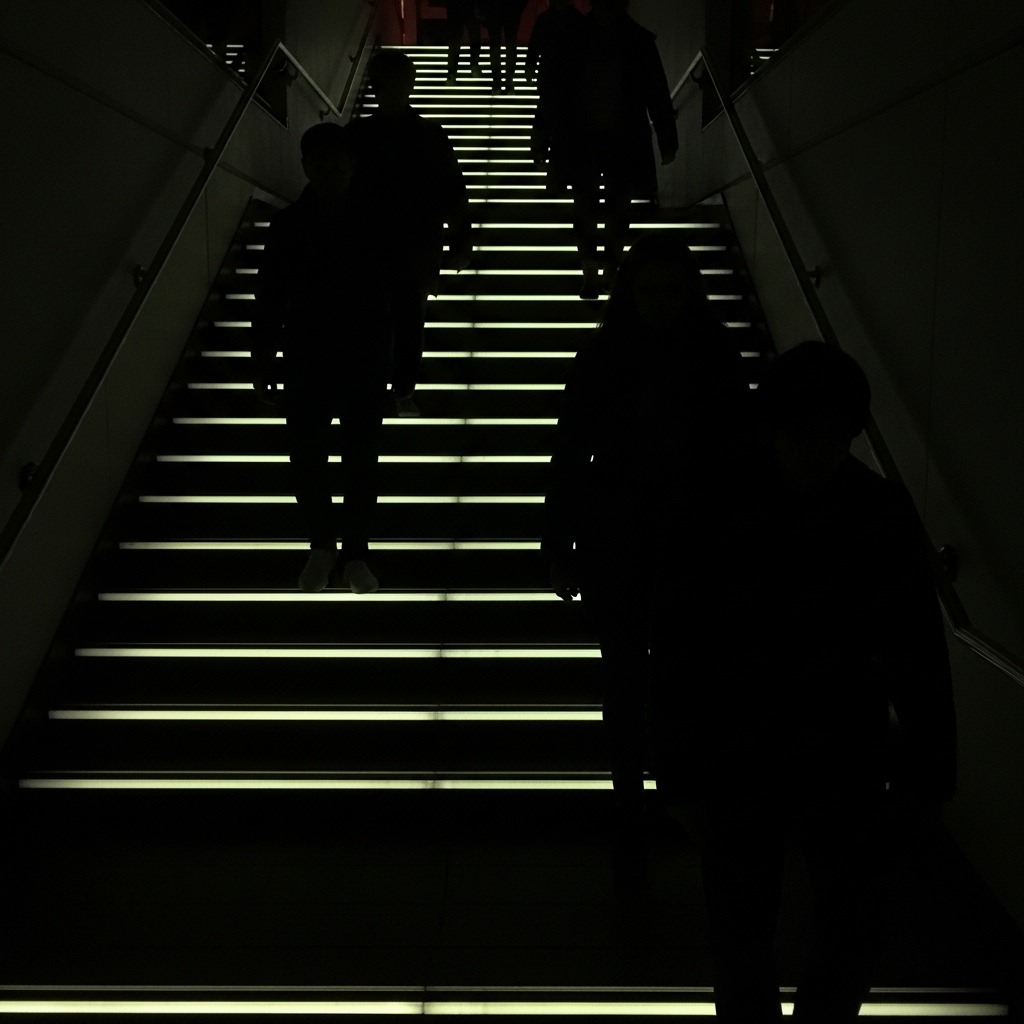
In a world where safety, visibility, and aesthetic appeal are more important than ever, one innovative product is quietly revolutionizing how we move through public and private spaces: “Glow in the Dark Staircase Nosing”.
Whether in public buildings, commercial properties, or residential homes, this small yet powerful product plays a crucial role in nighttime navigation and emergency evacuation. Recent technological advances and regulatory changes have pushed this niche product into the spotlight. In this in-depth article, we’ll explore what glow in the dark staircase nosing is, why it matters, and the most recent innovations and trends shaping its evolution in 2024 and beyond.
What is Glow in the Dark Staircase Nosing?
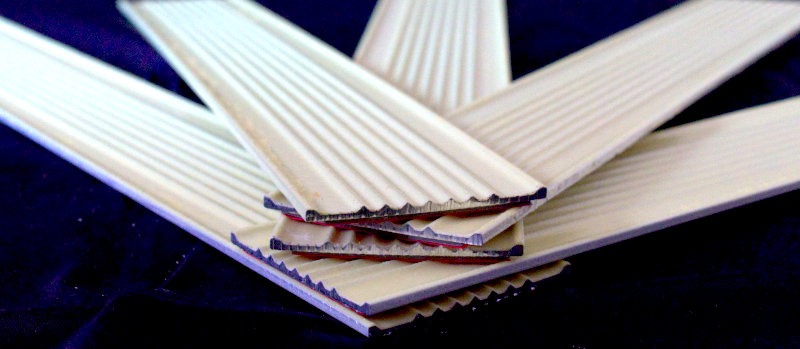
Glow in the dark staircase nosing is a specialized stair safety product made from luminant photoluminescent materials. These nosings are designed to glow in low-light conditions, serving two critical functions:
- Enhanced visibility in darkness: Preventing trips, slips, and falls during emergency evacuations or power outages.
- Compliance with safety codes: Meeting building regulation requirements such as the International Building Code (IBC), ADA standards, and UK regulations like BS 5266 and BS 8300.
Typically, the nosings are made from aluminum, steel, or PVC, combined with high-luminance photoluminescent strips that absorb ambient light and radiate it when it’s dark.
Why are Glow in the Dark Stair Treads Important?
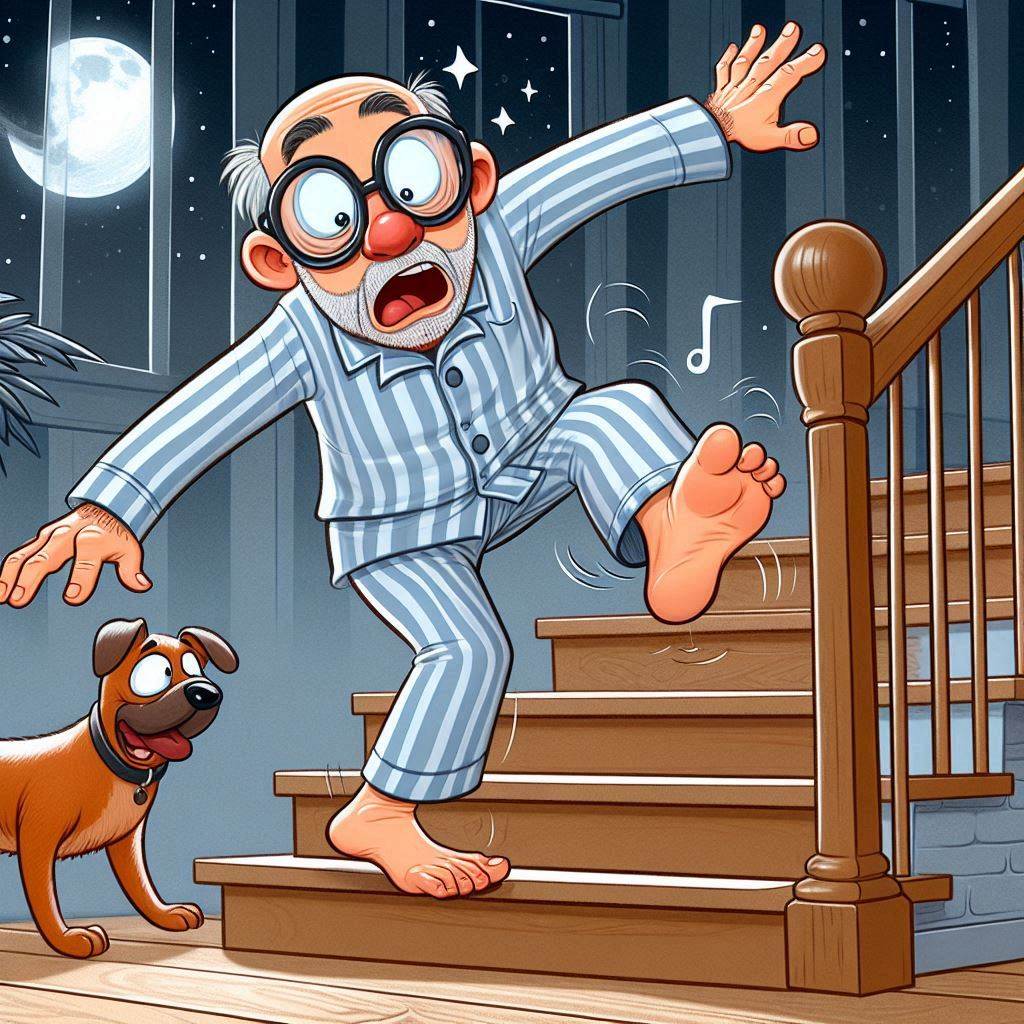
Every year, thousands of injuries occur due to poor visibility on staircases. According to the U.S. National Safety Council, more than one million stair-related injuries are reported annually. Incorrect lighting, especially during an emergency, can turn stairs into a major hazard.
Glow in the dark nosings provide: –
- Clear Edge Definition: Helping to distinguish tread edges when visibility is compromised.
- Wayfinding Assistance: Guiding people safely through paths and stairwells during emergencies such as fires or blackouts.
- Long-lasting Illumination: Some modern materials can glow for up to 12+ hours after being exposed to only a few minutes of light.
Latest Innovations in Glow in the Dark Staircase Nosing (2023–2024)
As we push into 2024, the field of architectural safety technology has seen some exciting advancements in photoluminescent nosing systems. Below are the key innovations:
- Next-Gen Photoluminescent Materials The development of rare-earth-based strontium aluminate compounds has revolutionized glow technology. These newer materials offer significantly greater brightness and longevity compared to older zinc sulfide-based compounds. Recent studies show that these materials can retain luminescence for up to 40–60% longer than previous generations, with glow times exceeding 20 hours in optimal charging conditions.
- Integration with Green Building Standards With the rise of the LEED (Leadership in Energy and Environmental Design) certification requirements and sustainable architecture, newer glow in the dark nosings are being manufactured from recycled materials and designed for easy recyclability. Many manufacturers are now offering completely non-toxic, heavy-metal-free formulations that are compliant with RoHS and REACH regulations, making these solutions safer and more environmentally friendly than ever before.
- Smart Stair Systems & IoT Integration The coupling of smart lighting systems with photoluminescent nosing is becoming a reality. Advanced stair systems now feature: – Motion sensors that trigger emergency lights as a backup if photoluminescence is compromised. – Integrated data collection to monitor stair foot traffic. – App-based monitoring systems to ensure that stairways are being maintained properly and comply with building codes.
- More Design Variety and Customization Leading suppliers like PLC, GripGuard, and EverGlow are now offering customizable nosing solutions with features such as: –
- Multiple color options (not just green glow)—including blue, yellow and even dual-color options. –
- Engravable text or directional symbols** that glow.
- Architectural grade finishes** that match high-end decor requirements in luxury hotels, shopping malls, and theaters.
- Regulatory Frameworks and Code Updates Keeping up with the latest codes is essential for architects, facility managers, and safety inspectors.
Below are key regulations influencing the glow in the dark stair nosing sector in 2024:
- International Building Code (IBC) The IBC mandates exit pathways and stairwells in high-rise buildings must be clearly marked. Since the 2012 edition, the inclusion of photoluminescent markings on stair nosings has been a requirement in structures more than 75 ft tall.Key Requirements:
- Stair nosings must feature a continuous strip of photoluminescent material across the full width of the tread.
- Luminescent strips should be at least 1 inch wide.
- The glow feature must remain visible without reliance on electrical power.
- British Standards (BS 5266, BS 8300) UK standards have gone a step further by advocating for proactive luminous signage and nosing in all public-use buildings. Recent updates in 2023 clarified spacing, contrast, and reflectivity standards, aligning more closely with inclusive design principles focused on disability access.
- Australian Standards AS/NZS 4586 Australia and New Zealand emphasize the friction coefficient of materials used in nosings. Combined with photoluminescence, stair nosings must also perform well under slip-resistance conditions evaluated under wet and dry scenarios.
Key Use Cases and Installations in 2024
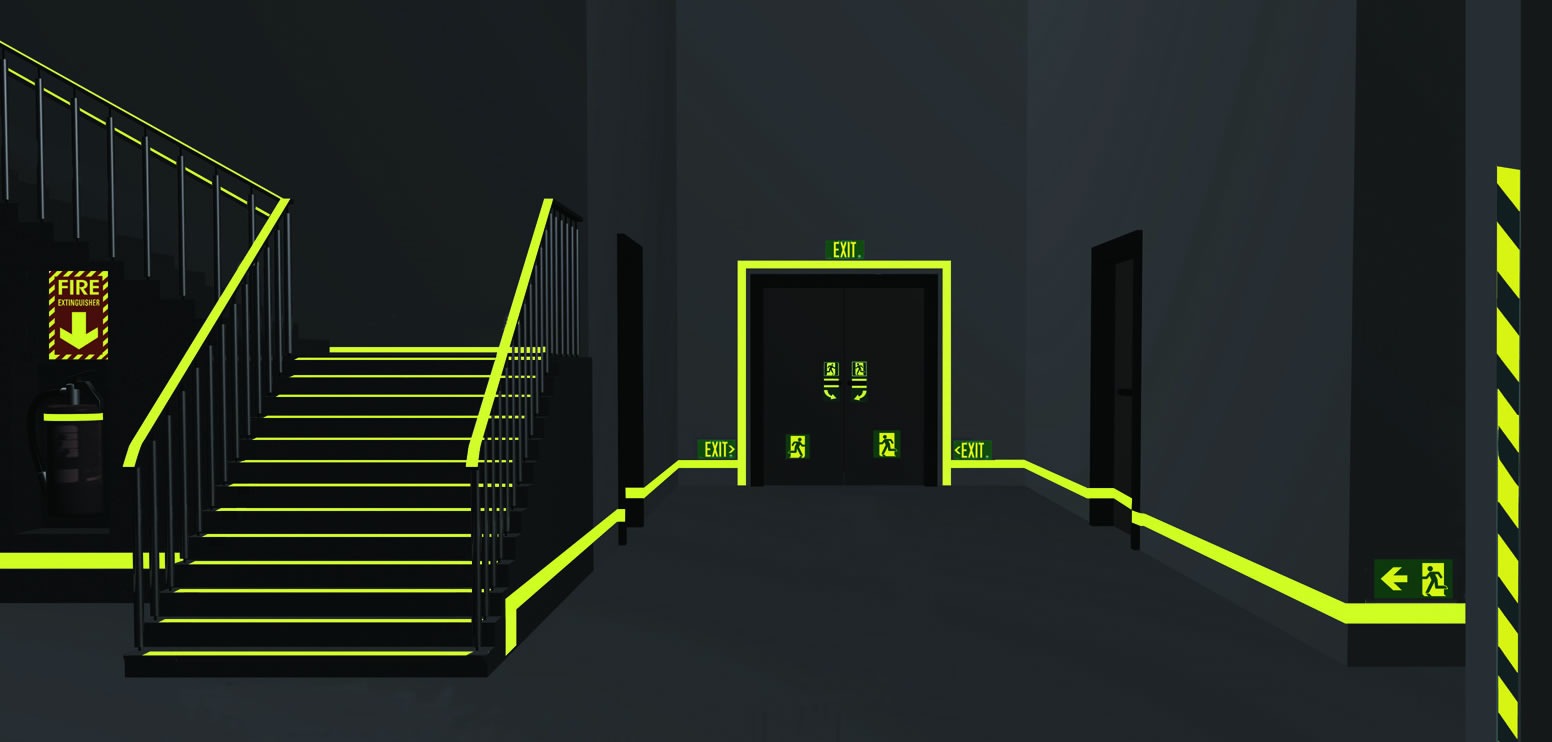
Glow in the dark aluminum plate strips are no longer limited to just industrial or high-rise buildings. Here’s an overview of current use cases:
- Transport Infrastructure Railway stations, airports, and subway networks are increasingly relying on glow in the dark nosings to ensure safe movement during nighttime operations and emergency evacuations. The Crossrail system in London is a notable example where over 10,000 meters of photoluminescent nosing were installed as part of safety upgrades in 2023.
- Educational Institutions Several U.S. school districts have implemented photoluminescent systems in staircases based on new school design guidelines emphasizing emergency preparedness. With increasing concern about school lockdown and fire evacuation protocols, the demand is surging.
- Hospitals and Elderly Care Facilities Poor lighting can exponentially increase the risk of falls in the elderly. Many aged care providers are now retrofitting staircases with high-visibility, non-slip, luminous stair nosings to improve safety for their most vulnerable residents.
- Hospitality and Entertainment Hotels, theaters, and cruise ships are incorporating glow nosings into their staircases not only for safety but also for ambiance. Decorative luminous strips are used to create appealing visuals that double up as wayfinding systems.
Top Materials and Manufacturing Trends In the manufacturing sector, 2023–24 has been marked by better material sourcing and improved process efficiency. Popular Material Choices Include: –
- Aluminum-based nosings with embedded strontium aluminate: Lightweight and corrosion-resistant.
- PVC-based glow nosing: Economical, flexible, and easy to install.
- Rubberized options: Preferred in sports facilities and schools for added impact resistance.
New Production Technologies –
- Laser-etched photoluminescence: Offers better control and pattern customization.
- Powder coating combined with luminescent particles: Enhances durability and glow clarity.
- 3D-printed nosings: Emerging technology for low-volume, high-design applications.
Environmental and Energy-Saving Advantages
Glow in the dark staircase nosing is inherently sustainable because it requires no power and emits no pollutants. In buildings aiming for net-zero emissions: –
- They reduce reliance on emergency lighting power.
- They help cut operational costs.
- They contribute to sustainable energy ratings like LEED and BREEAM.
Market research indicates that energy savings from reduced emergency lighting usage due to photoluminescent stair systems can amount to 12–18% annually, depending on building size.
Challenges and Limitations
Despite its many benefits, there are still a few limitations:
- Charging time sensitivity: Brightness depends on light exposure; poorly lit areas may reduce glow efficiency.
- Limited color spectrum: Purposeful design may be constrained by currently available glow colors, though this is rapidly evolving.
- Installation cost: Though costs have come down, high-grade materials are still relatively expensive initially.
The Future of Glow in the Dark Products
The global market for photoluminescent safety products is projected to hit USD 950 million by 2027, with safety products making up a significant share of that. Here’s what’s likely next: –
- Solar-powered augmentation: Self-powered staircase nosings that combine photoluminescence and solar charging units.
- Advanced biomaterials: Organic phosphorescent compounds derived from plant-based resources.
- AI-enhanced safety mapping: Data-driven placement using predictive AI to model crowd movement and optimize escape routes.
Final Thoughts
Glow in the dark staircase nosing may seem like a minor detail in architectural design, but its impact on safety, sustainability, and user experience is truly transformative. In 2024 and beyond, expect to see greater integration of this technology across all sectors—from homes and hospitals to international airports and skyscrapers.
Advancements in materials science, increased code enforcement, and rising public awareness have all converged to make glow in the dark stair nosing not just a regulatory compliance tool but a core component of thoughtful, inclusive, and resilient building design.
If you’re an architect, construction professional, or facility manager looking to futureproof your designs and ensure top-tier safety for occupants, now is the perfect time to explore the latest in glow in the dark stair nosing technology.
Let us know in the comments: Have you implemented glow in the dark nosings in your projects? What challenges or successes have you experienced?