
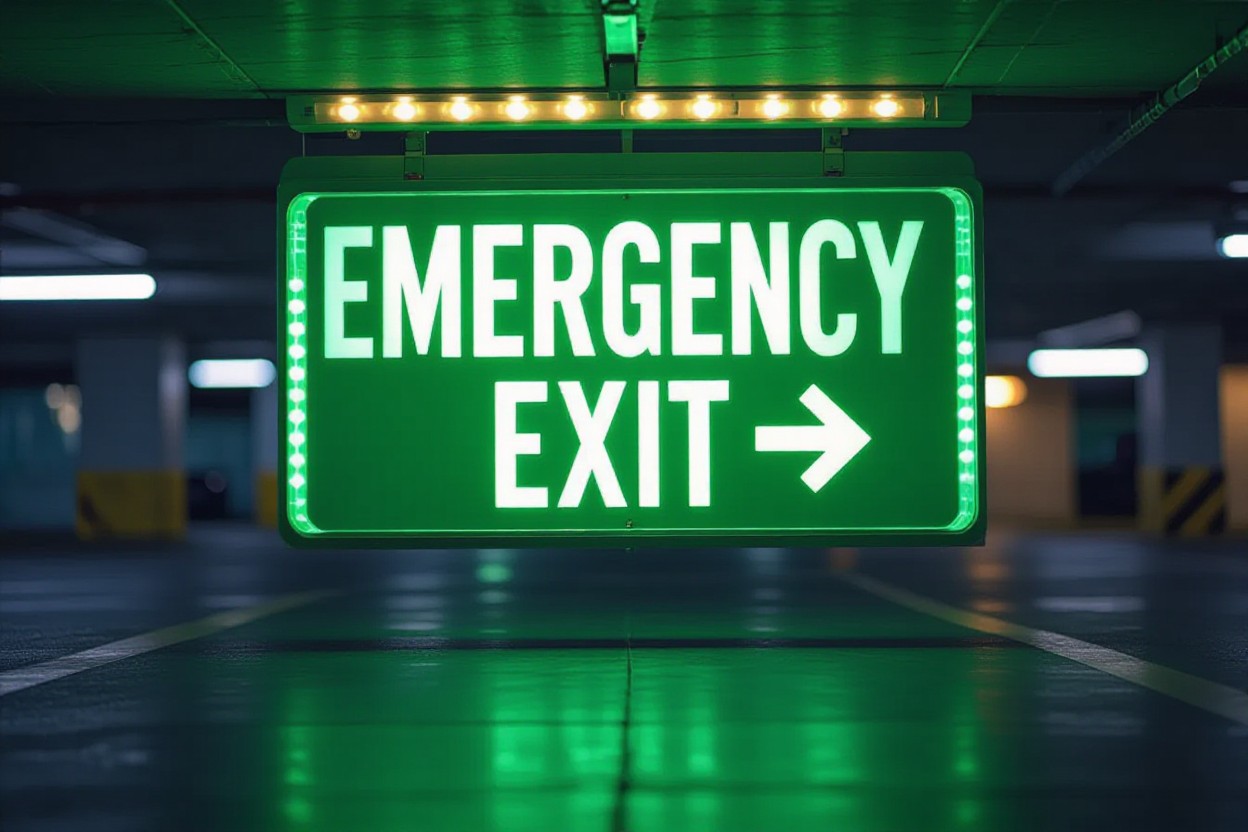
Over long power outages, you can rely on glow-in-the-dark emergency signage to guide you and your occupants when lighting fails; photoluminescent materials (strontium aluminate) charge in ambient light and emit visible guidance for hours. You should weigh benefits—non-toxic, long‑lasting, low‑maintenance and environmentally friendly—apply proper surface prep, mixing ratios and protective coatings, and follow safety guidance such as FEMA, OSHA egress standards and PSPA classification.
Table of Contents
Key Takeaways:
- Photoluminescent tech: Uses strontium aluminate phosphorescence—charges from ambient light and emits a visible glow for hours without power; ideal for low-light emergencies. (See industry guidance: Photoluminescent Safety Products Association.)
- Benefits: Non-toxic, low-maintenance, and environmentally friendly; recharges under normal lighting, remains effective for repeated power‑outage events when maintained properly.
- Application best practices: Follow manufacturer mixing ratios, clean and prime surfaces before application, and protect with durable clear coatings to maximize adhesion, chargeability, and wear resistance.
- Typical uses: Mark stair rails, floor/egress paths, door thresholds, and emergency kits to improve nighttime navigation and evacuation; align placement with workplace exit-route requirements (OSHA exit-route guidance).
- Standards, longevity, and maintenance: Use PSPA classifications and applicable codes for product selection; consult consensus standards and NFPA/OSHA guidance for compliance and inspection schedules (NFPA, OSHA).
Illuminating Science: The Mechanics Behind Glow-in-the-Dark Signage
Strontium aluminate-based photoluminescent signage stores energy from ambient light so you retain visible wayfinding during outages without power. High-grade pigments can provide a bright initial glow and maintain detectable luminance for up to 8–12 hours depending on charge intensity; full daylight (thousands of lux) charges faster than typical office lighting (300–500 lux). You’ll see manufacturers optimize pigment grade, thickness, and topcoat transparency to balance peak brightness and long-duration visibility in stairwells and exit paths.
Photoluminescence Explained: Strontium Aluminate’s Role
Strontium aluminate doped with europium (Eu2+) and dysprosium (Dy3+) acts as the active pigment you rely on: Eu2+ provides the luminescent centers while Dy3+ creates electron traps that permit slow release of stored energy. This chemistry outperforms older zinc-sulfide by roughly 10–100× in afterglow duration and intensity, remains non-toxic, and is chemically stable—attributes that make it suitable for family homes, public stair rails, and professional egress systems.
Energy Absorption and Release: How It Works
Photons from ambient lighting excite electrons in the strontium-aluminate lattice into higher energy states; you observe immediate emission as excited electrons relax, but the trapped electrons created by dopants release more slowly, producing a sustained afterglow typically centered near 520 nm (green). Initial luminance decays exponentially—high peak output for the first hour, then lower but usable glow for many hours—so you get both short-term visibility and extended guidance during long outages.
Delving deeper, the kinetics are driven by trap-depth distribution: shallow traps free electrons faster (bright early output), while deep traps bleed charge over hours, extending the tail of visibility; manufacturers quantify performance by measuring luminance after standardized charge times and lux levels. You can improve practical performance by increasing pigment concentration, applying 0.5–2 mm wet-film thickness for coatings, and avoiding opaque binders that block excitation. Industry test methods and classifications from groups like the Photoluminescent Safety Products Association (PSPA) and standards bodies (see NFPA guidance at https://www.nfpa.org) help you compare products by specifying charge conditions and minimum luminance criteria for egress applications.
The Green Solution: Unpacking Product Advantages
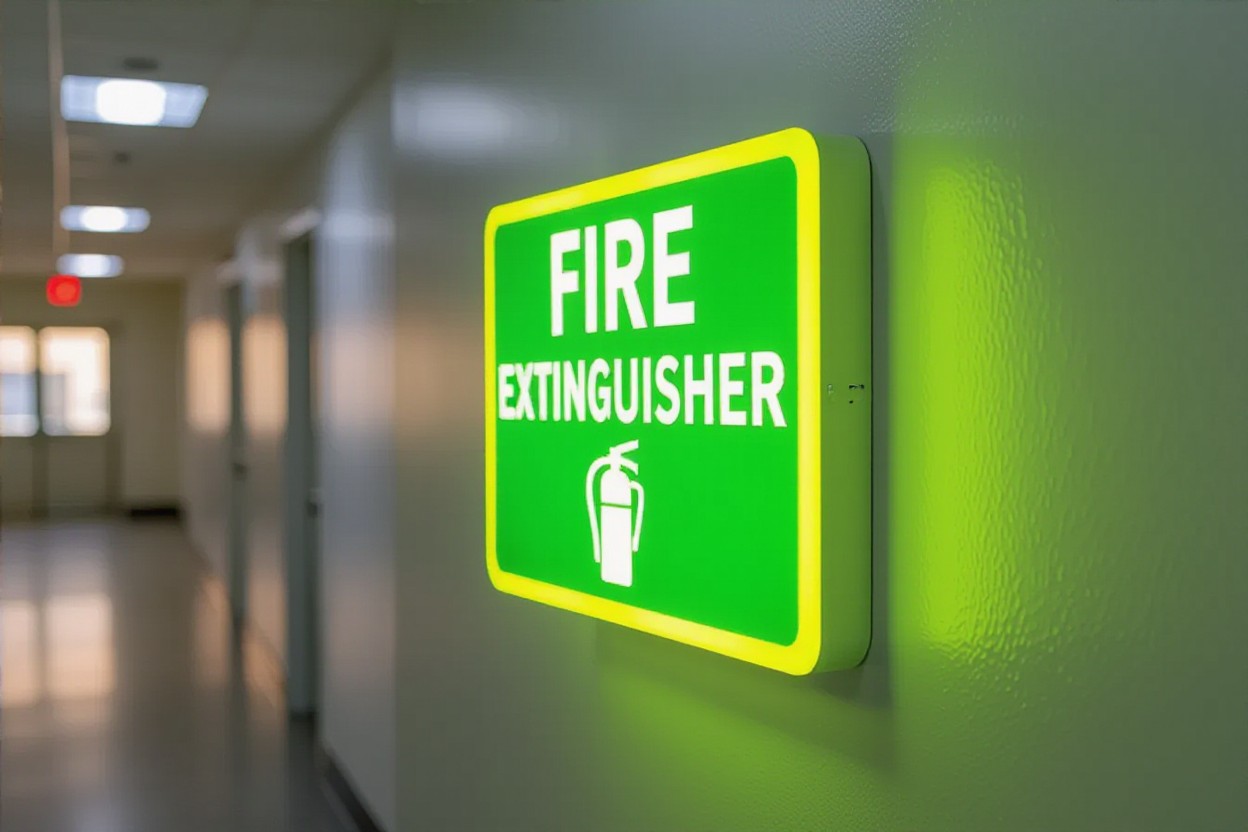
You gain reliable, non-electric visibility that recharges under ambient light; strontium aluminate-based signs typically recharge in 30–60 minutes under normal office lighting and provide visible guidance for 8–12 hours after a full charge, with a service life often quoted at 10–25 years depending on exposure and finish.
Environmental Impact: Non-Toxic and Sustainable Materials
You reduce environmental risk by choosing non-radioactive, heavy-metal-free photoluminescent pigments—unlike tritium or older radium-based markers—and many formulations are designed to meet RoHS and REACH standards while using recyclable substrates, making them suitable for homes, schools, and healthcare settings.
Durability and Effectiveness: Long Lifespan Benefits
You benefit from robust construction: UV-stable topcoats and abrasion-resistant substrates help retain luminance in corridors and stairwells, and manufacturers such as glowinfo.com report functional lifespans of 10–25 years for properly installed products.
You should plan for routine charging and inspections to maintain that lifespan; brightness typically falls quickly in the first hour then tails off, so vendors measure both initial luminance (first 10 minutes) and remaining output at 60 minutes to certify performance. Under 300–500 lux most signs reach a useful charge in 30–60 minutes; schedule quarterly visual checks, replace markers showing significant surface abrasion or >50% luminance loss, and use protective clearcoats in high-traffic or chemically cleaned areas to extend effective service life.
Mastering Application Techniques for Optimal Visibility
Aim for uniform film thickness and consistent pigment loading to achieve predictable glow performance; a wet film of 250–1,000 microns applied in 2–3 coats typically balances brightness and durability. Use test patches under realistic charge conditions (LED 500 lux for 1 minute) and measure luminance with a meter to verify results. Topcoat with a clear UV-resistant sealer when abrasion or chemical exposure is likely, and allow full cure at 20–25°C (68–77°F) for 24 hours before commissioning.
Surface Preparation Essentials: Ensuring Maximum Adhesion
Clean substrates with a degreaser or isopropyl alcohol, then abrade to a 60–80 grit profile on metal or light grinding on concrete to increase surface area. Remove dust with a tack cloth and ensure substrate temperature exceeds 5°C (41°F) and relative humidity stays below 80% during application. Use an appropriate primer—epoxy primer for concrete and zinc/iron phosphate for steel—and perform a cross-hatch adhesion test (ASTM D3359) on a sample area before full application.
Mixing and Application: Ratios That Matter
Target a photoluminescent pigment load of 40–60% by weight for strong output with workable viscosity; increase toward 65–70% only for maximum brightness, accepting reduced flow. Choose binder systems—acrylic for quick recoat, epoxy for chemical resistance—and follow manufacturer pot-life guidelines (epoxy typically 30–60 minutes at 20°C). Apply with a notched trowel or HVLP spray, aiming for 250–500 microns per coat and 24 hours cure between coats.
For a practical example, mix a 1 kg batch at 30% pigment load by blending 150 g pigment into 500 g binder: pre-wet the pigment with 10–15% of the binder, disperse with a high-speed mixer for 5–10 minutes or use a ball mill for industrial batches, then deaerate under vacuum for 2–5 minutes. Strain through a 100 µm mesh for spray applications, reduce by up to 5–10% with manufacturer-approved solvent if needed, and verify luminance on a control panel before large-scale rollout.
Real-World Applications: Safety in Action
Deployments in hospitals, hotels, transit stations and aircraft prove photoluminescent signage works under real emergency conditions: high-performance strontium aluminate grades can remain visibly useful for up to 8–12 hours after a 10–15 minute charge under normal indoor lighting. You should prioritize products meeting PSPA classifications and NFPA guidance (https://www.nfpa.org) and consult manufacturers (e.g., https://glowinfo.com) for test data and compliance documentation.
Transforming Commercial Spaces: From Stairs to Airplanes
Retail centers and office towers often apply glow tape to stair nosings, handrails and exit thresholds to maintain wayfinding when lights fail; transit agencies use baseboard and step-edge markers to reduce evacuation confusion. You’ll also find photoluminescent floor-path systems in many passenger aircraft and ferries, selected for passive reliability and low maintenance while conforming to sector-specific egress guidance.
Home Safety: Emergency Kits and Path Indicators
Add adhesive glow strips to stair edges, mark circuit-breaker panels and place photoluminescent stickers on flashlights and first-aid kits so you can locate importants during outages. You should space corridor markers about 3–4 feet apart for continuous guidance and include at least one charged handheld light in each kit as redundancy.
For maintenance and performance: charge markers with 10–15 minutes of ambient indoor light or 2–5 minutes in direct sunlight to achieve usable glow; expect visible output through the night (8–12 hours) depending on pigment grade. Clean surfaces annually, avoid opaque coatings that block charging, and plan replacement or reapplication within roughly 10–20 years based on wear and exposure to UV or abrasion.
Maintenance Matters: Prolonging the Life of Your Signage
Regular upkeep keeps your photoluminescent signs performing through blackouts: clean surfaces monthly with a soft cloth and pH-neutral cleaner, avoid solvents that strip binders, inspect mounts and edges every six months for peeling or abrasion, and apply a UV-resistant clearcoat if signs face direct sun. Plan for replacement or reapplication based on environmental stress—indoors signs often last 10–20 years, while high-traffic or exterior installations degrade faster.
Charging Methods and Lighting Conditions
Direct sunlight (tens of thousands lux) charges strontium aluminate-based panels in 5–30 minutes for peak output; typical indoor lighting (300–500 lux) requires several hours to approach optimal charge. LED and fluorescent fixtures work well if they provide steady illumination; avoid placing signs in permanently dark enclosures. Consider dedicated daytime charge lights or motion-activated LEDs near high-priority routes to ensure consistent charging cycles.
Longevity Expectations: What to Keep in Mind
Photoluminescent pigments like strontium aluminate remain chemically stable and non-toxic, so pigment life often outlasts coatings and adhesives; expect visible performance for 10–20 years under protected indoor conditions. Anticipate gradual brightness decline rather than sudden failure, with abrasive wear, chemical exposure, and UV-damaged clearcoats being the usual failure modes that force earlier replacement.
Measure actual in-place performance: perform a 60-minute discharge test after a full-day charge and record luminance in mcd/m² with a photometer, comparing results to manufacturer or PSPA class specs. Recoat with a UV-stable polyurethane every 3–7 years in sun-exposed areas; in a hospital case study, corridor markers recoated at year eight returned from ~70% to >95% of original brightness, extending service life without full replacement.
Navigating Standards: The Importance of Compliance
You must align glow-in-the-dark signage with recognized standards so performance matches emergency conditions; strontium aluminate-based products typically deliver visible afterglow for 8–12 hours after a full charge, but regulatory acceptance depends on documented luminance and durability. Codes such as NFPA and the IBC increasingly permit photoluminescent egress systems when tested to accepted methods, so demonstrating compliance prevents costly rework, speeds approvals, and ensures the signs function during real power-loss events.
Adhering to Safety Regulations: The Role of PSPA Classification
PSPA classification groups photoluminescent products by measurable performance—initial luminance, decay rate, and abrasion/weather resistance—so you can match signage to high-demand zones like stairwells or lower-risk corridors. Specifying the correct PSPA class helps you satisfy code reviewers and insurers, simplifies procurement by using documented metrics, and lets installers choose materials proven to meet expected illumination and longevity for your facility type.
Benefits of Meeting Industry Standards for Users
Meeting industry standards gives you predictable, verifiable performance during outages: inspectors can confirm luminance, maintenance teams know replacement intervals, and occupants experience consistent visibility for safe egress. Standards compliance also reduces litigation risk, can lower insurance costs, and often qualifies systems for code-approved credits—translating to faster approvals and fewer retrofit expenses across commercial, healthcare, and residential projects.
Beyond immediate safety gains, standards-backed products reduce lifecycle costs through fewer replacements and clearer maintenance protocols; manufacturers supply test reports you can archive for audits, and installers follow established application practices, minimizing installation errors. Many certification tests measure initial brightness and afterglow at intervals such as 10 and 60 minutes, letting you select materials that demonstrably meet your building’s evacuation-time requirements and occupant-density needs.
Final Words
Presently you can enhance nighttime safety by installing photoluminescent, strontium aluminate-based signage that charges under ambient light, requires no power, and is non-toxic and long-lasting. By placing markers along stair rails, exit paths, and emergency kits and following proper surface prep and coating guidance, you protect your occupants and ensure reliable visibility during outages, meeting PSPA classifications and established safety standards for emergency wayfinding.
FAQ
Q: Why install glow-in-the-dark emergency signage for night-time or low-light situations?
A: Glow-in-the-dark signage provides passive, reliable visual guidance when power fails or lighting is limited, improving safe egress and situational awareness without relying on batteries or mains power. These signs remain visible after being charged by normal indoor or outdoor light, help mark exit routes, stair edges and hazards, and reduce panic and disorientation during outages. For emergency planning and egress guidance see FEMA: https://www.fema.gov and OSHA egress/evacuation guidance: https://www.osha.gov.
Q: How does photoluminescent technology (strontium aluminate) work?
A: Photoluminescent materials such as strontium aluminate absorb photons from ambient light and re-emit them over time through phosphorescence. High-performance strontium aluminate pigments are non-radioactive, brighter and longer-lasting than older zinc-sulfide formulations. After adequate charging (minutes to hours depending on light level), intensity decays over time but remains visible long enough to guide occupants during extended outages.
Q: What are the primary safety and environmental benefits of photoluminescent signage?
A: Benefits include non-toxic and non-radioactive composition, low maintenance (no wiring or battery replacement), long service life under normal conditions, and reduced environmental impact compared with battery-powered or radioactive options such as tritium. Photoluminescent signs perform reliably in a wide temperature range, are suitable for family homes and public buildings, and can be specified to meet recognized safety codes for emergency marking.
Q: What are best practices for application, installation and maintenance (mixing ratios, surface prep, coatings)?
A: Follow manufacturer instructions for mixing ratios when using photoluminescent paints or coatings—high pigment loading yields greater brightness. Surface prep should include cleaning, degreasing and priming appropriate substrates to ensure adhesion. Apply in recommended thicknesses; use clear protective topcoats to improve abrasion and UV resistance where needed. Place markers continuously along exit paths: stair nosings, handrails, thresholds, door edges and floor paths. Verify charging conditions (exposure to ambient light) and perform post-installation visibility testing under expected low-light conditions. For technical application guides, consult product documentation at https://glowinfo.com.
Q: How long do photoluminescent signs last, what maintenance is required, and what standards or classifications apply?
A: Lifespan depends on material grade, exposure and wear; high-quality strontium aluminate products can remain effective for many years with routine inspection. Maintenance includes periodic cleaning, reapplication or replacement of worn markers, and functional checks to confirm adequate charge and legibility in darkness. Look for products tested to relevant safety codes and classifications (industry guidance such as NFPA 101 Life Safety Code: https://www.nfpa.org) and consult Photoluminescent Safety Products Association (PSPA) classification guidance and manufacturer test data via vendor resources (for example: https://www.glowinfo.com). Follow employer/building-owner testing and recordkeeping per OSHA and local code requirements: https://www.osha.gov.