
3 Ways to make Glow-in-the-dark roads and highways
Glow-in-the-dark roads and highways utilize photoluminescent materials to enhance nighttime visibility, thereby improving safety and reducing reliance on artificial lighting. These materials absorb sunlight during the day and emit a luminescent glow after dark, guiding drivers and pedestrians. Several methods have been developed to achieve this effect:
1. Photoluminescent Road Paint
This method involves applying paint infused with photoluminescent pigments directly onto road surfaces. The process includes:
-
Surface Preparation: Clean the road surface to remove debris, ensuring optimal adhesion.
-
Primer Application: Apply a compatible primer to enhance the bonding of the luminescent paint.
-
Mixing the Paint: Combine photoluminescent pigments, typically strontium aluminate-based, with a clear binder such as polyurethane or acrylic resin. The mixture often includes anti-skid additives like glass beads to maintain road safety.
-
Application: Use rollers or spray equipment to apply the mixture to the road surface, ensuring even coverage.
-
Curing: Allow the paint to dry and cure as per manufacturer guidelines before opening the road to traffic.
We offer photoluminescent road paint designed to improve nighttime visibility.
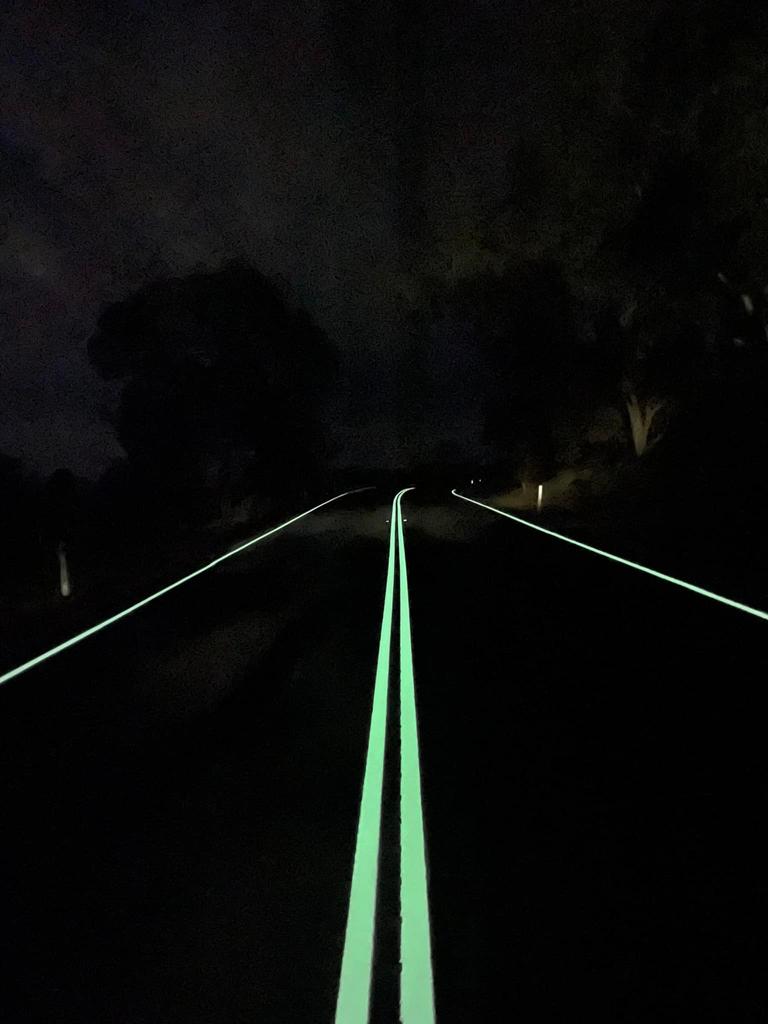
2. Photoluminescent Road Markings
Instead of painting entire road sections, this approach focuses on specific markings:
-
Material Selection: Choose durable, photoluminescent materials suitable for road markings.
-
Application: Apply these materials to create lines, symbols, or other indicators on the road surface.
-
Integration: Ensure that the markings are integrated seamlessly with existing road features and comply with safety standards.
3. Photoluminescent Aggregates in Asphalt
Incorporating photoluminescent aggregates into the asphalt mix during road construction is another innovative approach:
-
Aggregate Preparation: Select aggregates coated with photoluminescent materials.
-
Mixing: Integrate these aggregates into the asphalt mixture during the production process.
-
Paving: Lay the asphalt mixture onto the roadbed as usual.
-
Compaction and Curing: Compact and allow the asphalt to cure, ensuring the photoluminescent properties are retained.
This technique provides a uniform glow across the road surface, enhancing overall visibility.
Case Studies and Trials
Several trials have been conducted to assess the effectiveness of glow-in-the-dark road technologies:
-
Netherlands: A pilot stretch of highway in Brabant was equipped with photoluminescent markings that charged during the day and glowed at night. However, the paint’s performance was affected by moisture, leading to a cessation of the glow after two weeks.
-
Australia: New South Wales initiated a trial of glow-in-the-dark road markings on Bulli Pass, south of Sydney, to improve nighttime driving safety. These photoluminescent markings absorb sunlight during the day and glow at night, aiding visibility in areas lacking street lighting.
We offer Glow Gravel Aggregates for this purpose.
Incorporating glow-in-the-dark technologies into road infrastructure presents a promising avenue for enhancing nighttime visibility and safety. Ongoing research and trials continue to refine these methods, addressing challenges such as durability and environmental factors to ensure long-term effectiveness.