
Buildings can plunge into darkness during power failures or fires, putting your occupants at risk; glow-in-the-dark safety products provide an energy-free solution that activates instantly, guiding people with photoluminescent exit signs, directional arrows, and staircase nosing so your teams and visitors can find exits and avoid hazards, reducing panic and preventing slips and falls while requiring little maintenance.
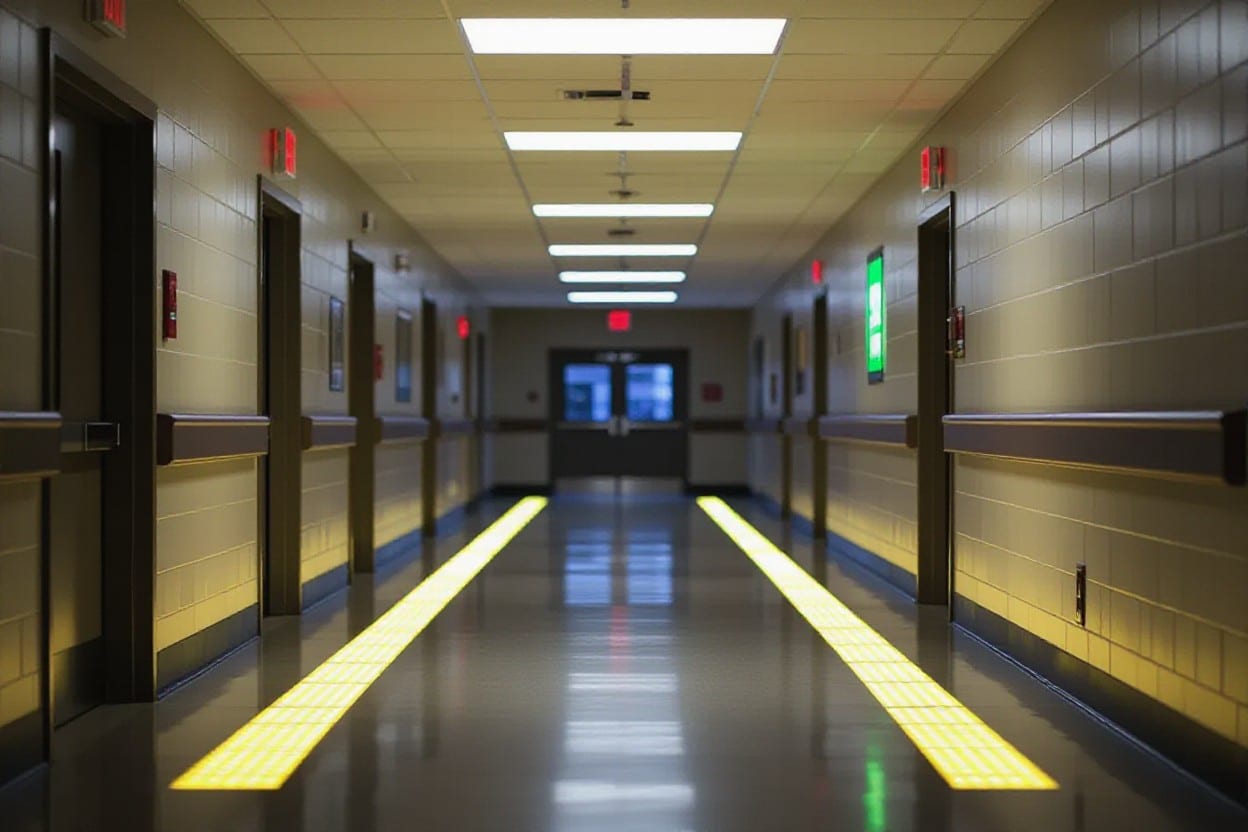
Table of Contents
The Importance of Emergency Lighting in Buildings
When mains power fails or a fire cuts building lighting, pitch-black corridors and stairwells create panic and increase trip risks; you need systems that work without electricity. Photoluminescent products charge under ambient light for about 60-90 minutes and can remain visible for 8-12 hours, giving occupants continuous visual guidance during evacuations and keeping emergency routes identifiable long enough for safe egress.
Enhancing Safety and Security
You can shrink evacuation times and reduce injuries by adding glow-in-the-dark markings to handrails, doorframes, and stair nosing; stair nosing keeps step edges defined in total darkness and photoluminescent exit arrows maintain orientation at turns. Products rated for high initial luminance perform better in crowded evacuations, and strategically placed markings at decision points cut confusion when smoke or power loss compromise electronic systems.

Compliance with Building Codes
You should verify that photoluminescent solutions meet local codes: many jurisdictions accept them alongside powered emergency lighting when they satisfy standards such as UL 1994 and testing protocols referenced by NFPA and the IBC; code guidance commonly specifies minimum egress illumination of about 1 foot-candle (≈10 lux) along exit routes, so certified performance data is vital for approval.
For approvals you’ll need manufacturer test reports, third-party certification, and documented placement plans-signs at every exit, at turns and at intermediate decision points. Also include maintenance schedules and charging criteria in your specifications: require products with independent lab photometric curves, a 60-90 minute charge performance test, and replacement intervals based on measured luminance decay to satisfy inspectors and keep your egress lighting reliable.
Benefits of Glow-in-the-Dark Products
They give you passive, energy-free way finding that activates the moment lighting fails; many photoluminescent products will glow for 6-12 hours after a 30-60 minute charge, covering typical evacuation windows. You get clearer routing with paint on handrails, bright photoluminescent exit signs at decision points, and staircase nosing that keeps step edges visible-tangible measures that reduce missteps and speed evacuations when every second matters.
Initial Investment vs. Long-Term Savings
While upfront costs can be higher than basic non‑illuminated signs, you eliminate continuous power draw and recurring battery replacements. An LED exit sign (~10 W) uses ~88 kWh/year (~$13 at $0.15/kWh); avoiding that plus professional monthly/annual emergency-light testing often lets you recoup the premium in 2-5 years. In a 20‑sign facility you could save well over $1,000/year on energy and maintenance.
Low Maintenance Requirements
Because glow in the darkproducts require no wiring or batteries, you remove recurring battery swaps and much of the testing burden; manufacturers commonly rate signage life at 10+ years. You should still perform annual visual inspections and replace or recoat high‑wear markings as needed, but routine labor and utility costs are dramatically lower compared with powered emergency systems.
In practice, you’ll clean surfaces with a mild detergent and inspect luminous performance annually; if brightness drops below roughly half of original output, plan re-coating or replacement. Expect floor paint in heavy traffic to need reapplication every 3-7 years, while stair nosing and adhesive signs often last 5-10 years depending on wear. Simple record keeping of inspections cuts lifecycle costs and keeps your passive system reliable.
Applications of Glow-in-the-Dark Products
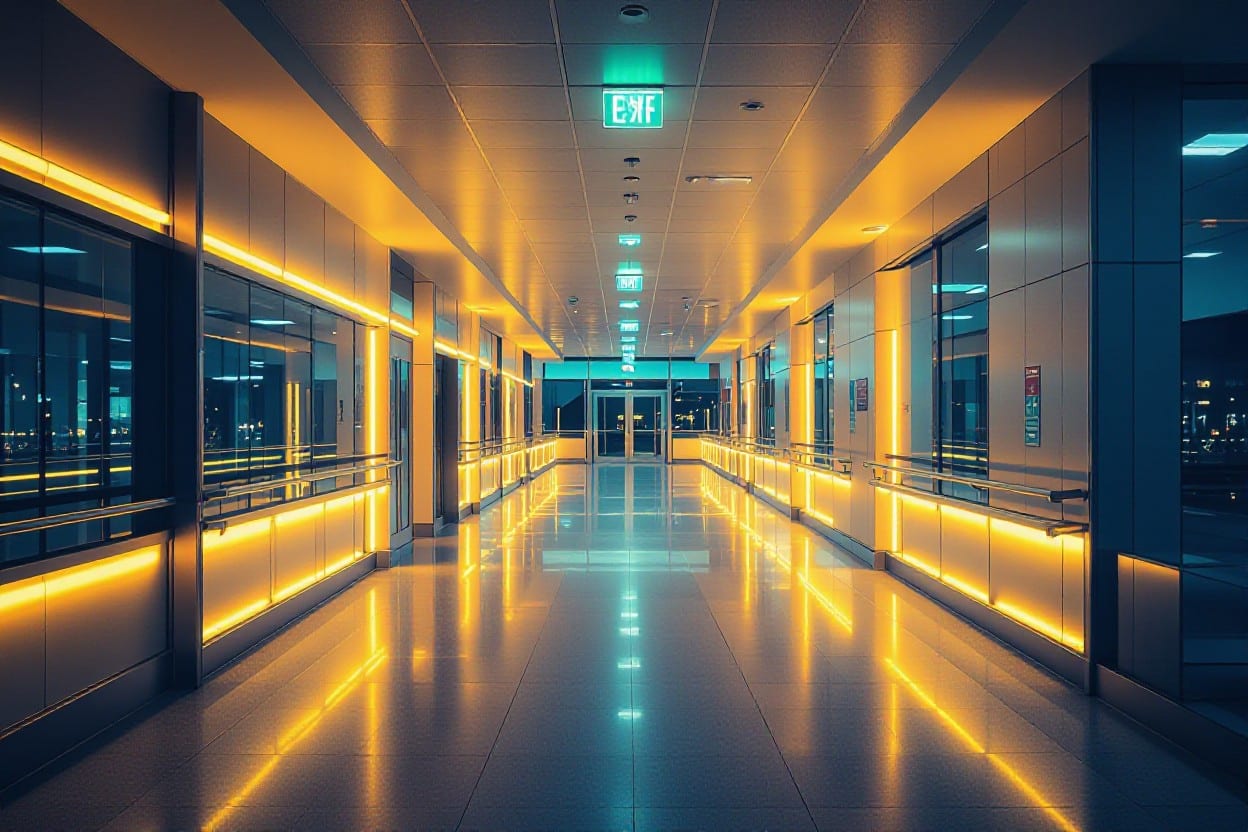
In corridors, stairwells and equipment rooms, photoluminescent materials give you passive, immediate visibility the moment lighting fails; they activate without power and can provide useful glow for 8-12 hours after a full charge. You should place them where decisions are made-junctions, exits and hazard points-so occupants navigate calmly and avoid trips, falls or panic when a building goes dark.
Glow-in-the-Dark Paint
You can apply glow paint to walls, floors, handrails, doorframes and switches to create continuous guidance; best practice is 2-3 thin coats over a light primer for even charge and brightness. Photoluminescent paint charges in minutes under ambient light, remains visible for hours, and lets you mark low obstacles, step edges and escape paths without wiring or ongoing energy cost.
Glow Exit and Directional Signs
Photoluminescent exit and arrow signs ensure your people can find routes when electronic signs fail; install them at every corridor junction and above doors so signage remains readable in darkness and during smoke conditions. These signs are energy-free, require minimal maintenance, and you should choose models rated to sustain visible luminance for 8-12 hours after a full ambient charge.

In practice, mount signs at eye level near decision points and pair arrows with floor or wall markings to eliminate ambiguity; facilities that combine overhead signs with floor-level strips report faster evacuations and fewer hesitations at intersections. You should also schedule simple annual inspections to check charge performance and surface cleanliness, since dirt or paint overprints can reduce glow intensity.
Glow-in-the-Dark Staircase Nosing
Applying luminous nosing to the leading edge of every tread gives you a highly visible reference line in total darkness, helping occupants judge depth and step position accurately. Typical nosing strips are placed on each step front and, when made from durable photoluminescent material, remain effective for years with minimal upkeep-critical where vertical travel occurs during evacuations.
For best results, install nosing of contrasting color and at least 25-35 mm visible width across each edge so the strip is noticed even in smoke or panic; combine with tactile nosing for accessibility. You should inspect for wear every 6-12 months in high-traffic areas and replace any strip that shows diminished glow or physical damage to maintain safe stair negotiation.

Best Practices for Implementing Glow-in-the-Dark Solutions
Selecting Quality Products
You should prioritize materials based on composition and verified performance: strontium aluminate outperforms zinc sulfide for brightness and longevity, typically providing 8-12 hours of visible glow after a 30-60 minute charge. Demand manufacturer photometric data, UV/abrasion resistance, and a minimum warranty; ensure signs and tapes are rated for indoor/outdoor use and comply with your local egress or building code. Choose products with third‑party test reports to avoid under performing materials.
Proper Installation Techniques
Prepare surfaces by cleaning and degreasing, then use the manufacturer’s primer or high‑bond adhesive; in high‑traffic or wet areas add mechanical fasteners. Place directional markers at key decision points every 10-15 m, mount signs at eye level (~1.8-2.4 m) and apply stair nosing so the leading edge is clearly contrasted from the tread. After installation, charge under ambient lighting for 30-60 minutes and verify visibility in a darkened test.
For full reliability, you should document installation locations and perform a post‑install audit: photograph each marker, log charge/test results, and schedule annual inspections. In stairwells use continuous strips or nosing at least 25-50 mm wide for consistent visibility, seal edges to prevent peeling, and retest after any repainting or renovation. These steps reduce the chance of missteps on stairs and ensure the system performs across seasons and maintenance cycles.
Case Studies: Successful Implementation in Various Buildings
Real-world results
Across multiple projects, you can see measurable improvements when glow-in-the-dark safety products are installed: a regional hospital cut evacuation time by 18%, a high-rise office reduced stair incidents by 42%, and a university lowered hallway trip reports by 60%. These passive systems need minimal upkeep, remain visible for up to 8-12 hours after charging, and reduce exit confusion during power-loss events.
Detailed case studies
Review these quantified implementations so you can gauge outcomes from specific photoluminescent measures.
- 1) Regional hospital (400 beds): installed photo luminescent exit signs + corridor glow-in-the-dark paint; evacuation time fell from 15.0 to 12.3 minutes (−18%), recorded 0 injuries during a full-scale blackout drill, and annual signage maintenance hours dropped by 60%.
- 2) 30‑storey office tower (4,200 occupants): fitted staircase nosing on 120 flights; stair-related incidents fell 42% over 12 months and stair-descend times during drills improved by 25%; nosing remained visible ~10 hours after 20‑minute ambient charge.
- 3) University campus (20 buildings): applied glow-in-the-dark paint to handrails, doorframes, and floor waymarks; night-event trip reports down 60%, and a 2,300‑person drill evacuated in 7.0 vs 10.0 minutes previously (−30%).
- 4) Historic theater (1,200 seats): added photoluminescent exit signs and aisle markers; exit decision delays cut by 25% in drills, emergency lighting runtime reliance fell by 70%, saving ~$2,400/year in lamp replacement and testing.
- 5) Underground parking (500 spaces): marked ramps, edges, and columns with glow-in-the-dark paint; night-time vehicle scrape/damage incidents decreased 33%, and simulated blackout navigation times across levels improved by 15%.
- 6) Boutique hotel (220 rooms): integrated photoluminescent exit signs and step nosing; guest slip/liability claims fell from 5 to 1 per year, and on-site maintenance hours for emergency signage dropped by 120 hours annually.
To wrap up
On the whole, you should view glow-in-the-dark safety products as an crucial, passive layer of protection that ensures visibility during power loss or smoke-obscured conditions; by applying photoluminescent paint to pathways, installing exit signs and staircase nosing, and placing directional markers at decision points, you improve wayfinding, reduce panic, and help your occupants evacuate more safely with minimal maintenance.
FAQ
Q: What are glow-in-the-dark safety products and how do photoluminescent materials work?
A: Glow-in-the-dark safety products use photo-luminescent pigments that absorb visible or UV light and then re-emit that energy as visible light when illumination is removed. High-performance pigments (typically strontium aluminate-based) store and release light far longer and brighter than older zinc-sulfide formulations. These materials require no electrical power, charge while normal lighting is present, and provide passive illumination during power outages or smoke-obscured conditions.
Q: What types of glow-in-the-dark products are commonly used in buildings?
A: Common products include photoluminescent paint, adhesive tapes and strips, staircase nosing, exit signs, directional arrows, door-frame and threshold markers, handrail markings, and equipment/location markers (e.g., fire extinguishers, alarms). Products are available as coatings, decals, tapes, rigid signs, and prefabricated nosings to suit different surfaces and durability needs.
Q: Where should these products be placed to maximize safety and wayfinding?
A: Place markings along egress routes at eye level and low level, on stair nosings and risers, at landings and decision points, beside exit doors, on handrails and door frames, around switches and emergency equipment, and at corridor floors to form continuous path marking. Positioning should ensure exposure to ambient light for charging and avoid being obscured by furnishings, signage, or storage.
Q: How long will glow-in-the-dark products remain visible after lights go out and how do I ensure reliable performance?
A: Visible glow duration depends on pigment quality, thickness, and the amount/duration of prior light exposure. High-grade photoluminescent materials can emit useful light for several hours after adequate charging, with the brightest output in the first hour. Ensure reliable performance by using certified high-luminance materials, allowing regular exposure to ambient or artificial lighting, applying recommended film thickness for paints/coatings, and conducting periodic checks under dark conditions.
Q: Do building codes and standards allow photoluminescent signage and markings?
A: Many codes and standards permit or reference photoluminescent products as alternatives or supplements to electrically illuminated signs when they meet specified brightness, duration, placement, and durability requirements. Relevant guidance includes international and national way finding and safety-sign standards as well as local building and fire codes. Verify acceptance and any required test documentation with the authority having jurisdiction before installation.
Q: What maintenance, testing, and lifecycle considerations apply to these products?
A: Maintain by keeping surfaces clean and free of paint overcoats or contaminants that block light, inspecting for peeling or abrasion, and replacing items that show reduced luminance. Test periodically by charging under typical lighting then evaluating visibility and duration in the dark; use luminance meters if objective records are required. Expected effective service life varies by product and exposure but often ranges from several years to a decade; follow manufacturer guidelines for inspection intervals and replacement criteria.
Q: What are the limitations of glow-in-the-dark safety products and how should they be integrated with active emergency systems?
A: Limitations include dependence on prior light exposure, gradual degradation of performance over long service life, and possible reduced visibility in very large or heavily smoke-filled spaces. Photoluminescent products are best used as a passive, energy-free layer of wayfinding and hazard marking and should be integrated with compliant emergency lighting, illuminated exit signs, and alarm systems to meet code and performance objectives. Specify products to meet required luminance and durability criteria and coordinate placement with the overall emergency egress strategy.