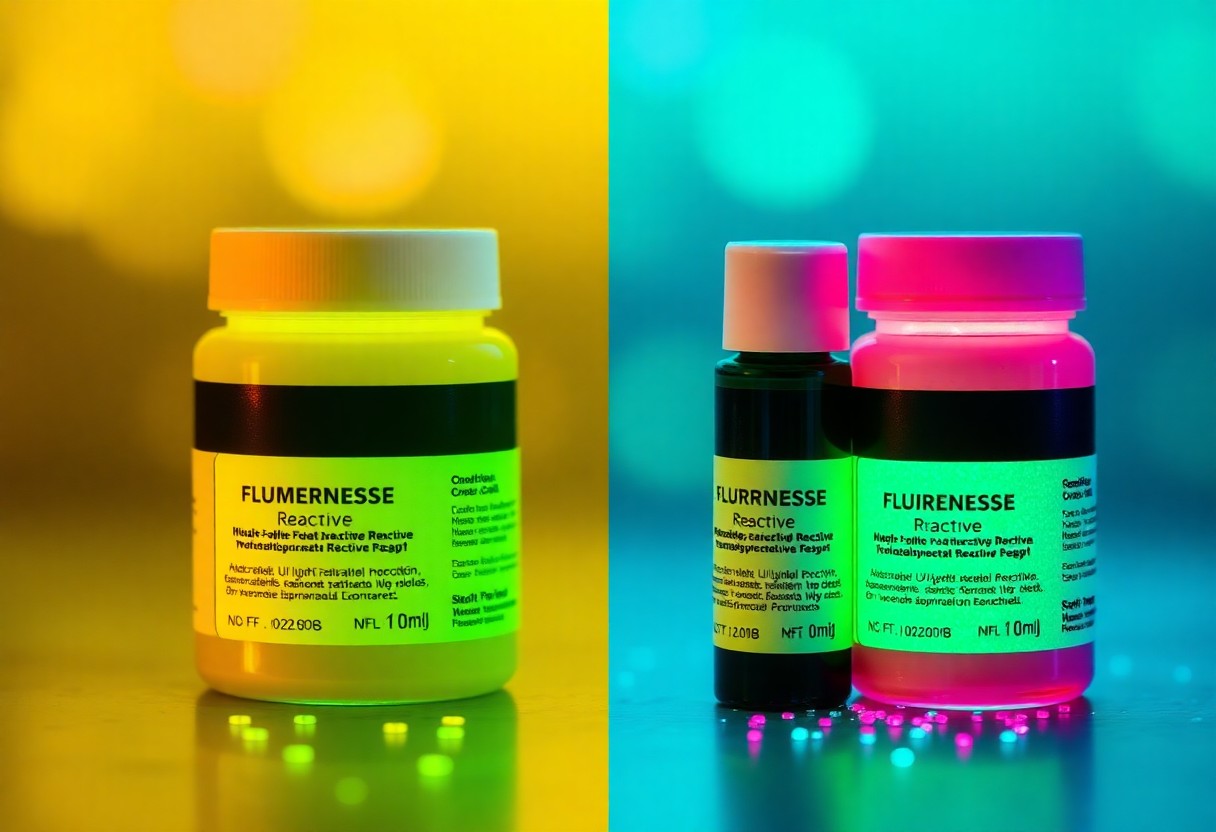
Fluorescence plays a key role in how you perceive UV light products, yet understanding the distinct behaviors of UV Light – Activated (Reactive) and Fluorescence products is crucial for your projects. While both respond to UV black lights, their reactions and appearances under normal light differ significantly. You should know that UV Light – Activated powders remain white until exposed to UV light, then shift colors, whereas Fluorescence powders glow brightly in their inherent colors. Knowing these differences helps you select the right product for applications like hidden markings or vibrant glow effects, optimizing safety and visual impact for your needs.
Table of Contents
Understanding UV Light-Activated (Reactive) Products

UV Light Reactive Powder
While both UV light-activated (reactive) and fluorescence products respond to UV black lights within 365nm to 395nm wavelengths, you will notice that UV light-activated powders appear white under normal light and only reveal vibrant colors like red, green, or blue when exposed to UV lights. This unique trait makes them ideal for hidden markings and secret artwork, offering a striking transformation that engages viewers once UV light is introduced.
Characteristics and Composition
Along with their white, powdery form, UV light-activated powders consist of specially engineered compounds that remain colorless under visible light. When you mix this white powder into transparent substrates such as paint or plastic, it preserves the material’s clarity until UV light exposure triggers the reaction. These products are designed for selective visibility, perfect for subtle yet impactful applications.
Mechanism of Color Change
One key factor in the color change process is the powder’s chemical structure, which absorbs energy from UV black light and then re-emits it at different visible wavelengths. When you expose the white powder to UV black light, its molecules undergo an excited state causing them to emit vibrant colors such as red, blue, or yellow, creating a vivid transformation that is invisible in normal lighting conditions.
Understanding this mechanism helps you appreciate how the UV light-activated powders function at a molecular level; the energy from UV light prompts a chemical reaction within the powder’s structure, altering its light emission properties. This shift results in the visible color change, which is both striking and reversible, allowing you to use these materials to produce dynamic effects. Be aware that prolonged exposure to intense UV light can degrade some compounds over time, so you should consider this when designing long-term applications.
Exploring UV Light Fluorescence Products
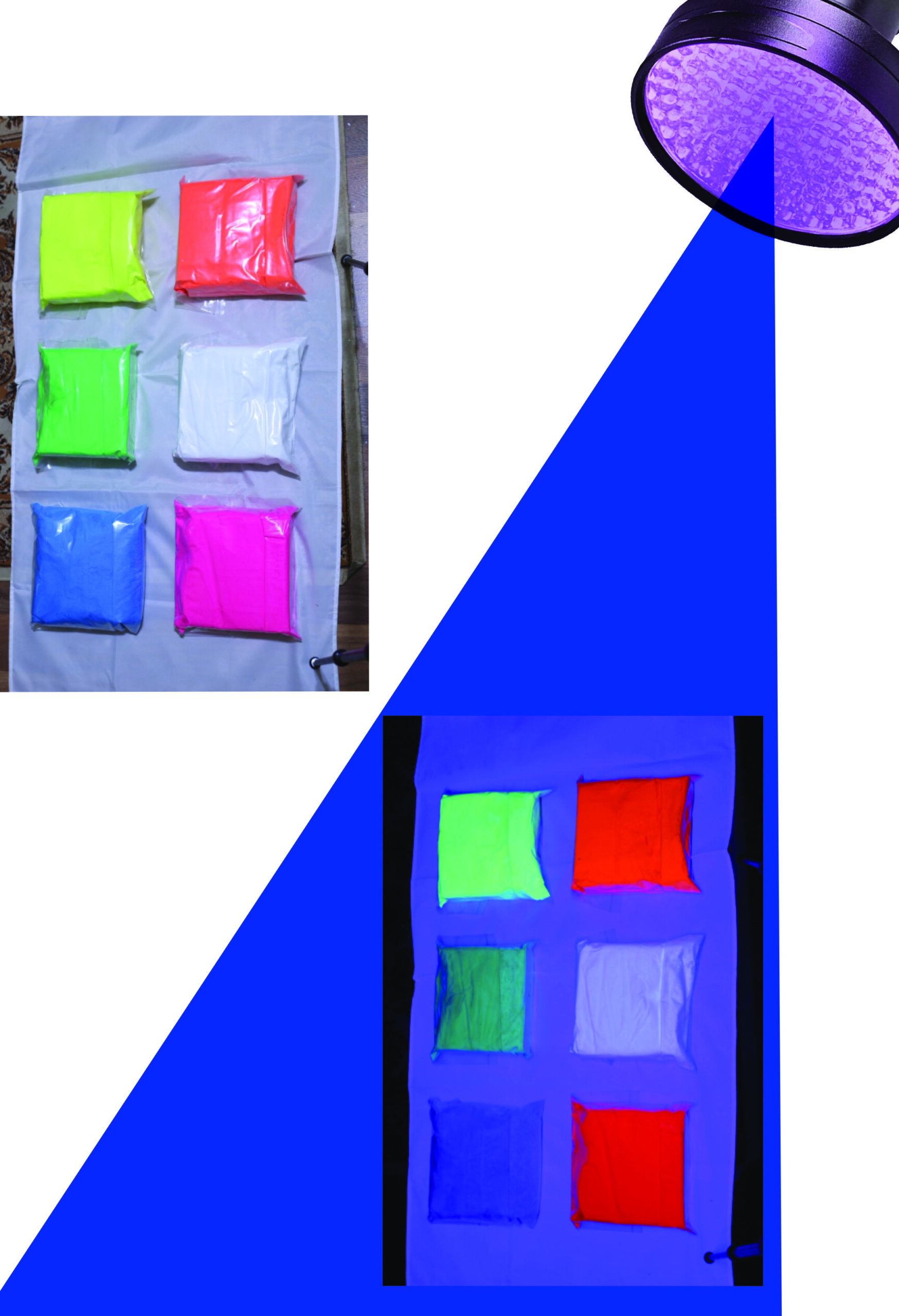
Some UV light fluorescence products display vibrant colors like red, blue, green, yellow, or white under normal lighting conditions. When you expose these products to UV black lights, they don’t change color but instead fluoresce, glowing brighter in their inherent hues. This makes them ideal for enhancing visual effects at parties, art projects, and safety markings where a vivid glow is desired under UV illumination.
Characteristics and Composition
About UV fluorescence powders, you will find they already possess distinct colors visible in normal light. These powders consist of phosphors and fluorescent dyes embedded in a white powder base, often designed to mix smoothly into transparent materials like paint or plastic. Importantly, you should note that the powders are stable but may contain chemicals requiring careful handling, especially in large quantities.
Mechanism of Fluorescence
At the molecular level, fluorescence occurs when UV black light excites the electrons within the powder’s phosphors. This excitation causes electrons to jump to higher energy states before quickly falling back, emitting visible light in the process. The visible glow corresponds to the powder’s original color, intensifying the brightness you see under UV illumination.
Composition plays a key role in how fluorescence behaves. UV fluorescence powders contain special phosphors that absorb UV wavelengths (365nm to 395nm) and efficiently re-emit light at longer visible wavelengths. While generally safe for casual use, you must be mindful of handling instructions, as some fluorescent compounds can be toxic or irritative in powdered form. Understanding this mechanism helps you choose appropriate products for enhancing visual effects without unintended risks.
Applications of UV Light-Activated (Reactive) Products
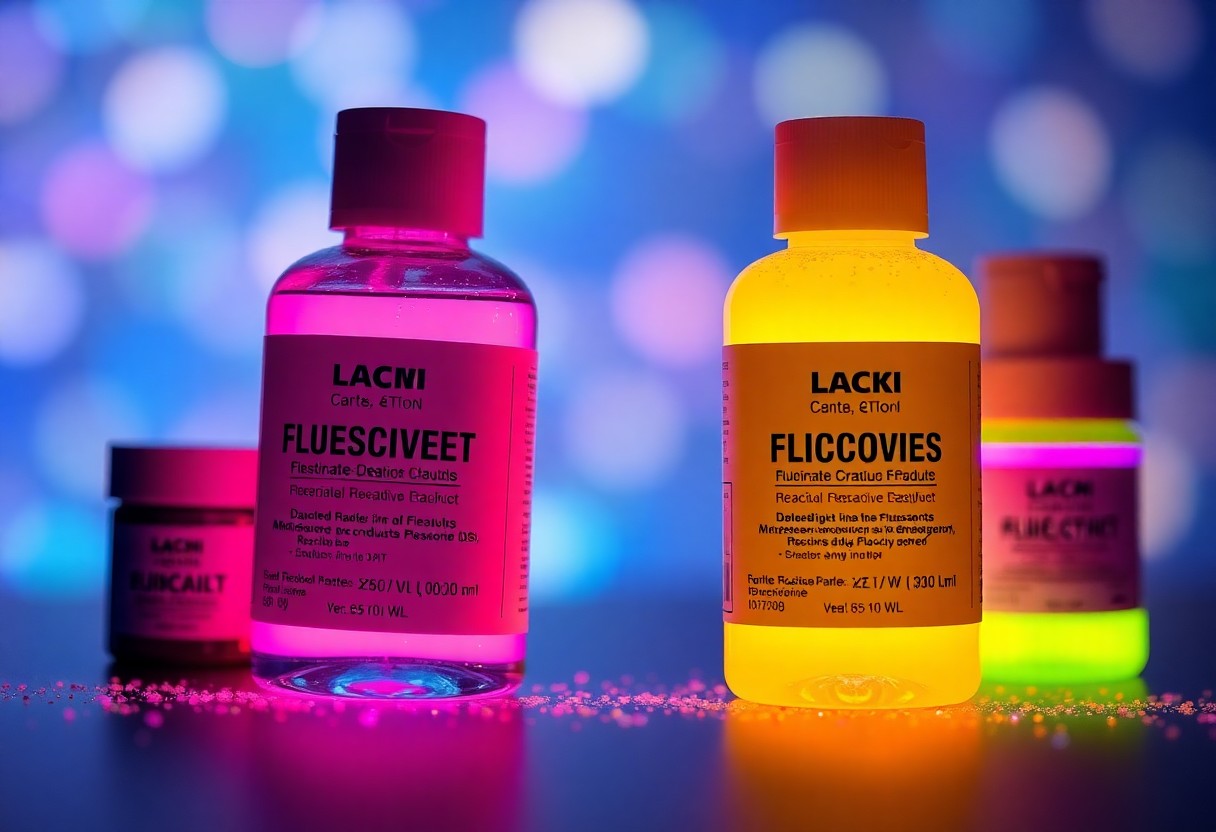
Clearly, UV Light-Activated (Reactive) products offer unique advantages for specialized applications where invisibility under normal light is important. You can use these white powders to create markings or designs that remain hidden until exposed to UV black lights (365nm to 395nm). Their ability to change color dramatically under UV light makes them ideal for security, authentication, and personalized creative projects, giving you a discreet yet vivid visual effect only revealed under specific conditions.
Hidden Markings and Security Features
Hidden within plain sight, UV Light-Activated powders allow you to apply invisible markings and security features on documents, products, or packaging. Since these powders appear white under normal lighting but transform into bright colors like red, green, or blue under UV black lights, you can use them to authenticate items or conceal information without altering the item’s appearance to the naked eye.
Art Projects and Creative Uses
Below the surface of ordinary materials, these reactive powders enable you to add surprising color effects only visible under UV black lights. By mixing the white powder into transparent substrates such as paint or plastic, you can create dynamic artworks or décor that reveal hidden layers, perfect for immersive art experiences or UV glow-themed events.
Creative projects become more engaging when you incorporate UV Light-Activated powders, as they transform your art from ordinary to interactive. You have the freedom to design hidden images or patterns that only emerge under UV lighting, making your work uniquely intriguing and interactive. This technique adds a layer of security or mystery that fluorescence powders can’t match, allowing you to intrigue your audience while giving your creations a distinct and memorable appeal.
Applications of UV Light Fluorescence Products
Once again, UV Light Fluorescence Products offer versatile solutions for your creative and practical needs. Unlike UV Light Activated materials, these powders glow brightly in their own colors under UV black lights, making them ideal for vibrant visual effects. You can explore a wide range of uses by incorporating UV Light Reactive Materials into your projects, from artistic expressions to everyday safety enhancements.
Party Decorations and Themed Events
Below, UV Light Fluorescence Products become your go-to for creating lively party decorations and immersive themed events. Since these powders already show color under normal light and glow brighter under UV black lights, your decorations will stand out with vivid hues, perfect for UV glow parties, concerts, or festivals. Mixing them into paints or fabrics can maintain brilliant visuals throughout the event, enhancing the overall atmosphere.
Safety and Signage
Fluorescence powders are extensively used in safety and signage applications where visibility is key. Their ability to glow brightly under UV black lights ensures that signs, markers, and safety gear catch attention even in low-light or dark environments, helping you maintain clear communication and hazard awareness when needed most.
Understanding the benefits of fluorescence in safety means you can apply these powders to create highly visible markings that enhance hazard detection and guide people effectively. While the glowing effect improves nighttime and low-light visibility, you should also consider that their color is visible under normal light, ensuring continuous identification. This dual visibility can prevent accidents and improve response times in emergencies, giving you a reliable tool to boost safety measures.
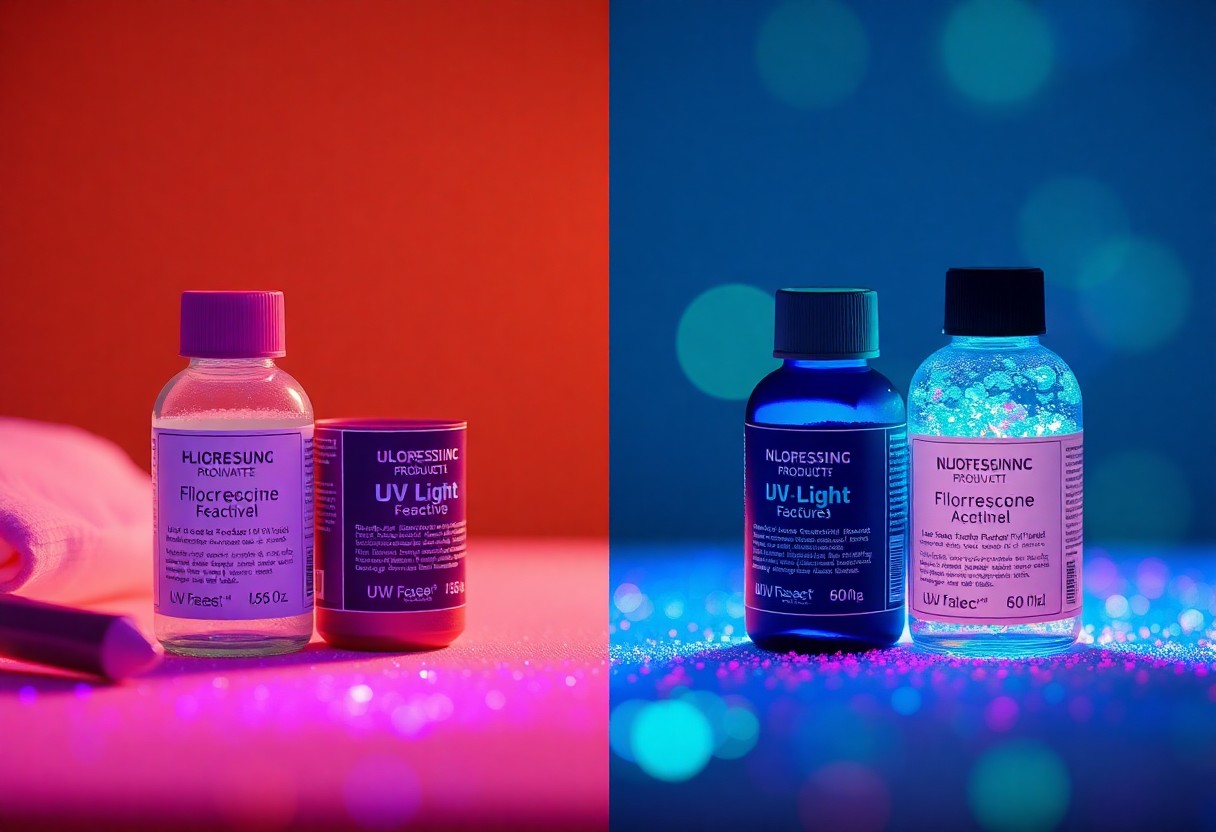
Comparison of Visual Effects
For you to understand the difference, here is a quick visual comparison between UV Light – Activated (Reactive) and Fluorescence Products under different lighting conditions.
| UV Light – Activated (Reactive) | UV Light Fluorescence |
|---|---|
| White powder under normal light, changes to bright colors like red, green, blue, or yellow under UV light | Colored powder under normal light (red, blue, green, yellow, white), glows brighter in the same color under UV light |
Under Normal Light Conditions
Normal light shows UV Light – Activated powders as plain white, making them subtle and unnoticeable until activated. In contrast, UV Fluorescence powders display vibrant colors under regular lighting, allowing you to see their hues anytime without needing UV exposure.
Under UV Light Conditions
Against UV black lights, UV Light – Activated powders transform dramatically, revealing hidden colors not seen before, perfect for secretive effects. UV Fluorescence powders simply shine brighter in the colors they already show, enhancing visibility.
Light interaction with UV Light – Activated powders means you can create hidden paintings or markings only visible under UV light, giving you unique control over when and how your designs appear. Fluorescence powders work well for vibrant, glowing effects at parties and art projects, offering immediate color brilliance that amplifies with UV exposure.
Considerations for Selection
To choose between UV Light-Activated (Reactive) and Fluorescence products, consider your project’s purpose and lighting conditions. UV Reactive powders reveal hidden colors only under UV black lights, while fluorescent powders glow brighter in their inherent colors. Your choice also depends on the UV wavelength you plan to use—if you want to learn more about What black light is best? exploring that resource will help guide your decision for optimal effects and safety.
Environmental Factors
The durability of UV-reactive and fluorescence powders can be affected by exposure to sunlight, moisture, and temperature variations. Both powders mixed into transparent substrates are best stored away from direct sunlight to preserve their reaction and glow. Additionally, the surrounding ambient lighting influences visibility under UV black light. After assessing these environmental factors, you can ensure your project maintains its vibrancy and effectiveness over time.
Intended Use Scenarios
Across different applications, your choice between UV Light-Activated and Fluorescence products depends on desired effects. UV Light-Activated powders are perfect for hidden artwork or security markings visible only under UV black lights. Fluorescent powders work well for brightly glowing decorations and party aesthetics, enhancing visibility in low-light environments.
Scenarios involving UV Light-Activated products often include hidden messages or secret paintings only visible under UV black light, ideal for secure identification or subtle artistic expressions. Conversely, UV Fluorescence products are suited for vibrant displays, safety gear, and glow parties, where you want immediate color visibility and enhanced brightness. You should be mindful that UV black lights must be compatible with the powders’ activation wavelengths (365nm–395nm) to achieve the desired reactions without risking overexposure to harmful UV radiation. By understanding these differences, you ensure your project’s safety and success.
Summing up
Taking this into account, you can see that UV Light-Activated (Reactive) products and UV Light Fluorescence products serve distinct purposes based on their unique reactions to UV black lights. The reactive powders change color only under UV exposure, making them ideal for hidden markings and secret artworks, while fluorescence powders glow brighter in their natural hues and are perfect for vibrant displays and glowing effects. Understanding these differences allows you to select the right product for your creative or functional needs, ensuring the desired visual impact under UV light conditions.
Q: What are the primary differences between UV Light-Activated (Reactive) powders and UV Fluorescence powders?
A: The main difference lies in their appearance under normal light and their response to UV black light. UV Light-Activated powders appear white under normal light and change color only when exposed to UV black light, while UV Fluorescence powders show distinct colors under normal light and glow brighter in those same colors under UV black light.
Q: How does the white UV Light-Activated powder change color when exposed to UV black light?
A: UV Light-Activated powders contain molecules that undergo a photochemical reaction upon exposure to UV black light within wavelengths of 365nm to 395nm. This reaction alters their molecular structure, causing them to emit visible colors such as red, green, blue, or yellow. Essentially, the powder transitions from appearing white to vibrant colors by absorbing UV light and re-emitting it in the visible spectrum.
Q: What happens to UV Fluorescence powders when exposed to UV black lights?
A: UV Fluorescence powders absorb the ultraviolet radiation and instantly re-emit it as visible light, causing the powders to glow or fluoresce in their inherent colors. Unlike UV Light-Activated powders, which change color, fluorescence powders simply intensify their existing color’s brightness, creating a glowing effect under UV illumination.
Q: In what applications are UV Light-Activated (Reactive) powders most effectively used?
A: UV Light-Activated powders are ideal for creating hidden paintings, security markings, and invisible designs that remain unseen under normal light but become vividly visible under UV black light. This makes them useful in security printing, counterfeit prevention, and secret artwork that requires covert visibility.
Q: What are common uses for UV Fluorescence powders?
A: UV Fluorescence powders are popular for decorative purposes such as creating glowing art projects, body painting, UV glow-themed parties, theatrical effects, and safety markings that need to be clearly visible under both normal and UV lighting. Their bright and vibrant fluorescence enhances visual impact in both light conditions.
Q: Can both UV Light-Activated and UV Fluorescence powders be mixed into paints or plastics?
A: Yes, both types of powders come in powder form and can be incorporated by mixing into clear or transparent substrates like paints, plastics, or resins. This allows them to be integrated seamlessly into various materials for artistic, decorative, or functional applications.
Q: How does the wavelength range of UV black lights affect the activation of these powders?
A: Both UV Light-Activated and UV Fluorescence powders are designed to respond within a UV black light wavelength range of approximately 365nm to 395nm. Exposure to this specific range triggers their respective photochemical or photophysical responses, ensuring optimal color change or fluorescence effects.
More About