Thermochromic Pigment for Temperature Color Changing Effects
Create dynamic color-changing effects with thermochromic pigments that react to temperature changes. These pigments shift from one color to another when exposed to heat or cold, making them ideal for interactive products, coatings, and creative applications.
• Changes color with heat or temperature variation
• Reversible effect (returns to original color when cooled)
• Suitable for paint, inks, coatings, and resin systems
Ideal for mugs, packaging, labels, security features, and interactive design applications.

Heat Activated Effect
Overview
Thermochromic pigments are advanced color-changing materials that react to temperature changes. When exposed to heat or cold, these pigments shift between colors or from visible to transparent, creating dynamic and interactive visual effects.
What is Thermochromic Pigment?

Thermochromic pigment is a heat-sensitive powder that changes color at specific temperatures. As the temperature rises or falls, the pigment transitions between two colors or fades from opaque to transparent, revealing underlying designs.
This reversible effect allows materials to respond instantly to temperature changes, making it ideal for interactive products and functional coatings.
Widely used in mugs, packaging, labels, textiles, and industrial coatings, thermochromic pigments add both functionality and visual impact. They are commonly applied in paints, inks, plastics, and resins to create temperature-responsive surfaces for creative, commercial, and safety applications.
Benefits
Thermochromic pigments offer dynamic color-changing functionality driven by temperature. Designed for both creative and industrial applications, they provide reliable performance, repeatable color transitions, and strong visual impact across multiple materials.
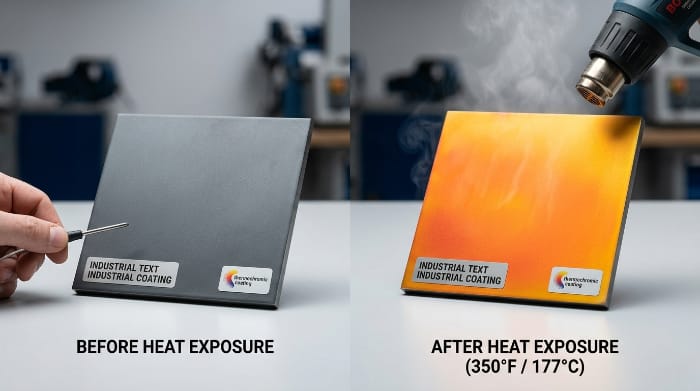
Engineered for consistent performance across repeated heating and cooling cycles.
Why Choose Thermochromic Pigments?
- • Temperature-Activated Color Change – Transitions at specific activation temperatures
• Reversible & Repeatable – Returns to original color when temperature changes
• Wide Material Compatibility – Works with paints, inks, epoxy, plastics, and coatings
• Strong Visual Impact – Vibrant and noticeable color transitions
• Custom Activation Ranges – Available in different temperature thresholds (e.g. 25°C, 31°C, 45°C)
• Enhances Product Interactivity – Ideal for smart, responsive, and engaging designs
How To Use
Learn how to use thermochromic pigment to create temperature-activated color changing effects for mugs, coatings, packaging, and creative applications. Follow these simple steps for best results.
Choose Activation Temperature
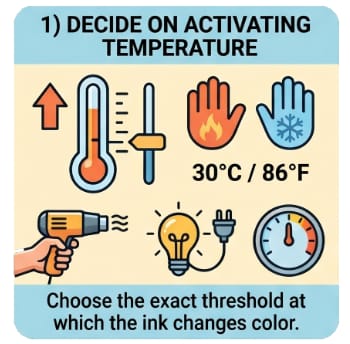
Select the activation temperature based on your application. Common ranges include 25°C, 31°C, and 45°C. The pigment will change color when this temperature is reached, making it ideal for heat-sensitive designs like mugs, labels, and safety indicators.
Prepare Your Design or Base Layer

Create your artwork, print, or base color layer first. This will be the visible design revealed when the thermochromic coating changes. Use high-contrast colors for stronger visual effects.
Apply Thermochromic Coating
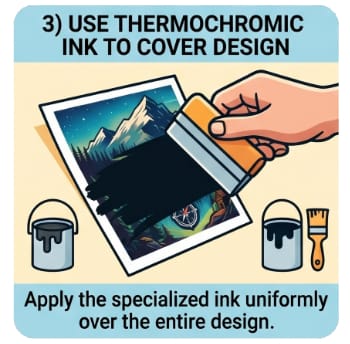
Mix thermochromic pigment with a suitable clear medium such as paint, ink, or resin. Apply an even layer over your design using brush, spray, or screen printing. Ensure consistent coverage for smooth color transition.
Activate with Temperature Change
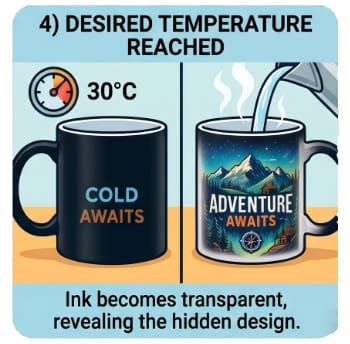
Expose the surface to heat or temperature change. As the activation temperature is reached, the coating becomes transparent or shifts color, revealing the design underneath. The effect is reversible when temperature drops.
Applications / Use Cases
Your content goes here. Edit or remove this text inline or in the module Content settings. You can also style every aspect of this content in the module Design settings and even apply custom CSS to this text in the module Advanced settings.

Art & DIY Projects
Interactive paintings and creative designs

Printing & Packaging
Temperature indicators and smart labels

Industrial Coatings
Heat-sensitive safety coatings

Textiles & Apparel
Color-changing fabrics and fashion
Available Options
Choose the right thermochromic pigment based on activation temperature. Different temperature ranges allow you to create heat-sensitive, color-changing effects for mugs, packaging, coatings, and industrial applications.
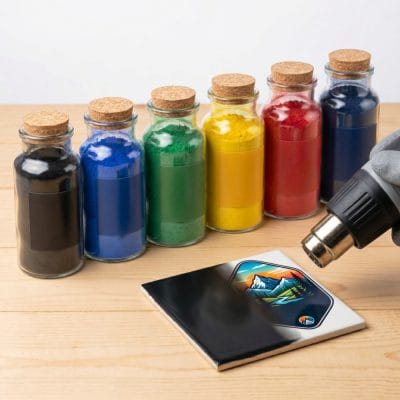
Custom activation temperatures are available for specific applications and bulk orders.
Frequently Asked Questions
What are thermochromic pigments?
Thermochromic pigments are temperature-sensitive pigments that change color when heated or cooled beyond a specific activation temperature. They are usually dark colored applied over an image. When the specific temperature is reached, the dark color becomes transparent and starts to reveal the image below.
What temperature do thermochromic pigments activate at?
For mugs and touch-sensitive products, 31°C–33°C is usually the most popular.
For industrial applications, higher temperatures such as 45°C or 65°C may be preferred.
For extremely hot surfaces like iron or stoves, activation could start and 120°C.
What are thermochromic pigments commonly used for?
Common applications include mugs, labels, packaging, textiles, resin art, industrial indicators, and temperature-sensitive coatings.
Are thermochromic pigments reversible?
Yes. Most thermochromic pigments are reversible and return to their original color when the temperature changes back.
Can thermochromic or photochromic pigment be mixed into paint or resin?
Yes. Thermochromic or Photochromic pigments can be mixed into clear paints, inks, plastics, and epoxy systems for temperature-sensitive color changing effects.
Mixing ratio is 10 to 15% powder measured by weight.
Know someone who needs this? Share it.
Ready To Get Started With Thermochromic Pigment
Get Expert Advice or Order Directly
Choose the option that works best for you.