What Is a Thermochromic Effect?
A thermochromic effect occurs when a material changes appearance based on temperature. The change may be:
- One color to another
- Colored to transparent
- Transparent to colored
- Dark to light
- Matte to vibrant
The effect can happen gradually or suddenly depending on the pigment formulation.
Most commercial thermochromic systems use microencapsulated liquid crystal or leuco dye technology.
How Thermochromic Pigments Work
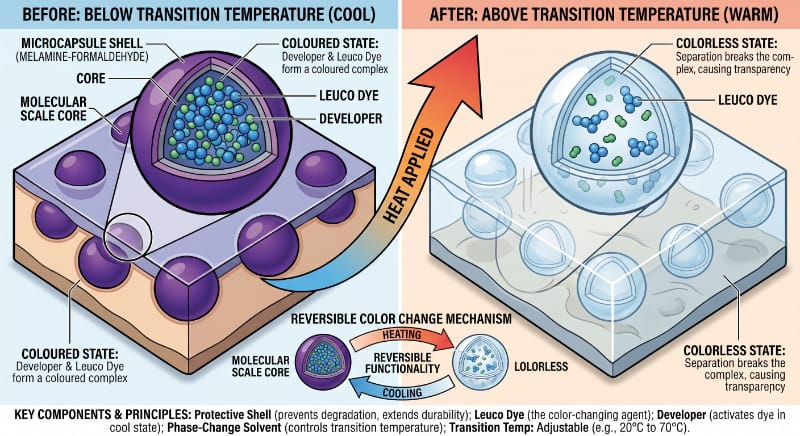
Thermochromic pigments contain microscopic capsules that react to heat. Inside these capsules are chemical systems that alter how light is absorbed and reflected.
When the temperature reaches a specific activation point:
- The molecular structure changes
- The visible color changes
- The original color may disappear or transform
Once the temperature drops, the color usually returns.
Common activation temperatures include:
- 15°C
- 27°C
- 31°C
- 43°C
Different activation points are chosen depending on the application.
Types of Thermochromic Effects
Reversible Thermochromic Effects
These return to the original color when temperature changes back.
Examples:
- Mood products
- Temperature mugs
- Interactive prints
- Reusable packaging indicators
This is the most common type.
Irreversible Thermochromic Effects
These permanently change color after reaching a certain temperature.
Examples:
- Heat exposure warning labels
- Sterilization indicators
- Tamper evidence systems
- Industrial safety indicators
These are often used where permanent visual confirmation is needed.
Common Forms of Thermochromic Materials
Thermochromic Powder
For projects requiring a heat-sensitive colour-changing effect, Thermochromic Powder can be incorporated into compatible paints, coatings and other materials.
Thermochromic effects can be added into many products including:
- Paint
- Ink
- Powder pigment
- Epoxy resin
- Plastics
- Fabric coatings
- Nail polish
- Screen printing ink
- UV printing systems
- Automotive coatings
- Spray paint formulations
Practical Uses of Thermochromic Materials
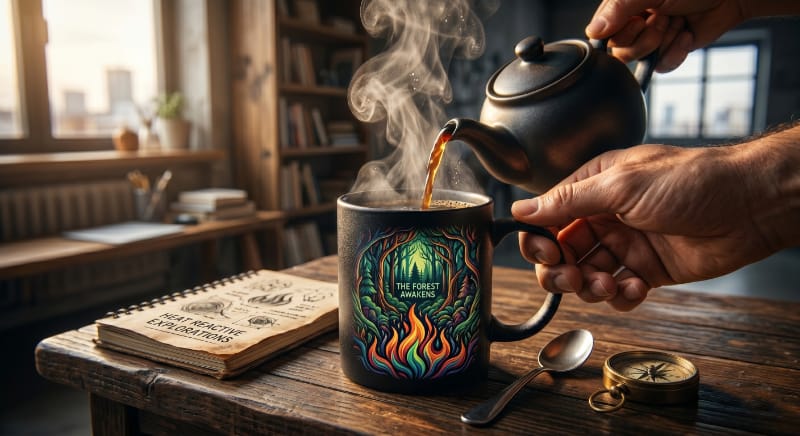
Temperature Warning Indicators
Thermochromic coatings can visually warn users when a surface becomes too hot or cold.
Applications include:
- Baby bottles
- Coffee cups
- Cooking equipment
- Electronics
- Machinery
Interactive Packaging
Brands use heat-sensitive printing to create engaging packaging experiences.
Examples:
- Beverage cans
- Food containers
- Promotional packaging
- Limited edition product labels
Cold drinks may reveal hidden graphics or logos when chilled.
Safety and Industrial Applications
Thermochromic technology is widely used in industrial monitoring.
Uses include:
- Overheating detection
- Pipeline monitoring
- Battery temperature indicators
- Electrical component testing
- Heat mapping systems
Printing and Promotional Products
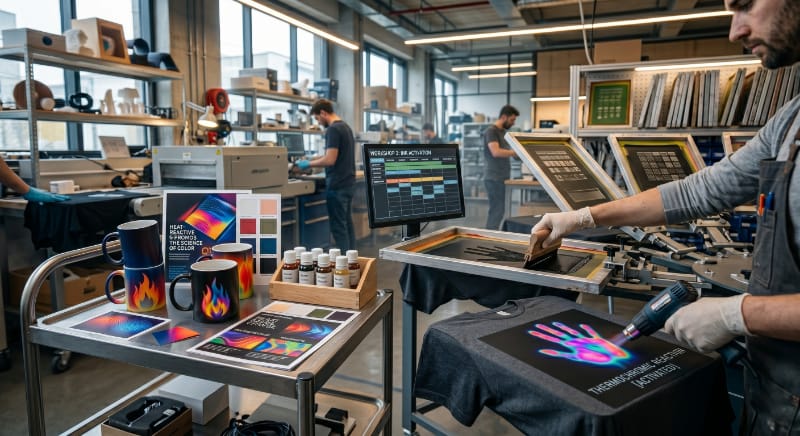
Thermochromic inks are popular in:
- Screen printing
- Offset printing
- Flexographic printing
- UV printing
Used on:
- T-shirts
- Stickers
- Posters
- Event merchandise
- Business promotions
Art and Decorative Effects
Artists and designers use thermochromic paint for:
- Interactive murals
- Hidden artwork
- Dynamic canvas effects
- Event installations
- Glow room designs
Combining thermochromic and glow-in-the-dark effects can create layered visual experiences.
Thermochromic Paint Applications
Wall Art & Murals
Heat-sensitive paints can reveal hidden images when touched or heated.
Popular for:
- Entertainment venues
- Escape rooms
- Clubs
- Interactive exhibitions
Automotive & Custom Finishes
Some specialty automotive coatings use thermochromic pigments to create:
- Color shift panels
- Heat-reactive graphics
- Engine heat indicators
These are usually decorative rather than permanent OEM finishes.
Product Prototyping & Innovation
Designers use thermochromic coatings in:
- Smart product concepts
- Educational tools
- Interactive toys
- Consumer electronics
Thermochromic Printing Methods
Screen Printing
One of the most common methods because thicker ink layers improve visibility.
Good for:
- Apparel
- Posters
- Packaging
- Promotional products
UV Printing
UV-curable systems can incorporate thermochromic pigments for specialty printing applications.
Used for:
- Labels
- Packaging
- Plastic surfaces
- Signage
Pad Printing
Used on smaller objects like:
- Pens
- Bottles
- Promotional items
- Electronics
For projects requiring a heat-activated colour change, Thermochromic Powder can be incorporated into compatible coatings, paints and other materials to create a temperature-responsive effect.
Important Limitations
Thermochromic materials also have limitations.
UV Exposure
Long-term sunlight exposure can degrade the pigments over time.
Outdoor use often requires:
- UV-resistant topcoats
- Protective clear coatings
- Controlled exposure
Temperature Range Sensitivity
Each pigment only works within a designed temperature range.
Choosing the wrong activation point may reduce effectiveness.
Durability
Frequent abrasion or chemical exposure may reduce performance.
Industrial-grade systems often require specialized binders and coatings.
Thermochromic vs Photochromic
People often confuse thermochromic and photochromic materials.
- Thermochromic = reacts to heat
- Photochromic = reacts to UV light
One changes from temperature, while the other changes from light exposure.
Future of Thermochromic Technology
Modern thermochromic materials are increasingly being integrated into:
- Smart packaging
- Wearable technology
- Medical indicators
- Energy efficient systems
- Interactive architecture
As printing and coating technologies improve, thermochromic effects are becoming more durable, vivid, and commercially practical.
Other Colour-Changing Technologies
Thermochromic materials react to temperature, while photochromic materials respond primarily to light exposure. See our Photochromic Materials Guide for a comparison of light-activated colour-changing effects.