Introduction
UV reactive and UV fluorescent products are often used interchangeably, but there are subtle differences in how these materials behave under ultraviolet light. Understanding how fluorescence works helps artists, manufacturers, event organizers, and DIY users choose the right product for their projects.
UV light reactive and UV fluorescent products have become increasingly popular in art, entertainment, safety applications, themed environments, and creative design. Under normal lighting conditions, these products may appear bright and colorful, but when exposed to ultraviolet (UV) light or black light, they suddenly emit intense glowing colors that create dramatic visual effects.
Although the terms “UV reactive” and “UV fluorescent” are often used interchangeably, there are subtle differences in how these materials behave, how they are formulated, and where they are best used.
Understanding these differences helps artists, event organizers, hobbyists, and industrial users choose the right product for their projects.
UV Reactive vs Glow in the Dark
“UV reactive” and “UV fluorescent” products do not! Glow in the Dark. They only glow under UV Black light. For a more detailed explanation, refer to Beginner Guide to Special Effect Pigments
What Are UV Light Reactive Products?
UV light reactive products are materials that visibly respond when exposed to ultraviolet light. These products contain special fluorescent pigments, dyes, or compounds that absorb UV radiation and instantly emit visible light.
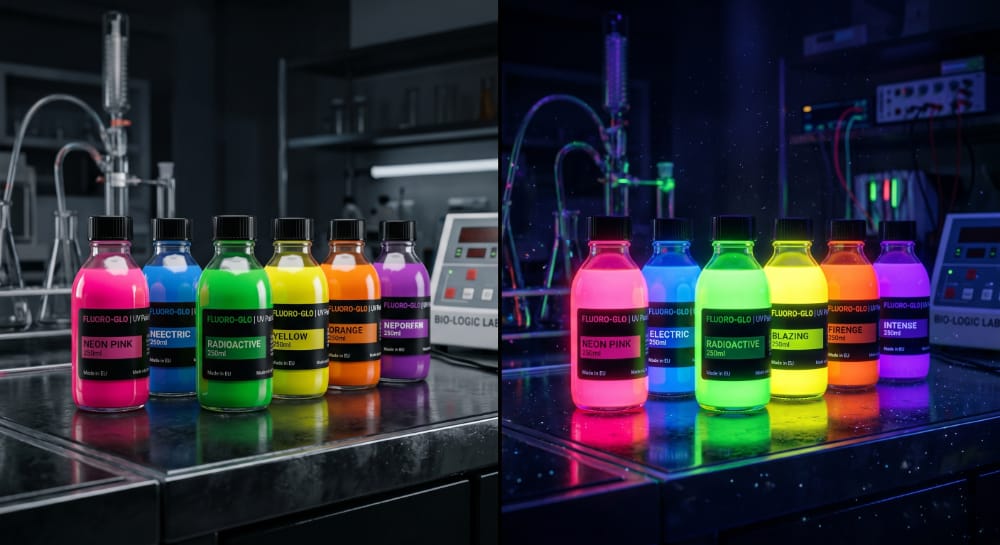
Under ordinary lighting, the colors may appear vibrant or pastel-like. However, under black light, they become intensely luminous.
Common UV Reactive Products
- UV reactive paint
- UV pigments
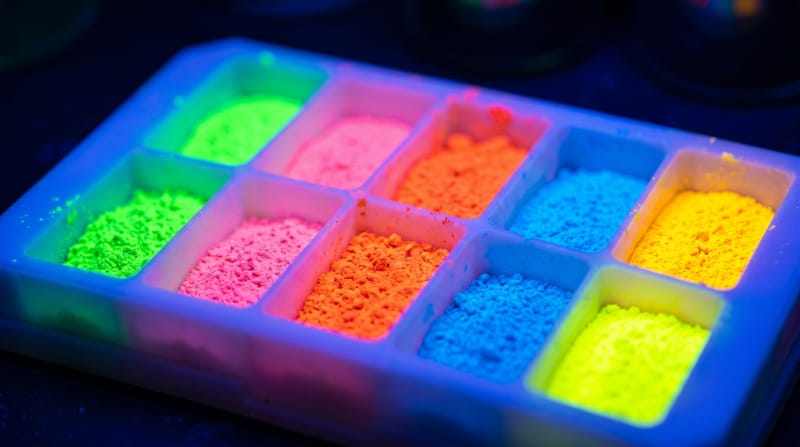
- UV fluorescent powders
- UV inks
- UV nail polish
- UV fabrics and textiles
- UV body paint
- UV epoxy additives
UV Materials
If you are choosing between different UV-reactive materials, our UV Fluorescent Powder, UV Reactive Powder and UV Black Light Paint ranges provide practical options for creating visible fluorescence under UV illumination.
How UV Fluorescence Works
UV fluorescence occurs when fluorescent materials absorb invisible ultraviolet radiation and instantly emit visible light.
When UV light strikes fluorescent pigments or dyes, their molecules become energized. As the molecules return to their normal state, they release energy in the form of visible light, creating the bright neon glow associated with UV reactive products.
Unlike phosphorescent glow materials, fluorescent products react immediately and stop glowing the moment the UV light source is removed.
The intensity of the fluorescent effect depends on several factors including:
- UV wavelength
- Pigment quality
- Pigment concentration
- Ambient lighting conditions
- Surface color and finish
This instant-response effect is what makes UV fluorescent materials highly effective for blacklight environments, stage productions, artistic installations, and visual displays.
UV Fluorescent vs UV Reactive
Many people mistakenly think fluorescent products are the same as glow-in-the-dark materials, but they behave very differently.
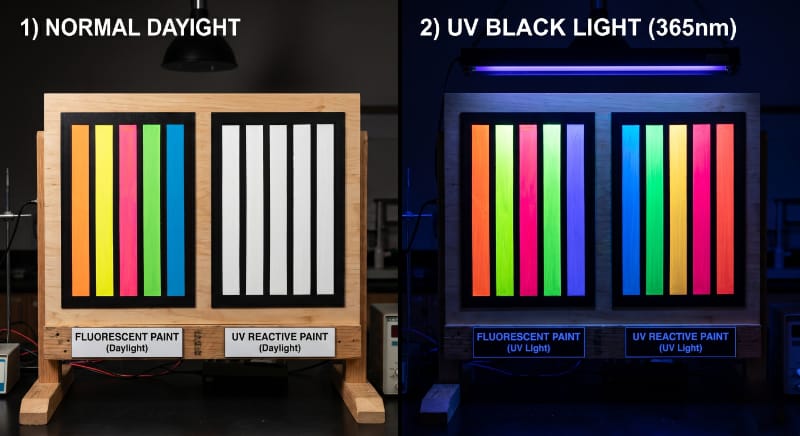
| Feature | UV Fluorescent | UV Reactive |
|---|---|---|
| Appearance under normal light | Different Colors | White |
| Appearance under UV light | Different Colors | Different Colors |
| Requires UV Black Lights | Yes | Yes |
| Activation | Instant under UV Light | Instant under UV Light |
| Best for | Black light environments | Hidden art, drawings, text |
Glow-in-the-dark products use phosphorescence, while UV reactive products use fluorescence.
Types of UV Fluorescent Products
UV Fluorescent Paint
These paints contain fluorescent pigments that emit vivid colors under black light.
Popular uses include:
- Wall murals
- Stage props
- Event decorations
- Club interiors
- Escape rooms
- Haunted attractions
UV Fluorescent Powder
Powders can be mixed into:
- Paint
- Resin
- Plastics
- Ink
- Coatings
- Cosmetics
These powders provide flexibility for custom formulations.
UV Reactive Ink
Commonly used in:
- Security printing
- Anti-counterfeit markings
- Promotional materials
- Artwork
UV Body Paint
Widely used at:
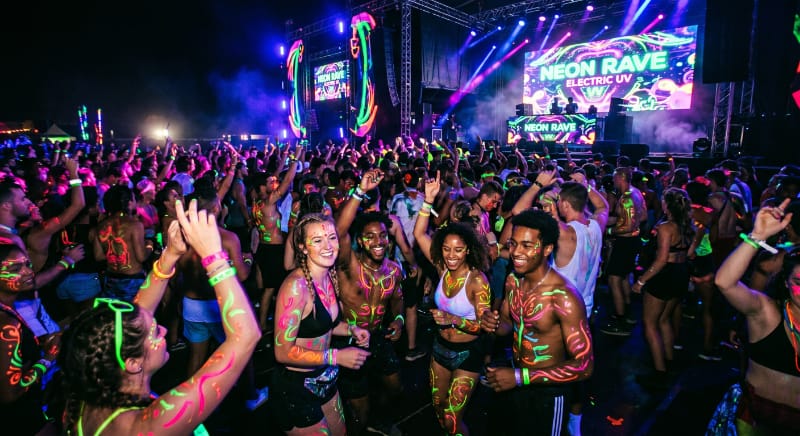
- Music festivals
- Dance events
- Parties
- Performance art
For surfaces that need to produce a strong visible reaction under UV illumination, UV Black Light Paint offers a ready-to-use alternative to loose fluorescent powder.
For strong fluorescence under UV illumination, UV Fluorescent Powder provides a versatile pigment that can be incorporated into suitable paints, coatings, inks and creative projects.
Best UV Light Sources for Fluorescent Effects
The type of UV light used has a major impact on brightness and overall fluorescent performance.
Most UV reactive products respond best to ultraviolet wavelengths between 365nm and 395nm.
365nm UV Blacklights
365nm UV lights produce stronger fluorescence with less visible purple light. These are commonly used for professional applications, inspections, photography, and high-performance fluorescent displays.
395nm UV Blacklights
395nm blacklights are more affordable and commonly used for parties, decorative lighting, and general blacklight effects. They produce more visible purple light while still activating fluorescent pigments effectively.
Common UV Light Types
- LED blacklights
- UV floodlights
- Fluorescent blacklight tubes
- Portable UV flashlights
- UV inspection lamps
For maximum brightness, darker environments and higher-quality UV light sources generally produce better fluorescent effects.
UV Lighting
The UV source is also important when selecting fluorescent materials. Our Ultimate Guide to UV Black Lights explains the differences between common 365nm and 395nm UV lights.
Applications of UV Light Reactive Products
Entertainment and Events
UV reactive products are extremely popular in entertainment because they create immersive glowing environments.
Common applications include:
- Nightclubs
- Glow parties
- Music festivals
- Bowling alleys
- Escape rooms
- Haunted houses
- Stage performances
The intense fluorescent glow creates visually exciting spaces that are highly memorable.
Art and Creative Design
Artists use fluorescent paints to create dynamic pieces that transform under UV lighting.
Popular artistic uses include:
- Black light murals
- Canvas paintings
- Street art
- Sculptures
- Resin artwork
- Custom sneakers
- Airbrushing
Many artists combine daylight-visible pigments with UV fluorescent effects for dual-appearance artwork.
If you need a material that changes from a relatively pale appearance under normal lighting to a stronger colour under UV, UV White-to-Colour Powder is designed for this type of effect.
Safety and Industrial Uses
UV fluorescent products also serve practical purposes.
Safety Markings
Fluorescent coatings improve visibility in low-light environments.
Used for:
- Emergency exits
- Safety pathways
- Industrial hazards
- Warning labels
Leak Detection
Certain fluorescent dyes are added to fluids so leaks become visible under UV light.
Common in:
- Automotive systems
- HVAC servicing
- Industrial maintenance

Security and Anti-Counterfeiting
Invisible fluorescent inks are often used for security printing because they remain hidden under normal lighting.
Applications include:
- Currency security
- Identification cards
- Tickets
- Packaging authentication
- Brand protection
Under UV light, hidden markings become visible.
For applications where the marking should remain difficult to see under normal lighting, Invisible UV Ink provides a practical solution. The ink becomes visible when illuminated with a suitable UV black light.
Indoor vs Outdoor UV Products
Not all fluorescent materials perform equally outdoors.
Indoor UV Products
Indoor formulations prioritize brightness and intense fluorescence.
Best for:
- Clubs
- Parties
- Indoor art
- Decorations
Outdoor UV Products
Outdoor UV reactive products require additional resistance against:
- Sunlight
- Moisture
- Heat
- UV degradation
Without UV-resistant binders, fluorescent pigments may fade over time in direct sunlight.
Limitations of UV Fluorescent Products
Despite their impressive appearance, fluorescent products have limitations.
Requires UV Light
The effect depends entirely on black light exposure.
Sunlight Fading
Some fluorescent pigments degrade faster under strong UV exposure.
Lower Durability
Certain fluorescent colors may not last as long as conventional pigments outdoors.
Color Shift
Under daylight, some fluorescent paints appear different compared to their UV glow appearance.
Indoor vs Outdoor UV Reactive Applications
UV reactive products can be used both indoors and outdoors, but environmental exposure greatly affects durability and performance.
Indoor applications typically maintain fluorescent brightness longer because they are protected from weather, moisture, and prolonged sunlight exposure.
Outdoor applications require additional considerations such as:
- UV resistance
- Weather resistance
- Water resistance
- Heat exposure
- Surface preparation
- Protective clear coatings
Continuous sunlight exposure can gradually reduce fluorescence over time, especially with lower-quality pigments. For outdoor projects, UV-stable fluorescent pigments and protective coatings help improve longevity and color retention.
Common outdoor applications include:
- Safety markings
- Event signage
- Decorative pathways
- Architectural accents
- Outdoor art installations
Proper product selection is essential for maintaining strong fluorescent effects in demanding environments.
Choosing the Right UV Reactive Product
The performance of UV-reactive materials depends heavily on the light source. For help selecting a suitable lamp or torch, see our UV Black Lights range.
When selecting a UV fluorescent product, consider:
Intended Environment
- Indoor or outdoor?
- Permanent or temporary?
- Decorative or industrial?
Surface Compatibility
Choose products designed for:
- Wood
- Concrete
- Plastic
- Fabric
- Metal
- Resin
Brightness Requirements
Different fluorescent pigments vary in intensity.
Typically brightest:
- Neon green
- Neon yellow
- Neon orange
UV Light Sources Matter
The type of UV light affects brightness significantly.
Best UV Wavelength
Most fluorescent products respond strongest to:
- 365nm UV light
- 395nm black light
365nm UV usually produces stronger fluorescence with less visible purple light spill.
Why Some UV Products Glow Brighter Than Others
Not all UV reactive products produce the same level of brightness. Several factors influence how intense the fluorescent effect appears under blacklight.
Pigment Concentration
Higher fluorescent pigment concentrations generally create stronger and more vivid glow effects.
UV Wavelength
Different fluorescent pigments respond differently to specific UV wavelengths. Many products achieve peak performance under 365nm UV lighting.
Ambient Lighting
Fluorescent effects appear much brighter in darker environments. Bright surrounding light can reduce the visible impact of UV fluorescence.
Surface Color
White or light-colored surfaces often enhance fluorescent visibility, while darker surfaces may absorb some of the emitted light.
Binder Transparency
In paints, resins, and coatings, transparent binders allow UV light to reach the pigments more effectively, improving brightness.
Pigment Quality
Professional-grade fluorescent pigments usually provide stronger color intensity, better UV response, and improved durability compared to lower-grade materials.
Understanding these factors helps users select the right combination of pigments, surfaces, and UV lighting for maximum visual impact.
Safety Considerations
Most modern fluorescent products are safe when used properly, but users should still:
- Avoid prolonged skin exposure to industrial products
- Use ventilation during painting
- Wear protective equipment if spraying
- Follow manufacturer safety instructions
Always check whether products are:
- Non-toxic
- Water-based
- Solvent-based
- Skin-safe
Environmental Considerations
Modern fluorescent products are generally much safer than older chemical formulations.
Many high-quality manufacturers now offer:
- Low-VOC paints
- Water-based formulas
- Non-radioactive glow systems
- Eco-conscious coatings
Choosing reputable products improves both safety and durability.
Future of UV Reactive Technology
UV reactive technology continues evolving rapidly.
Emerging trends include:
- Smart fluorescent coatings
- UV-reactive 3D printing materials
- Advanced anti-counterfeit systems
- Interactive art installations
- UV-sensitive textiles
- High-performance fluorescent resins
As pigment technology improves, fluorescent products are becoming brighter, safer, and more durable.
Summary
UV light reactive and UV fluorescent products create some of the most visually striking effects possible under black light. From artistic creations and immersive entertainment spaces to industrial safety and security applications, fluorescent materials offer both creativity and functionality.
Understanding how fluorescence works helps users choose the right product for their needs, whether they are creating glowing artwork, designing themed events, or developing industrial solutions.
While UV fluorescent products only glow under UV light and differ from traditional glow-in-the-dark materials, their intense brightness and vivid neon colors make them uniquely powerful for black light environments.
Frequently Asked Questions
What is the difference between UV reactive and UV Fluorescent?
UV reactive products appear White under normal light, but glow in different colors only while exposed to UV light.
UV Fluorescent products appear in colors both under normal light and glow brighter under UV light.
Do UV products work in daylight?
Only UV fluorescent - but the glowing fluorescent effect is strongest under black light or UV lighting.
Are UV fluorescent paints safe?
Most modern UV paints are safe when used properly, especially water-based non-toxic formulations. Always follow manufacturer instructions.
What colors glow brightest under UV light?
Neon green, yellow, and orange usually produce the brightest fluorescent glow.
Can UV reactive paint be used outdoors?
Yes, but outdoor durability depends on UV resistance and weather-resistant formulation quality.