This guide introduces the core printing methods used at Darknite Glow—offset, screen, flexographic (flexo), and electrostatic discharge (ED)—and explores how each technique can be enhanced with specialty effects. You’ll learn how to incorporate innovative finishes such as glow-in-the-dark, UV-reactive, thermochromic, and photochromic effects to create dynamic, high-impact print results.
🖨️ Printing Methods Overview
🧵 1. Silk Screen Printing (Screen Printing)
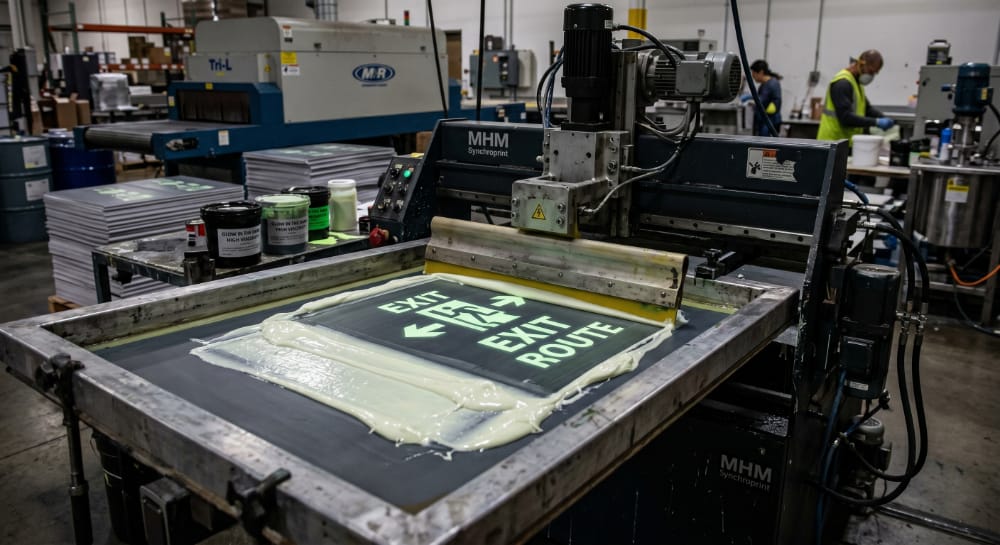
- The Process
- Pros / Cons
- Adding Effects
- What you need
- Image transferred to plate
- Ink transferred to rubber blanket
- Printed onto substrate (paper/plastic)
✅ Pros
- High-speed production
- Excellent for detailed graphics
- Cost-efficient for large volumes
❌ Cons
- Very thin ink layer
- Not suitable for heavy pigments
- Glow effect is weak
- Uses specialized glow offset inks
- Limited due to:
- Low ink thickness
- Pigment dispersion challenges
🔦 Expected Glow Brightness
⭐⭐⭐⭐⭐ (Best among all methods)
- Screen printing glow ink (high pigment load)
- Clear binder systems
- High mesh count adjustment required
📰 2. Offset Printing
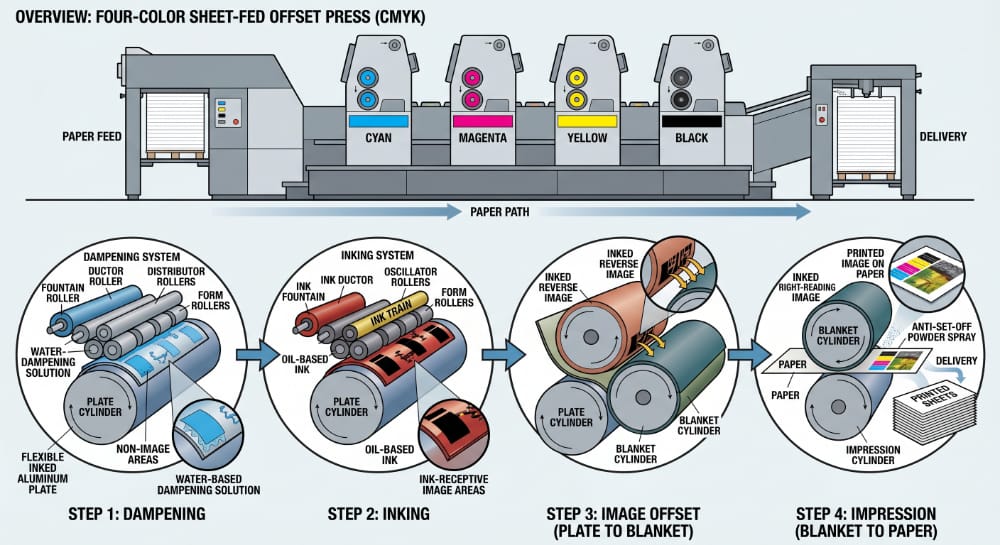
- The Process
- Pros / Cons
- Adding Effects
- What you need
- Image transferred to plate
- Ink transferred to rubber blanket
- Printed onto substrate (paper/plastic)
✅ Pros
- High-speed production
- Excellent for detailed graphics
- Cost-efficient for large volumes
❌ Cons
- Very thin ink layer
- Not suitable for heavy pigments
- Glow effect is weak
- Uses specialized glow offset inks
- Limited due to:
- Low ink thickness
- Pigment dispersion challenges
🔦 Expected Glow Brightness
⭐⭐☆☆☆ (Low)
👉 Mostly decorative, not functional glow
- Glow offset ink (low pigment load + low viscosity)
- Modified varnish systems
📦 3. Flexographic Printing (Flexo)
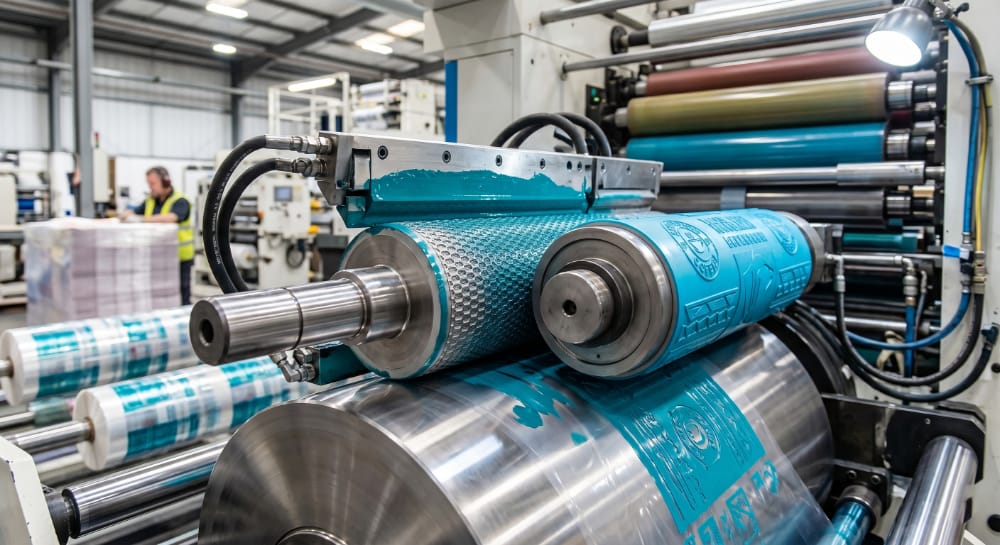
- The Process
- Pros / Cons
- Adding Effects
- What you need
- Flexible relief plate used
- Ink transferred via anilox roller
- Printed onto substrate (packaging, films)
✅ Pros
- Fast production (packaging industry)
- Works on flexible materials (plastic, films)
- Good for large-scale runs
❌ Cons
- Thin ink layer (similar to offset)
- Limited glow brightness
- Requires specialized ink formulation
- Uses flexo-compatible glow inks
- Challenges:
- Pigment size vs anilox cell size
- Ink viscosity control
🔦 Expected Glow Brightness
⭐⭐☆☆☆ (Low to Moderate)
👉 Can improve slightly with multiple passes
- Glow or UV flexographic ink
- Modified (optimized) phosphorescent dispersion
🧱 4. 3D Printing (Glow Filament)
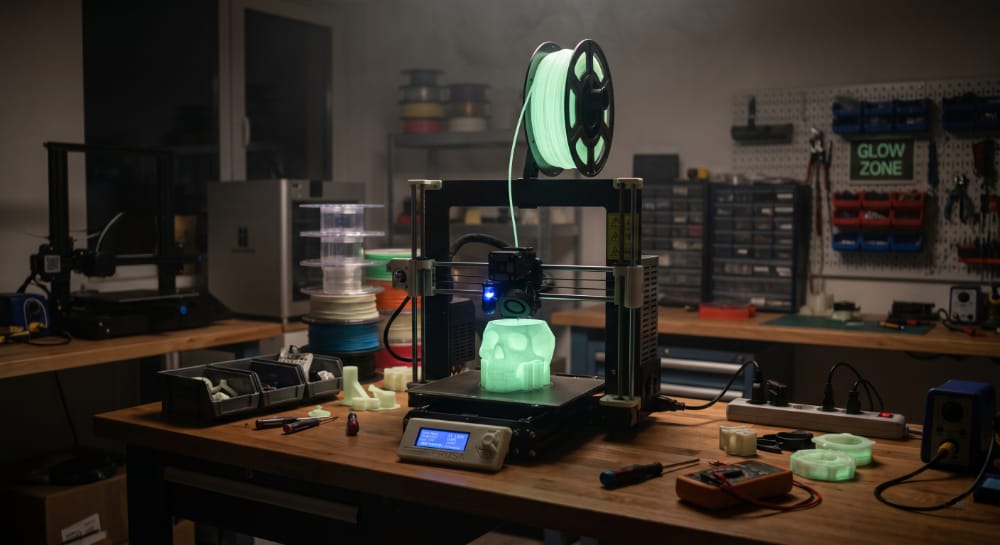
- The Process
- Pros / Cons
- Adding Effects
- What you need
- Digital model sliced
- Filament melted and extruded layer-by-layer
- Object formed physically
✅ Pros
- Full 3D glow objects
- Consistent glow throughout material
- No coating needed
❌ Cons
- Slower production
- Filament cost higher
- Surface finish limitations
- Uses glow filament made from masterbatch
- Glow is embedded in material (not surface)
🔦 Expected Glow Brightness
⭐⭐⭐⭐☆ (High, but depends on filament quality)
- 3D printer
- Glow / UV Filament
- Glow PLA filament
- Glow ABS filament
- Glow PETG filament
🧪 Glow Filament & Masterbatch Explained
🧱 What is Glow Filament?
- Thermoplastic (PLA, ABS, PETG) mixed with:
- Phosphorescent pigment
- Extruded into filament for 3D printing
🧬 What are Masterbatch Pellets?
- Concentrated mix of:
- Glow pigment
- Polymer carrier
- Used In
- Plastic injection
- Filament production
🏭 Manufacturing Flow
- Glow pigment (strontium aluminate)
- Mixed into polymer resin
- Extruded → pellets (masterbatch)
- Re-extruded → filament
👉 Same concept applies to industrial plastic products
Materials for Printing
Depending on the desired visual effect, printing projects can use phosphorescent glow materials, fluorescent UV materials or other special-effect pigments. Explore our Glow Powder, UV Fluorescent or UV White to Color Powder and Special Effect Pigments resources to identify the appropriate material.
UV Printing
For projects using UV-reactive inks and materials, understanding the difference between fluorescent and other UV-reactive effects is important. See our UV Light Reactive vs UV Fluorescent Guide for more information.
UV Illumination
If your printed design needs to be viewed under UV lighting, see our Ultimate Guide to UV Black Lights for guidance on selecting the appropriate UV light source.
⚖️ Comparison Summary
| Method | Glow Brightness | Best Use Case |
|---|---|---|
| Screen Printing | ⭐⭐⭐⭐⭐ | Apparel, signage, safety |
| Offset Printing | ⭐⭐☆☆☆ | Decorative prints |
| Flexo Printing | ⭐⭐☆☆☆ | Packaging |
| 3D Printing | ⭐⭐⭐⭐☆ | Products, prototypes |
💡 Key Insight
👉 Glow brightness = thickness of material/ink layer
- Thin ink (offset/flexo) → weak glow
- Thick ink/material (screen/3D) → strong glow
This is the #1 misunderstanding in the market
🤝 Join the Glow Printing Network
📢 Are You Offering Glow or UV Printing Services?
If you specialize in glow in the dark or UV printing, this is your opportunity to get in front of high-intent clients actively looking for your services.
We are building a curated global directory of verified printing partners, experienced in Glow in the Dark or UV:
- Screen printing
- Offset printing
- Flexographic printing
- 3D printing
🎯 Why Join?
Stand out in a niche market where demand is growing but trusted providers are limited.
✅ What You Get
- Direct client enquiries from targeted traffic
- Featured placement on a high-intent industry page
- Increased credibility as a listed glow printing specialist
- Early mover advantage in a specialised directory
🚀 Who Should Apply?
- Commercial printers exploring specialty inks
- Packaging & flexo printing companies
- Screen printers offering specialty finishes
- 3D printing service providers using glow materials