Glow in the Dark Walls
Everything you need to know about designing, painting and maintaining glow in the dark walls for bedrooms, feature walls, murals and creative interior spaces.
Introduction
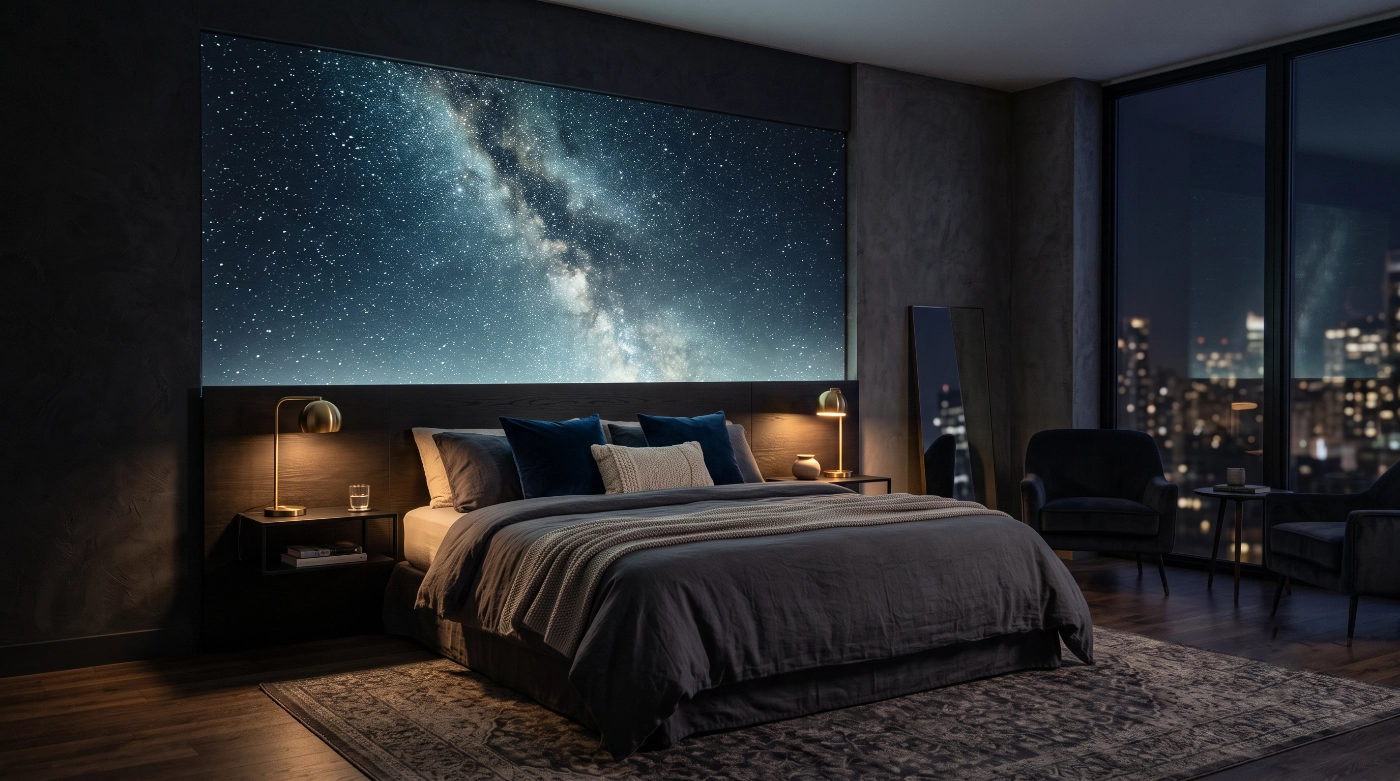
Glow in the dark walls allow ordinary rooms to transform into captivating spaces once the lights are switched off. Unlike decorative lighting that requires electricity, Glow Paint stores energy from natural daylight or artificial lighting before slowly releasing it as a soft, long-lasting glow.
Whether you are decorating a child's bedroom, creating a feature wall in a games room, designing an artistic mural or adding a unique touch to a commercial space, glow walls offer a creative solution that is both attractive and energy efficient.
Modern photoluminescent coatings are significantly brighter and longer lasting than older glow products, making them suitable for both decorative and practical applications.
If you are planning a large project, understanding the correct products, surface preparation and lighting conditions will help you achieve professional-looking results.
Benefits
- Creates impressive night-time visual effects.
- Requires no electricity once charged.
- Suitable for homes, schools and commercial interiors.
- Available in clear or coloured finishes depending on the desired appearance.
- Can be used on feature walls, murals, ceilings and decorative artwork.
- Long service life when properly applied.
- Easy to maintain with normal indoor care.
Typical Uses
Glow in the dark walls are commonly used for:
- Children's bedrooms
- Nursery feature walls
- Space-themed rooms
- Fantasy murals
- Gaming rooms
- Home cinemas
- Entertainment venues
- Museums
- Escape rooms
- Educational displays
- Creative retail interiors
- Art installations
For emergency escape markings or safety applications, refer to the dedicated Darknite Glow technical guides, as these require different performance considerations.
How Glow in the Dark Walls Work

- How It Works
- Key Facts
- Advantages
- Professional Tip
Glow Paint contains photoluminescent particles that absorb energy from surrounding light sources. When the room becomes dark, the stored energy is slowly released as visible light.
The brighter and longer the charging period, the stronger and longer the glow.
Unlike fluorescent paints, glow products continue glowing after the light source has been removed.
- Charges using sunlight or indoor lighting.
- Requires darkness for the glow to become visible.
- Continues glowing for many hours after charging.
- Performs best over a white or light-coloured base.
- Suitable for most properly prepared interior walls.
Compared with conventional decorative paints, Glow Paint offers several advantages:
- No electrical wiring required.
- Silent operation.
- Low maintenance.
- Safe for bedrooms.
- Long-lasting decorative effect.
- Can be combined with murals and artwork.
- Excellent for themed interior designs.
During application, periodically switch off the lights and inspect your work using a UV black light. This reveals missed areas, uneven coverage and ensures the best glow performance. The same technique is recommended for UV reactive paints as the black light immediately reveals the finished effect.
Types of Finishes
For murals, feature walls and decorative designs, glow paint offers an easy way to apply photoluminescent effects directly to the surface. See our [Glow Paint] range for suitable products.
Invisible Day Finish
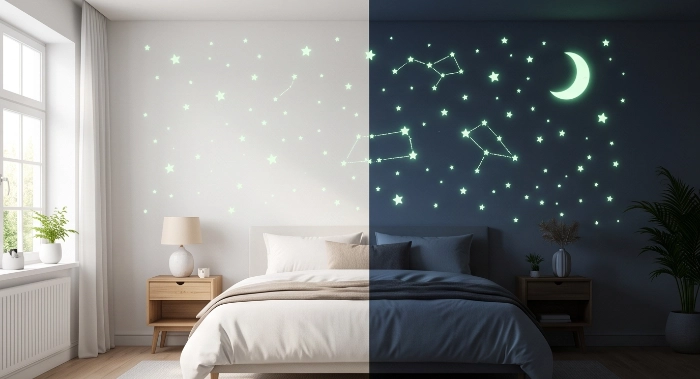
A clear Glow Paint creates little or no visible change during daylight while producing an impressive glow in darkness. This is ideal where the existing wall colour or artwork should remain unchanged.
Feature Glow Wall
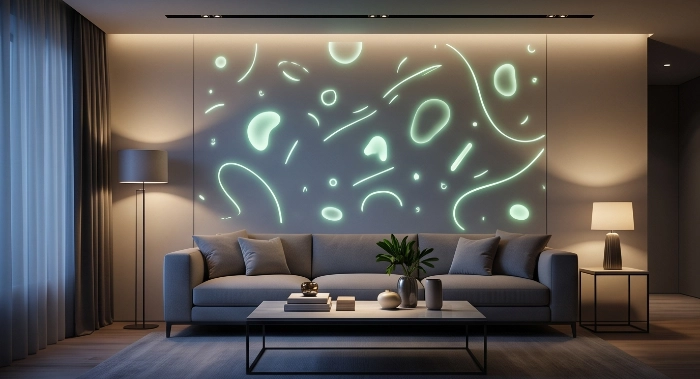
A complete feature wall coated with Glow Paint provides a striking focal point that completely transforms the room after dark.
Hand Painted Murals

Glow Paint can be incorporated into painted murals featuring galaxies, forests, underwater scenes or abstract artwork to create two completely different appearances between day and night.
Children’s Bedroom Themes
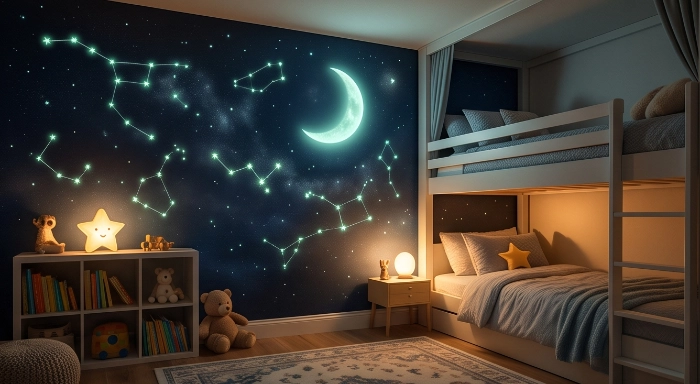
Glow Paint is perfect for stars, planets, clouds, dinosaurs, fairies and imaginative themes that create a comforting night-time environment.
Decorative Stencils
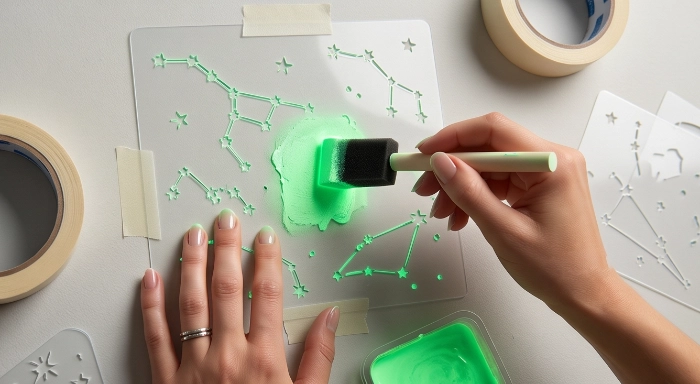
Using reusable stencils allows homeowners to create repeating glow patterns without requiring advanced painting skills.
Popular designs include:
- Leaves
- Stars
- Snowflakes
- Mandalas
- Geometric patterns
Day vs Night Appearance
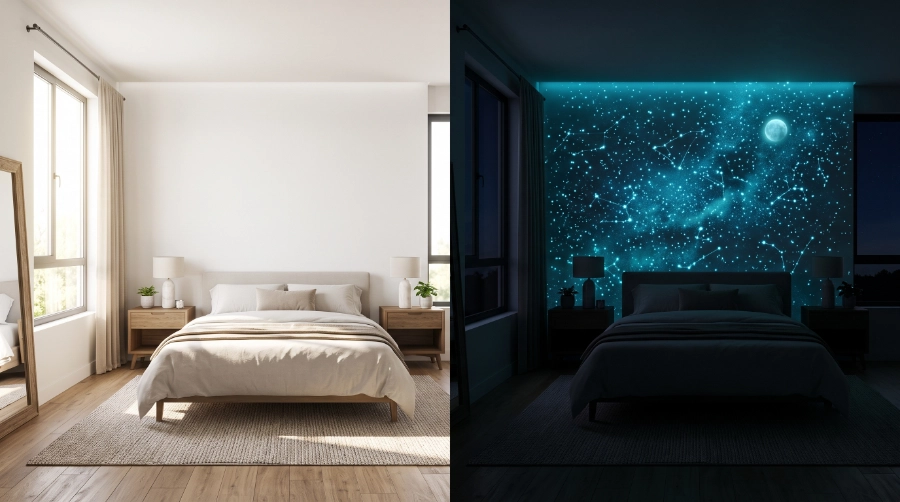
- Day Appearance
- Night Appearance
- Lighting
- Best Results
During daylight, Glow Paint can appear almost invisible when applied as a clear coating or display a subtle off-white tint depending on the formulation and thickness.
Decorative murals and coloured finishes remain attractive during the day while hiding their glowing effect until darkness falls.
Once the room becomes sufficiently dark, the stored energy is gradually released as a soft glow. The effect is strongest immediately after the lights are turned off before slowly reducing over several hours.
A well-designed glow wall creates depth, atmosphere and visual interest without overwhelming the room.
Glow Paint performs best after exposure to:
- Direct sunlight
- Bright LED lighting
- Fluorescent lighting
- UV black lights for rapid charging
The brighter the charging light, the brighter the glow.
Avoid expecting strong performance after prolonged exposure to dim ambient lighting.
For the brightest glow:
- Prepare surfaces properly.
- Apply Glow Primer where recommended.
- Use multiple coats of Glow Paint.
- Allow adequate drying between coats.
- Charge the wall fully before evaluating the glow.
- Inspect coverage using a UV black light during application.
- Maintain clean wall surfaces to preserve appearance.
Safety Note: Wear suitable gloves when painting, ensure good ventilation during application, follow the manufacturer's drying times, and never look directly into a UV light source for extended periods.
Brightness Expectations
- Brightness
- Charging
- Glow Duration
- Performance Factors
Glow in the dark walls produce a gentle, atmospheric glow rather than the brightness of conventional lighting. They are designed to create ambience and visual interest, not to illuminate a room.
Modern Glow Paint performs significantly better than older glow products, particularly when applied over a suitable primer with multiple coats.
Brightness depends on:
Amount of charging light received
Quality of the Glow Paint
Thickness of application
Number of coats
Colour of the base surface
Glow Paint requires exposure to light before it can glow.
Good charging sources include:
- Direct sunlight
- Bright white LED lighting
- Fluorescent lighting
- UV black lights (fastest charging)
Longer and brighter charging produces a stronger glow.
A quality glow coating can remain visible for many hours.
Typically:
Can remain visible throughout the night once fully charged.
Brightest during the first 30–60 minutes.
Gradually reduces in brightness.
Several factors influence glow performance.
| Factor | Effect |
|---|---|
| White primer | Maximum brightness |
| Dark wall colours | Reduced glow |
| More paint coats | Improved brightness |
| Better charging light | Longer glow |
| Clean surface | Better appearance |
| Smooth finish | More even glow |
Choosing Products
| Product | Best Use | Indoor / Outdoor | Notes |
|---|---|---|---|
| Glow Paint | Complete glow walls and murals | Water base / Solvent based | Painting should be under UV light |
| Glow Powder | Mixing into clear binders, paints and resins | Both with suitable binder | Offers maximum flexibility for custom coatings. |
| Glow Primer | Base coat before Glow Paint | NA | Enhances the effect |
| Glow Stickers | Just paste over the wall like wall paper | Indoor | Fast setup with professional glowing surface |
| UV Lights | Charging and inspecting painted surfaces | NA | Needed to check eveness of painting |
Recommended Products
For most glow wall projects Darknite Glow recommends:
- Glow Paint
- Glow Primer
- UV Light for inspection and charging
- Glow Stickers
For experienced users creating customised coatings:
- Glow Powder (Glow Pigment)
- Suitable clear binder
- UV Light
Choosing Glow Paint
For walls, murals and decorative features, Glow Paint provides a straightforward way to apply photoluminescent effects directly to the surface.
Powder-Based Effects
For custom coatings or projects where the glow material needs to be incorporated into another medium, Glow Powder provides greater flexibility.
Surface Preparation & Application
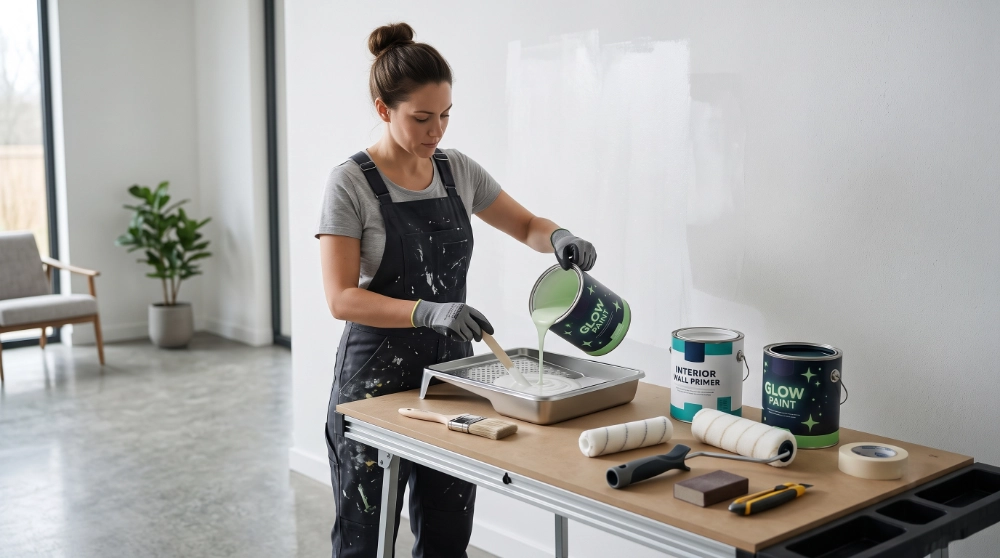
Surface Preparation
Good preparation is essential for an even finish and maximum glow.
- Repair cracks and holes.
- Sand rough areas smooth.
- Remove dust and grease.
- Ensure surfaces are completely dry.
- Apply Glow Primer where recommended.
Materials Needed
Typical equipment includes:
- Glow Primer
- Glow Paint
- Paint rollers
- Quality brushes
- Paint tray
- Masking tape
- Dust sheets
- Fine sandpaper
- UV black light
- Protective gloves
Application Steps
- Prepare and clean the surface.
- Apply Glow Primer if required.
- Allow the primer to dry completely.
- Apply the first coat of Glow Paint.
- Allow sufficient drying time.
- Apply additional coats for improved brightness.
- Inspect coverage with a UV light.
- Allow the coating to cure before heavy use.
Professional Tips
During application, periodically switch off the lights and inspect your work using a UV black light. This reveals missed areas, uneven coverage and ensures the best glow performance. The same technique is recommended for UV reactive paints as the black light immediately reveals the finished effect.
Additional tips:
- Apply thin, even coats.
- Avoid rushing drying times.
- Stir paint thoroughly before use.
- Keep a wet edge while rolling large walls.
Safety Notes
Wear gloves where appropriate. Work in a well-ventilated room. Follow the manufacturer's drying and curing times. Keep products out of reach of children. Never shine UV lights directly into the eyes.
Other Interior Applications
Glow walls are one of many ways photoluminescent materials can be used indoors. See our Glow in the Dark Applications Guide for additional interior and lifestyle applications.
Common Mistakes
Applying Over Dark Paint
Why it happens
People assume glow paint behaves like ordinary decorative paint.
How to avoid it
Use Glow Primer or a light-coloured base for maximum brightness.
Applying Too Few Coats
Why it happens
Trying to save paint.
How to avoid it
Apply the recommended number of coats for the desired glow performance.
Judging the Glow Too Soon
Why it happens
Testing before the paint has fully cured.
How to avoid it
Allow the coating to dry and cure fully before evaluating performance.
Using Dim Lighting for Charging
Why it happens
The wall never receives enough light.
How to avoid it
Charge using bright daylight, LED lighting or a UV black light.
Poor Surface Preparation
Why it happens
Painting directly over dusty or damaged walls.
How to avoid it
Clean, repair and prime the surface before painting.
Uneven Roller Coverage
Why it happens
Inconsistent paint thickness.
How to avoid it
Maintain a wet edge and use smooth, overlapping strokes.
Patches when viewed in the dark
Why it happens
Missed patches are difficult to spot in normal lighting.
How to avoid it
Inspect each coat using a UV black light before it dries.
Looking for more glow-in-the-dark ideas,
techniques and applications?
Explore our complete guide.