Glow in the Dark Concrete
Learn how Glow Paint, Glow Powder and Glow Pebbles can transform ordinary concrete into attractive decorative features and practical guidance systems for homes, commercial buildings and public spaces.
Introduction
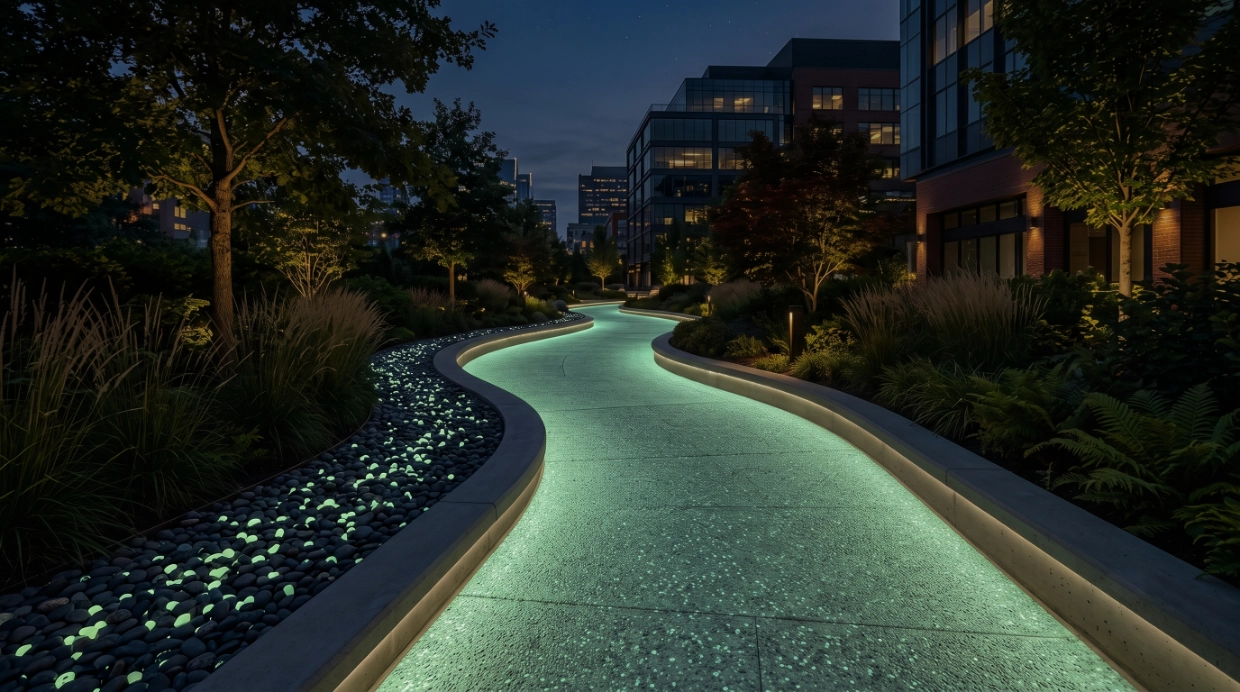
Concrete is one of the world's most widely used construction materials, making it an ideal surface for decorative and functional glow applications. From residential garden paths to commercial developments and public parks, glow in the dark concrete offers an attractive way to improve aesthetics while increasing visibility after dark.
It is important to understand that concrete itself does not glow.
Instead, the glow effect is achieved by applying photoluminescent products to the finished surface or incorporating decorative Glow Pebbles into suitable landscape designs.
Modern Glow Paint and Glow Powder coatings allow architects, designers and contractors to create impressive glow effects without altering the structural properties of the concrete.
Whether you are working on newly poured concrete or upgrading an existing surface, selecting the correct products and preparing the surface properly are essential for long-lasting performance.
Benefits
- Improves visibility in low-light conditions.
- Creates attractive architectural features.
- Requires no electricity after charging.
- Charges naturally from sunlight or artificial lighting.
- Suitable for both decorative and guidance applications.
- Available for residential, commercial and industrial projects.
- Can be applied to new or existing concrete.
Typical Uses
Glow in the dark concrete is commonly used for:
- Garden pathways
- Public walkways
- Commercial landscaping
- Outdoor seating areas
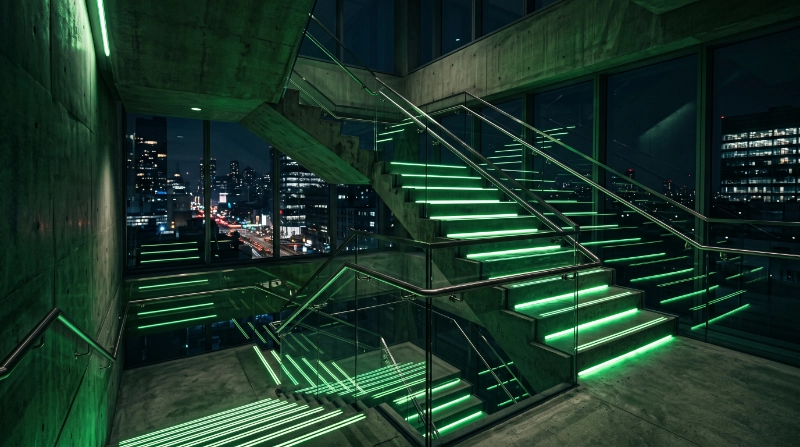
- Stair edging
- Building entrances
- Parks
- Driveway borders
- Decorative patios
- Swimming pool surrounds
- Precast concrete products
- Architectural feature walls
For applications requiring compliance with emergency escape or safety standards, refer to the dedicated Darknite Glow technical guides covering photoluminescent safety markings.
How It Works
- How It Works
- Key Facts
- Advantages
- Professional Tip
Photoluminescent materials absorb energy from sunlight or artificial lighting before gradually releasing it as visible light when darkness falls.
Unlike electrical lighting, glow products require no wiring or batteries.
For concrete applications, the glow effect is normally created by:
- Applying Glow Paint directly onto prepared concrete.
- Mixing Glow Powder into a suitable clear coating before applying it to the concrete surface.
- Installing Glow Pebbles within landscape features or exposed aggregate designs.
These methods preserve the strength of the concrete while providing an attractive glow effect.
- Concrete itself does not produce light.
- Glow products require exposure to light before glowing.
- White or light-coloured surfaces improve glow brightness.
- Glow performance depends on charging conditions.
- Glow coatings can be applied to both new and existing concrete after proper preparation.
Glow in the dark concrete offers several advantages over conventional decorative lighting:
- No ongoing electricity costs.
- Minimal maintenance.
- Environmentally friendly operation.
- Attractive architectural appearance.
- Suitable for large outdoor areas.
- Can enhance visibility without bright lighting.
- Complements modern landscape designs.
Professional Tip
During application, periodically switch off the lights and inspect your work using a UV black light. This reveals missed areas, uneven coverage and ensures the best glow performance. The same technique is recommended for UV reactive paints as the black light immediately reveals the finished effect.
Types of Glow Concrete Finishes
Glow Painted Concrete
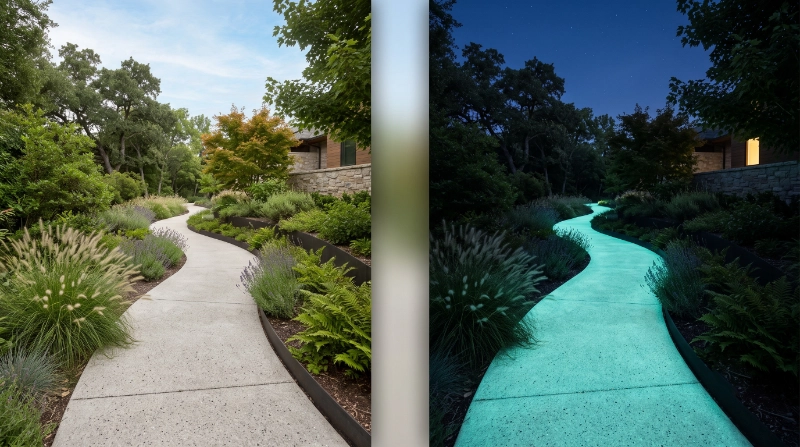
Applying Glow Paint directly onto cured concrete is the simplest and most versatile method. It is suitable for pathways, walls, steps and decorative architectural features.
Glow Powder Clear Coating
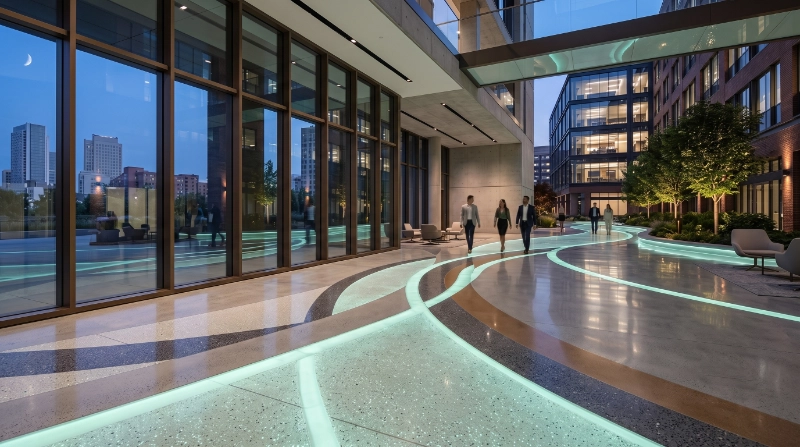
Glow Powder (Glow Pigment) can be mixed into a compatible clear binder to create transparent protective coatings that preserve the appearance of decorative concrete while adding a glow effect.
Glow Pebble Landscaping
Glow Pebbles provide an attractive way to create glowing borders around pathways, garden beds and water features without coating the concrete itself.

Precast Concrete Features
Glow coatings can be applied to precast concrete seating, planters, bollards and architectural elements after manufacture, allowing decorative glow effects without affecting structural integrity.

Decorative Safety Edges
Glow Paint or stair nosings on kerbs and pathway edges, improving visibility while complementing the overall design.
Epoxy resin can also be used with glow materials for decorative surfaces and inlays. See our Epoxy Resin range if you are considering a resin-based glow project.
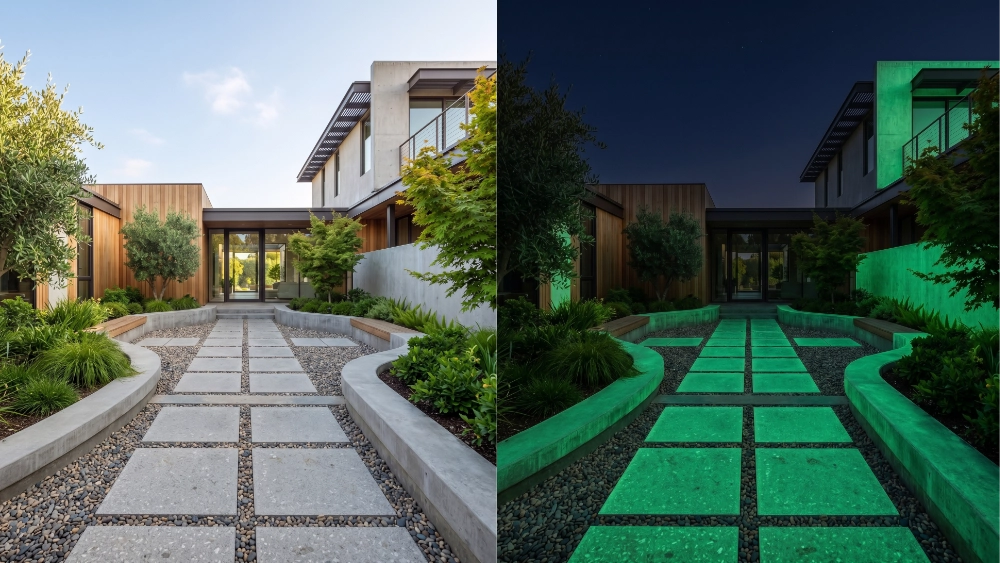
Day vs Night Appearance
- Day Appearance
- Night Appearance
- Lighting
- Best Results
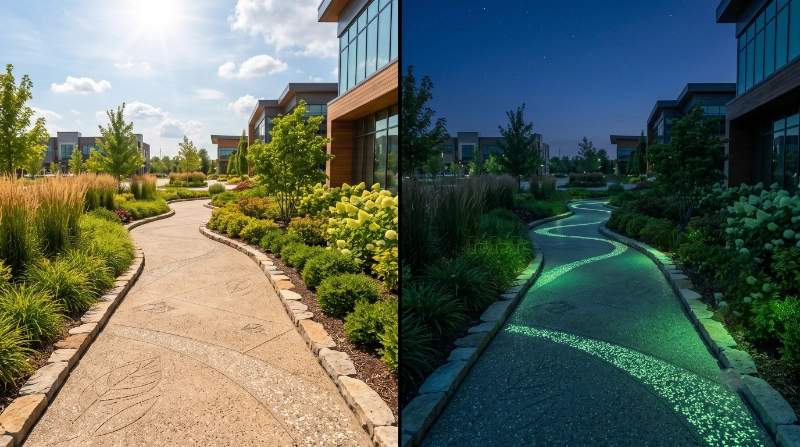
During daylight, Glow Paint can appear almost invisible when used as a clear coating or show a subtle off-white finish depending on the formulation. Decorative Glow Pebbles resemble attractive landscape stones, blending naturally into the surrounding design.
This allows glow features to remain visually appealing without dominating the daytime appearance of the project.
After charging throughout the day, Glow Paint and Glow Pebbles emit a soft, ambient glow that highlights pathways, landscaping features and architectural details.
Rather than acting as a light source, they create gentle illumination that enhances atmosphere and improves wayfinding in darker environments.
The best charging sources include:
- Direct sunlight
- Bright outdoor LED lighting
- Flood lighting
- UV black lights for rapid charging and inspection
Outdoor applications generally perform best where they receive regular exposure to sunlight during the day.
For optimum performance:
- Allow new concrete to cure fully before applying any glow coating.
- Thoroughly clean and prepare existing concrete surfaces.
- Use Glow Primer where appropriate for painted applications.
- Apply multiple even coats rather than one heavy coat.
- Inspect coverage using a UV black light during application.
- Choose Glow Pebbles for landscape borders where painting is impractical.
Safety Note: Always ensure painted concrete surfaces maintain adequate slip resistance, particularly on outdoor pathways, ramps and pool surrounds. Follow the recommended drying and curing times before allowing pedestrian traffic.
Brightness Expectations
- Brightness
- Charging
- Glow Duration
- Performance Factors
Glow in the dark concrete produces a soft, ambient glow rather than acting as a replacement for conventional lighting.
The brightness depends on:
- The quality of the Glow Paint or Glow Powder.
- The amount of light received during charging.
- The number of paint coats applied.
- Surface preparation.
- Whether a suitable Glow Primer has been used.
- Environmental conditions.
For outdoor projects, sunlight usually provides the best charging source.
Glow products charge from:
- Direct sunlight (best)
- Bright LED lighting
- Flood lighting
- Fluorescent lighting
- UV black lights
Outdoor pathways that receive several hours of direct sunlight each day generally produce the strongest glow after sunset.
Once fully charged, Glow Paint and Glow Pebbles gradually release stored energy over many hours.
Typically:
- Brightest during the first hour.
- Gradually fades throughout the evening.
- Can remain visible for much of the night depending on the product, charging conditions and surrounding darkness.
| Factor | Effect |
|---|
| Direct sunlight | Maximum charging |
| White Glow Primer | Brighter painted finish |
| Smooth concrete | More even coating |
| Multiple coats | Improved glow |
| Clean surface | Better appearance |
| Heavy dirt or algae | Reduced performance |
| Shaded locations | Lower charging efficiency |
Choosing Products
| Product | Best For | Location | Difficulty | Notes |
|---|---|---|---|---|
| Glow Paint | Large flat surfaces | Indoor/Outdoor | Hard | Best choice for most completed concrete surfaces. |
| White surface primer | Base coat for glow paint | Indoor/Outdoor | Hard | Improves brightness on porous or dark concrete. |
| Glow Powder | Mixed into compatible clear coatings or powder coating | Indoor/Outdoor | MediumHard | Ideal for customised coatings. Glow Powder and Glow Pigment are the same product. |
| Glow Tape | Edge marking with no traffic | Indoor | Easy | Just cut and stick on any surface |
| Glow Aluminum Plates | Edge marking with heavy traffic | Indoor/Outdoor | Medium | Needs drilling or heavy duty glue for proper installation |
Recommended Products
For most concrete projects Darknite Glow recommends:
- Glow Primer
- Glow Paint
- UV Black Light (for inspection)
- Glow Pebbles for landscaping features
For customised industrial or architectural finishes:
- Glow Powder (Glow Pigment)
- Suitable clear binder
- Glow Primer
- UV Black Light
Glow Materials for Concrete
Photoluminescent [Glow Powder] can be incorporated into suitable concrete and cement-based applications to create surfaces that store light and glow in darkness.
Glow powder is commonly mixed directly into concrete, cement and other decorative materials to create a rechargeable glow effect. For a closer look at suitable materials and colours, see our Glow Powder range.
Surface Preparation & Application
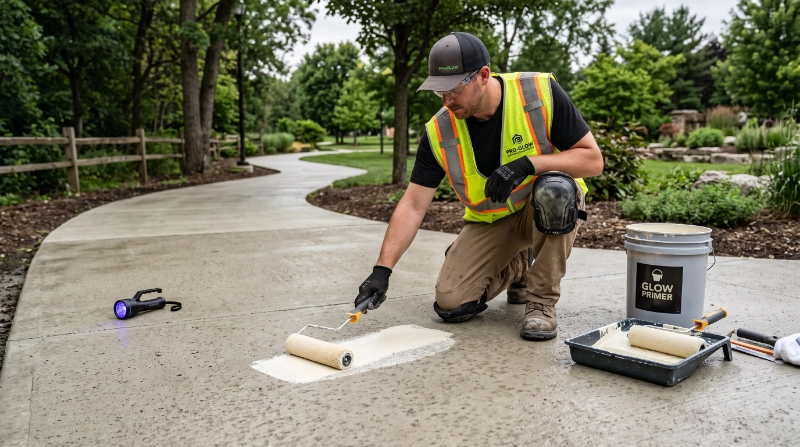
Surface Preparation
Concrete should always be fully cured before applying Glow Paint or Glow Powder coatings.
Preparation includes:
- Remove dust, dirt and grease.
- Pressure wash where appropriate.
- Repair cracks or damaged areas.
- Allow the surface to dry completely.
- Apply Glow Primer if recommended.
Important: Do not mix Glow Powder directly into wet structural concrete. This can reduce glow performance because the particles become buried beneath the concrete surface. For best results, apply Glow Paint or a Glow Powder coating after the concrete has cured.
Materials Needed
Typical materials include:
- Glow Primer
- Glow Paint
- Glow Powder (if preparing a custom coating)
- Compatible clear binder
- Paint rollers
- Brushes
- Paint tray
- Masking tape
- Pressure washer or stiff brush
- UV black light
- Protective gloves
Application Steps
- Allow new concrete to cure fully.
- Clean and prepare the surface.
- Repair any defects.
- Apply Glow Primer if required.
- Allow the primer to dry.
- Apply thin, even coats of Glow Paint or the prepared Glow Powder coating.
- Inspect the coating using a UV black light.
- Allow the coating to cure before use.
Professional Tips
Professional Tip
During application, periodically switch off the lights and inspect your work using a UV black light. This reveals missed areas, uneven coverage and ensures the best glow performance. The same technique is recommended for UV reactive paints as the black light immediately reveals the finished effect.
Additional recommendations:
- Avoid painting in wet weather.
- Do not apply to damp concrete.
- Follow recommended curing times.
- Stir products thoroughly before application.
Safety Notes
- Wear gloves during application.
- Ensure good ventilation when working indoors.
- Keep products away from children.
- Never shine UV lights directly into the eyes.
- Maintain suitable slip resistance on pedestrian surfaces.
Other Surface Applications
Concrete is only one option for creating permanent glow effects. Depending on the project, Glow Paint or resin-based systems may provide a more suitable solution.
Applications
Glow concrete can be used for pathways, landscaping, decorative features and other outdoor projects. Explore our Glow in the Dark Applications Guide for additional ideas.
Common Mistakes
Mixing Glow Powder into Wet Concrete
Why it happens
Many people assume glow material behaves like coloured concrete pigment.
How to avoid it
Apply Glow Paint or a Glow Powder coating after the concrete has cured. The glow material must remain close to the surface to absorb and emit light effectively.
Painting Before Concrete Has Fully Cured
Why it happens
New construction projects often have tight schedules.
How to avoid it
Allow concrete to cure fully before applying any coating.
Poor Surface Cleaning
Why it happens
Dust, laitance or oil residues remain on the surface.
How to avoid it
Thoroughly clean and prepare the concrete before painting.
Applying Thick Coats
Why it happens
Trying to achieve maximum brightness with one application.
How to avoid it
Apply several thin, even coats for a smoother, more consistent finish.
Ignoring Sunlight Exposure
Why it happens
The installation is permanently shaded.
How to avoid it
Consider the available charging light during the design stage.
Choosing the Wrong Product
Using paint where Glow Pebbles would be more suitable, or vice versa.
How to avoid it
Select products according to the intended application rather than trying to use one solution everywhere.
Forgetting UV Inspection
Why it happens
Uneven coverage is difficult to see under normal lighting.
How to avoid it
Inspect every coat with a UV black light before it dries.
Key Takeaways
- Concrete itself does not glow; the glow effect comes from products applied to or incorporated into the finished surface.
- Allow new concrete to cure fully before applying Glow Paint or Glow Powder coatings.
- Glow Paint is the simplest solution for most decorative and guidance applications.
- Glow Powder (Glow Pigment) should be mixed into a suitable clear binder, not directly into structural concrete.
- Glow Pebbles are ideal for landscaping, borders and exposed aggregate designs. Surface preparation is essential for long-lasting adhesion and brightness.
- A UV black light is invaluable for checking coating coverage during application.
- Consider available sunlight when planning outdoor glow installations.
Whether you're designing a landscaped garden, upgrading a public walkway or creating a distinctive architectural feature, Darknite Glow offers a range of products to suit your project. Explore our Glow Paint, Glow Powder, Glow Primer and Glow Pebbles, and browse our Resource Centre for additional guides covering pathways, safety markings, walls and other glow applications.
Looking for more glow-in-the-dark ideas,
techniques and applications?
Explore our complete guide.