Glow in the Dark Paint Guide for Professionals
Glow in the dark paint is one of the most versatile special effect coatings available today. From safety markings and emergency signage to murals, flooring, gaming rooms, artwork, product coatings and architectural effects, luminous paints can transform ordinary surfaces into eye-catching glowing environments.
Modern glow paints use advanced photoluminescent pigments that absorb surrounding light energy and slowly release it in darkness. High-quality glow paints can remain visible for hours after charging and can be used both indoors and outdoors when applied correctly.
This guide combines years of practical glow paint knowledge, surface preparation techniques, pigment selection advice and real-world applications into one complete resource.
In this guide you will learn:
- What glow in the dark paint actually is
- How photoluminescent technology works
- The different types of glow paint available
- How to choose the correct paint base
- Proper mixing ratios and storage methods
- Surface preparation for concrete, walls, metal and plasticsIndoor vs outdoor glow paint performance
- How to maximize brightness and glow duration Common mistakes to avoid
- Real-world applications for professional and decorative projects
For projects where you need to mix the glow material into resin, concrete, coatings or other materials, glow powder provides more flexibility than ready-made glow paint.
Paint vs Powder
Ready-made Glow Paint is ideal when you want to apply a photoluminescent coating directly to a surface, while Glow Powder offers more flexibility when incorporating the glow material into another medium.
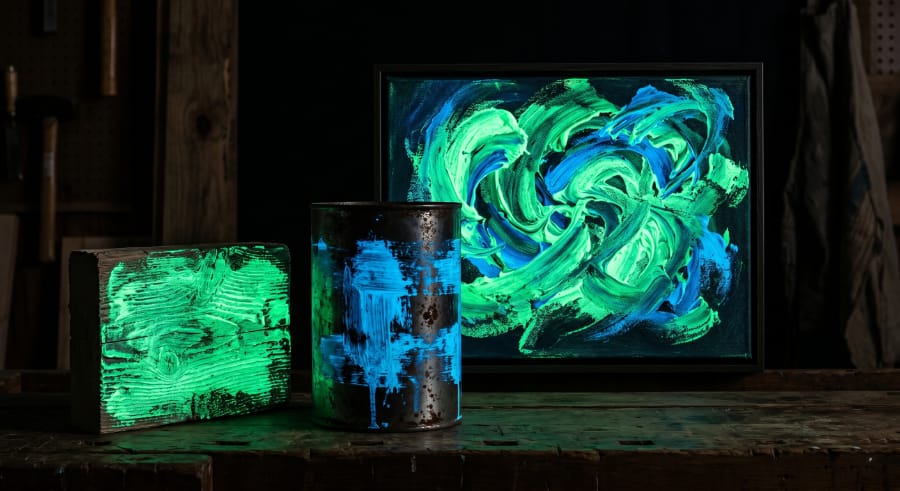
What is Glow in the Dark Paint?
Glow in the dark paint is a special coating that contains photoluminescent pigments capable of absorbing and storing light energy. Once the surrounding light source is removed, the stored energy is slowly released as visible light in darkness.
Modern glow paints commonly use strontium aluminate pigments, which are:
- Non-radioactive
- Non-toxic
- Extremely bright
- Long-lasting
- Rechargeable thousands of times
Glow paint can be used on:
- Walls
- Concrete floors
- Metal surfaces
- Plastic products
- Wood
- Glass
- Ceramics
- Safety systems
- Decorative artwork
- Industrial applications
The brightness and glow duration depend heavily on:
- Pigment quality
- Pigment concentration
- Surface preparation
- Charging light source
- Paint thickness
- Paint base used
If you want a ready-to-apply solution rather than mixing powder into another material, glow paint is the simpler option. Explore our [Glow Paint] range for glow-in-the-dark paints suitable for walls, signs, decorative surfaces and other applications.
How Glow in the Dark Paint Works
Glow paint works using photoluminescence.
When exposed to sunlight, UV light or strong artificial lighting, the photoluminescent pigments absorb energy and store it temporarily. In darkness, this stored energy is slowly released as visible glowing light.
The charging cycle can repeat thousands of times without damaging the pigments.
Common Charging Sources
- Sunlight
- UV Black Light
- LED Lighting
- Colored Lights
Natural sunlight is one of the strongest charging sources and usually provides the brightest and longest-lasting glow.
UV light charges glow pigments extremely quickly and is often used during glow painting applications.
Some bright white LEDs can charge glow paint, but weaker LEDs may produce limited results.
Colored Lights that work
- White
- Blue
- UV
Colored Lights that Do Not work
- Yellow
- Green
Glow in the Dark Paint vs UV Reactive Paint
Unlike fluorescent paints that only glow under UV or black light, photoluminescent glow paint continues glowing even after the lights are turned off.
Many people confuse glow in the dark paint with UV reactive or fluorescent paint.
Glow in the Dark Paint
- Continues glowing after lights are turned off
- Uses photoluminescent pigments
- Stores and releases light energy
- Works in darkness
UV Reactive Paint
- Only glows under UV or black light
- Uses fluorescent pigments
- Does not glow in total darkness
- Produces extremely vivid colours under blacklight
Types of Clear Paint, Medium or Resin
Choosing the correct paint type is one of the most important factors for achieving good results.

Water-Based Paint
Water-based paint is easy to apply, low odour and suitable for indoor applications.
Best For
- Walls
- Concrete
- Drywall
- Decorative projects
- Indoor murals
Advantages
- Easy cleanup
- Lower odour
- Safer indoor use
- Good for porous surfaces
Disadvantages
- Requires surface protection outdoors
- Less durable outdoors
- Lower chemical resistance
Solvent-Based Paint
Solvent-based paints offer better durability and weather resistance.
Best For
- Metal surfaces
- Wood
- Outdoor projects
- Industrial applications
Advantages
- Strong adhesion
- Weather resistant
- Durable finish
- Better moisture resistance
Disadvantages
- Higher VOC content
- Strong smell
- Requires thinners
Epoxy Resin + Hardener
Epoxy resin and hardener is a 2 part product that provides the best surface protection and durability.
Best For
- Floors
- Heavy-duty surfaces
- Industrial areas
- High traffic environments
- Outdoor architectural features
Advantages
- Extremely durable
- Waterproof
- Chemical resistant
- Long-lasting protection
Disadvantages
- Requires accurate mixing
- Limited working time
- Curing period between 12 to 24 hours
Spray Glow Paint
Spray paints are useful for quick application and complex surfaces.
Best For
- Large areas
- Curved surfaces
- Decorative effects
- Automotive projects
- Helmets and bicycles
Important Notes
- Smaller pigment sizes work better for spraying
- Proper thinning may be required
- Multiple thin coats produce better glow performance
Glow, UV and other Effect Pigments
Glow, UV, Thermochromic and Photochromic powders are the core material responsible for their respective effects.

Photoluminescent Pigments
These pigments absorb and store light energy.
Characteristics
- Long-lasting glow
- Extremely bright
- Rechargeable thousands of times
- Suitable for indoor and outdoor use
Common Colours
- Ultra Green
- Aqua Blue
- Sky Blue
- Yellow Green
- Orange
- Red
Green and aqua pigments are usually the brightest and longest lasting.
UV Fluorescent / Color Changing Pigments
These pigments react only under UV lighting.
- Fluorescent Pigments appear colored under normal light and glow under UV black light
- Color changing pigments appear White under normal light and in colors under a UV black light
Common Uses
- Party effects
- UV artwork
- Nightclubs
- Events
- Entertainment environments
Thermochromic Pigments
Thermochromic pigments change colour with temperature.
Common Uses
- Interactive products
- Novelty coatings
- Temperature indicators
- Educational products
Photochromic Pigments
Photochromic pigments react to sunlight and UV exposure.
Common Uses
- Outdoor products
- UV-sensitive surfaces
- Sunglasses
- Sunlight-reactive artwork
Surface Preparation Guide
Proper surface preparation is critical for good adhesion, durability and glow performance.
Preparing Concrete Surfaces
Concrete is porous and requires proper sealing and priming.
Recommended Steps
1. Clean the Surface
Remove dirt, oil, old paint and contaminants.
2. Repair Cracks and Holes
Use fillers or patching compounds to smooth the surface.
3. Seal Against Moisture
Concrete moisture can damage painted surfaces over time.
4. Apply Primer
Use a suitable white primer to improve brightness.
5. Apply Multiple Thin Glow Coats
Thin coats produce more even glow performance.
6. Apply Protective Clear Coat
This helps extend outdoor durability.
Preparing Metal Surfaces
Metal surfaces require proper cleaning and protection against corrosion.
Recommended Steps
Use solvent-based or epoxy systems where possible
- Remove rust
- Degrease thoroughly
- Sand glossy surfaces lightly
- Apply metal primer
Preparing Plastic Surfaces
Plastic surfaces may require adhesion promoters.
Important Notes
- Avoid overly smooth surfaces
- Light sanding improves adhesion
- Flexible plastics may require special coatings
Preparing Wood Surfaces
Wood surfaces should be dry and clean before painting.
Best Practices
- Sand rough areas
- Seal porous wood
- Use primer where necessary
- Apply multiple thin coats
Mixing & Storage
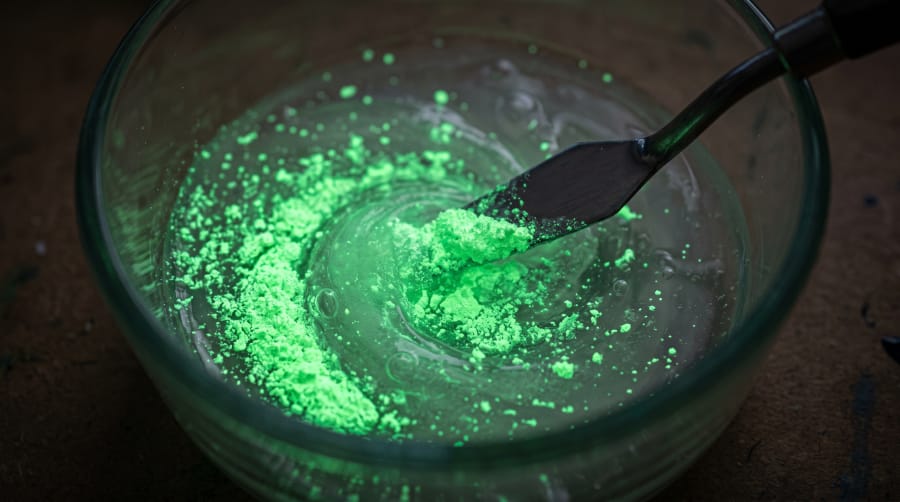
- Mixing Ratio
- Storage & Lifespan
- Common Mistakes
Glow Pigments
Standard Ratio:
- 20 - 30% pigment by weight
Brighter Ratio:
- 30 - 40% pigment by weight
- Higher loading = brighter glow with less coats
UV Pigments
Standard Ratio:
- 5–10% pigment by weight
- Too much reduces transparency
Thermochromic Pigments
Recommended:
- 5–10% pigment by weight
- Avoid overheating during mixing
Photochromic Pigments
Recommended:
- 5–10% pigment by weight
- Avoid overheating during mixing
Mixed Paint:
- Usable for 6–24 hours (depending on base)
Raw Pigments:
- Shelf life: 3–5 years if dry
How To Store
- Keep away from direct sunlight
- Keep in airtight containers
- Store below 30°C
- Avoid moisture exposure
Sedimentation
- Glow pigments are heavy and naturally settle over time.
- Using anti-settling agents can reduce hard sediment build-up.
- Overloading pigment: reduces adhesion
- Poor mixing: uneven glow
- Settling issues: not stirring before use
- Wrong base: reduces performance
Application Method
- Brush
- Spray
- Dipping
- Pouring
- Roller

Best For
- Detailed work
- Small projects
- Murals
- Decorative surfaces
Tips
- Apply evenly to avoid streaking
- Use multiple thin coats
- Allow proper drying between layers
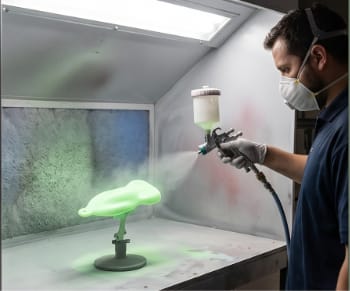
Best For
- Automotive work
- Industrial coatings
- Large projects
- Smooth finishes
Important Notes
- Smaller particle pigments spray more easily
- Thin paint appropriately
- Use proper nozzle sizes

Dipping is often used in manufacturing environments.
Common Uses
- Repetitive production
- Plastic parts
- Small products
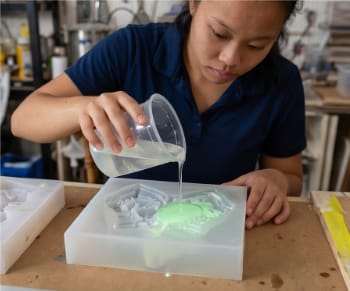
Glow pigments can be embedded into:
- Epoxy resin
- Polyester resin
- Polyurethane systems
This method is popular for:
- Decorative casting
- River tables
- Artwork
- Countertops
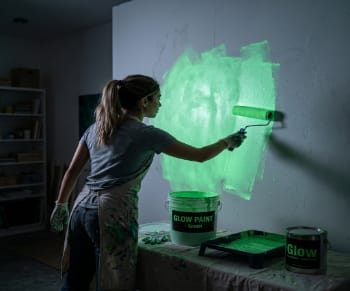
Best For
- Walls
- Large flat surfaces
- Floors
Tips
- Use high-density foam rollers
- Apply smooth even coats
- Avoid overworking the paint
Tips for Maximum Brightness
Number Of Coats
The final brightness of glow paint depends heavily on application quality.
Use White Base Coats
White backgrounds reflect more light and improve glow visibility.
Apply Multiple Thin Layers
Type text here. Describe the image in detail
Use High-Quality Pigments
Premium pigments produce significantly brighter and longer-lasting glow.
Charge Properly
UV lighting and sunlight provide the best charging performance.
Avoid Over-Thinning
Too much thinner reduces pigment concentration.
Indoor vs Outdoor Glow Paint
Glow paint performance changes significantly outdoors.
Indoor Applications
Indoor glow paint generally lasts longer due to reduced UV exposure and weather damage.
Common Uses
- Bedrooms
- Gaming rooms
- Artwork
- Decorative walls
- Events
Outdoor Applications
Outdoor surfaces require stronger protection.
Common Challenges
- UV degradation
- Rain exposure
- Dirt accumulation
- Temperature fluctuations
Outdoor Recommendations
- Use solvent or epoxy systems
- Apply UV protective clear coats
- Use weather-resistant primers
- Reapply maintenance coatings periodically
Glow Paint Colours and Brightness
Different glow colours perform differently.
Brightest Glow Colours
Ultra Green
Usually the brightest and longest lasting.
Aqua Blue
Very bright with strong visual appeal.
Sky Blue
Popular for decorative effects.Type text here. Describe the image in detail
Medium Brightness Colours
- Yellow
- Orange
- Pink
These provide attractive colours but usually shorter glow duration.
Lower Brightness Colours
- Red
- Purple
These colours typically glow for shorter periods because of lower luminous efficiency.
Common Glow Paint Mistakes
Avoiding common mistakes can dramatically improve final results.
Applying Thick Coats
Thick coats often reduce glow uniformity. 3 to 4 thin coats is better.
Using Dark Base Colours
Dark backgrounds reduce brightness. Paint on white or light background.
Poor Surface Preparation
Improper preparation reduces adhesion and durability.
Charge Properly
UV lighting and sunlight provide the best charging performance.
Painting under normal light
Glow painting must! be done under UV light.
Real-World Uses
Architecture and Construction
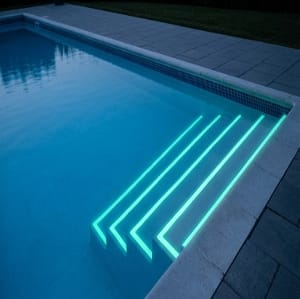
Architectural applications include:
- Concrete pathways
- Landscape features
- Swimming pools
- Decorative flooring
- Public installations
Safety and Emergency Systems

Glow paints are widely used for:
- Exit routes
- Stair markings
- Emergency pathways
- Safety signs
- Road markings
These systems improve visibility during power failures and low-light conditions.
Decorative and Artistic Applications

Glow paint is extremely popular for:
- Wall murals
- Canvas artwork
- Bedroom ceilings
- Gaming rooms
- Entertainment spaces
- Glow parties
Application Ideas
Glow paint can be used for walls, decorative surfaces, signage and other creative projects. See our Glow in the Dark Walls Guide for a detailed example of using glow effects on interior surfaces.
Product Manufacturing

Glow pigments are used in:
- Plastics
- Consumer products
- Toys
- Industrial coatings
- Promotional items
Final Thoughts
Glow in the dark paint offers an incredible combination of creativity, functionality and visual impact. Whether used for decorative artwork, professional safety systems, architectural features or product manufacturing, the final results depend heavily on selecting the correct paint system, preparing surfaces properly and applying the coating correctly.
Related Glow Applications
Glow paint is only one way to create photoluminescent effects. Explore our Ultimate Glow in the Dark Applications Guide] for additional residential, commercial, safety and outdoor applications.
By understanding pigment types, surface preparation methods, charging techniques and durability factors, you can create bright, long-lasting glow effects that remain impressive for years.
As glow technology continues improving, glow in the dark coatings are becoming increasingly popular across industries ranging from entertainment and architecture to industrial safety and manufacturing.
With the right materials and proper application techniques, glow paint can transform ordinary surfaces into striking luminous environments.
Looking for more glow-in-the-dark ideas,
techniques and applications?
Explore our complete guide.