Ultraviolet (UV) black lights create fascinating glowing effects that reveal fluorescent and phosphorescent materials invisible under normal lighting. From glow-in-the-dark paints and UV reactive decorations to forensic inspections and entertainment lighting, UV black lights are widely used in both professional and creative industries.
Whether you are looking for a UV torch, blacklight bulb, UV LED strip, or simply trying to understand the difference between 365nm and 395nm UV lights, this guide explains everything you need to know.
What Is a UV Black Light?
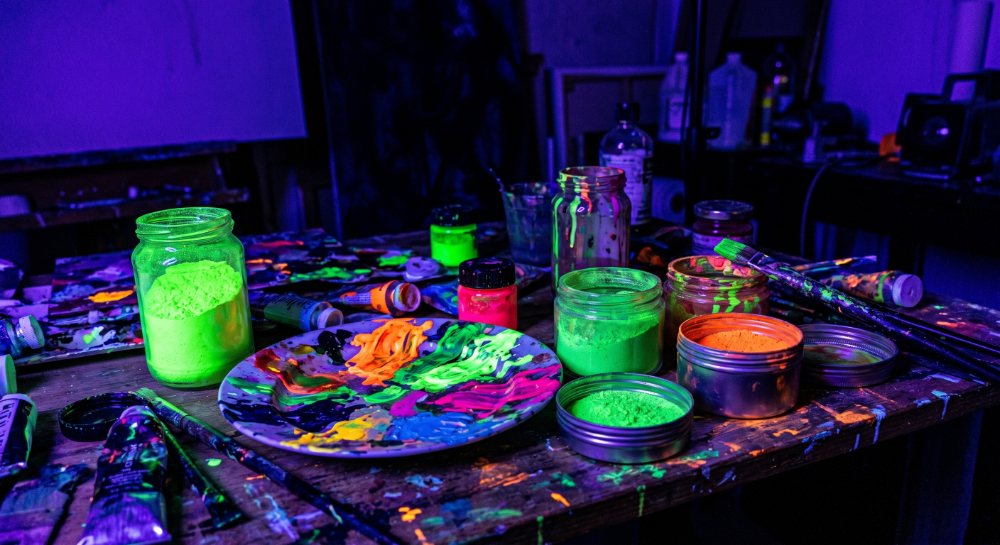
A UV black light emits ultraviolet radiation, primarily within the UVA spectrum. Unlike visible white light, ultraviolet light is mostly invisible to the human eye. However, when UV light strikes fluorescent or phosphorescent materials, those materials absorb the UV energy and re-emit it as visible glowing light.
This is why UV black lights are commonly used for:
- Glow-in-the-dark products
- Fluorescent paints and inks
- Nightclub and party lighting
- Security verification
- Mineral and gemstone inspection
- Artistic and decorative effects
- UV reactive printing
- Scientific applications
The most common black lights used for glow and fluorescent effects operate in the UVA range between 315nm and 400nm.
Understanding UVA, UVB and UVC
Ultraviolet light is divided into three main categories based on wavelength.
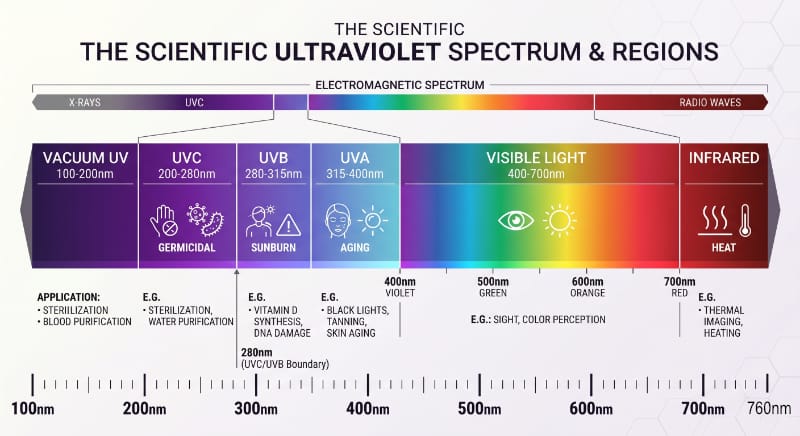
UVA – Long Wave UV (315nm to 400nm)
UVA is the safest and most commonly used form of ultraviolet lighting for glow and UV reactive applications. It is used in:
- Blacklights
- UV LED strips
- Glow charging lamps
- Fluorescent displays
- Stage lighting
- UV torches
UVA light efficiently excites fluorescent pigments and glow-in-the-dark materials without the dangerous intensity associated with shorter UV wavelengths.
UVB – Medium Wave UV (280nm to 315nm)
UVB is associated with skin tanning and vitamin D production. While it has industrial and medical uses, it is generally not used for glow-in-the-dark applications.
Prolonged exposure to UVB can be harmful to skin and eyes.
UVC – Short Wave UV (100nm to 280nm)
UVC is primarily used for sterilization and germicidal applications because it can destroy microorganisms.
UVC is not suitable for glow products or decorative lighting and should never be used casually due to safety risks.
| Type | Wavelength | Penetration | Main Effects | Atmospheric Block |
|---|---|---|---|---|
| UVA | 315 - 400 nm | Deep (Dermis) | Aging, wrinkles, long-term damage | None |
| UVB | 280 - 315 nm | Shallow (Epidermis) | Sunburn, skin cancer | Mostly |
| UVC | 100 - 280 nm | None (Surface) | Germicidal (but lethal) | Completely |
365nm vs 395nm UV Black Lights
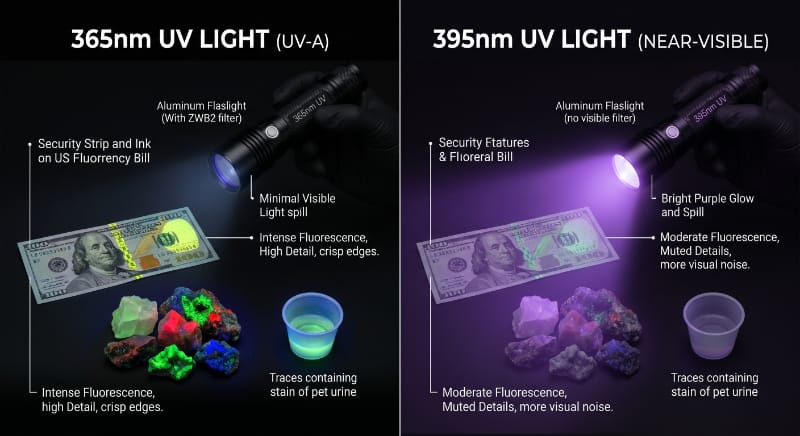
One of the most common questions when buying UV lighting is whether to choose 365nm or 395nm.
Although both fall within the UVA spectrum, they behave quite differently.
365nm UV Black Lights
365nm UV lights emit shorter wavelength UVA light that produces stronger fluorescence with less visible purple glow.
Advantages of 365nm UV:
- Stronger fluorescent reactions
- Better for professional inspections
- Charges glow products faster
- Less visible purple light
- Superior for fluorescent pigments and inks
- Better for forensic applications
365nm UV is ideal for:
- Glow-in-the-dark paints
- UV reactive pigments
- Fluorescent minerals
- Security markings
- Scientific inspections
- Professional UV photography
Because less visible light is emitted, fluorescent materials appear brighter and more dramatic under 365nm UV lighting.
395nm UV Black Ligh
395nm UV lights produce more visible violet light alongside ultraviolet output.
Advantages of 395nm UV:
- More affordable
- Easier to find
- Good for decorative blacklight effects
- Suitable for casual glow applications
395nm UV is commonly used for:
- Party lighting
- Decorative effects
- General glow rooms
- Entertainment lighting
- Basic glow charging
However, because more visible purple light is produced, fluorescent effects may appear less intense compared to 365nm UV.
UV fluorescent powders require suitable UV illumination to produce their visible effect. See our UV Fluorescent Powder range for pigments designed for UV-reactive applications.
Which Is Better: 365nm or 395nm?
The best choice depends on your application.
Choose 365nm If You Need:
- Maximum fluorescence
- Professional UV performance
- Faster glow charging
- Better fluorescent visibility
- Inspection accuracy
Choose 395nm If You Need:
- Budget-friendly UV lighting
- Decorative blacklight ambience
- Casual glow effects
- Party and entertainment lighting
Types of UV Black Lights
UV Black Light Bulbs

UV blacklight bulbs are commonly installed into standard light fixtures and are ideal for rooms, displays, artwork, and charging glow products.
Common bulb styles include:
- E27 screw bulbs
- PAR spotlight bulbs
- Floodlight UV bulbs
- Compact UV CFL bulbs
These are suitable for:
Decorative installations
- Glow rooms
- Fluorescent artwork
- Display lighting
- Decorative installations
UV-reactive paints are among the easiest materials to use with a black light because they can be applied directly to suitable surfaces. Explore our UV Black Light Paint range for ready-to-use UV-reactive coatings.
UV LED Strips

UV LED strips are flexible lighting strips containing multiple ultraviolet LEDs.
They are popular for:
- Gaming rooms
- LED accent lighting
- UV reactive decor
- Display cabinets
- Event lighting
- Glow furniture
UV LED strips are energy efficient, low heat, and easy to install.
UV Torches and Flashlights
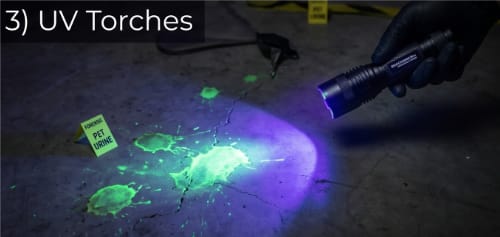
Handheld UV torches provide concentrated ultraviolet light for inspections and portable glow charging.
They are useful for:
- Security checks
- Mineral identification
- Leak detection
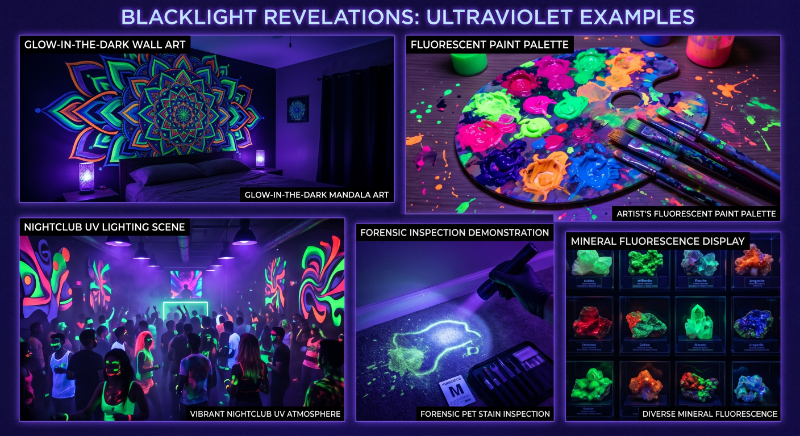
- Pet stain inspection
- Glow charging
- Fluorescent verification
365nm UV torches are especially popular for professional fluorescent detection.
UV Fluorescent Tubes

Traditional fluorescent UV tubes are commonly used in:
- Clubs
- Haunted houses
- Stage productions
- Industrial installations
- Large glow rooms
These provide broad UV coverage and are effective for larger spaces.
Common Uses for UV Black Lights
Glow-in-the-Dark Products
Glow paints, powders, resins, plastics, and decorations often react strongly under UVA blacklights.
UV lighting can:
- Charge phosphorescent materials faster
- Enhance glow brightness
- Create dramatic glowing displays
Many artists use UV blacklights to intensify glow artwork and installations.
UV Reactive Paints and Inks
Fluorescent paints and inks become highly visible under blacklights.
Applications include:
- Stage effects
- Glow murals
- Party decorations
- Security printing
- Escape rooms
- Event signage
Under UV lighting, fluorescent pigments emit vibrant neon colors that appear to glow intensely.
Entertainment and Decorative Lighting
Blacklights are widely used in:
- Nightclubs
- Glow parties
- Halloween attractions
- Gaming setups
- Art exhibitions
- Live performances
UV reactive materials transform ordinary environments into immersive glowing spaces.
Security and Counterfeit Detection
Many official documents and currencies contain UV reactive security markings invisible under normal light.
UV torches help detect:
- Counterfeit currency
- Fake IDs
- Hidden markings
- Security inks
365nm UV lights are especially effective for these tasks.
Mineral and Gemstone Inspection
Certain minerals and gemstones fluoresce under ultraviolet light.
Geologists and collectors use UV lights to identify:
- Fluorite
- Calcite
- Scheelite
- Willemite
- Certain gemstones
365nm UV produces stronger fluorescence for mineral inspection.
Choosing the Right UV Black Light
Choosing the correct UV wavelength is essential for getting the desired reaction from fluorescent and UV-reactive materials. See our UV Black Lights range for suitable 365nm and 395nm options. Our UV Fluorescent Powder and UV White to Color Powder pages provide examples of materials designed for UV illumination.
Invisible UV Applications
UV illumination can also reveal markings that are difficult to see under normal lighting. See our Invisible UV Ink page for applications involving hidden or security markings.
When selecting a UV black light, consider:
Wavelength
- 365nm for professional fluorescence
- 395nm for decorative effects
Coverage Area
- Bulbs and floodlights for rooms
- LED strips for accent lighting
- Torches for portable use
Brightness
Higher-powered UV lights create stronger fluorescent reactions.
Intended Use
Different applications require different UV solutions.
UV Safety Tips
Although UVA blacklights are safer than UVB and UVC, basic precautions should still be followed.
Safety Recommendations
- Avoid prolonged direct eye exposure
- Do not stare into high-powered UV LEDs
- Use protective eyewear for powerful UV sources
- Keep UVC lighting away from skin exposure
- Use UV products responsibly indoors
Most consumer UVA blacklights used for glow products are considered safe when used correctly.
Frequently Asked Questions
Is 365nm better than 395nm?
Yes. 365nm typically produces stronger fluorescence and better glow charging with less visible purple light.
Can UV lights charge glow-in-the-dark paint?
Yes. UVA blacklights efficiently charge glow paints, powders, and phosphorescent materials.
Are UV black lights dangerous?
Standard UVA blacklights are generally safe for normal use, though prolonged exposure should still be avoided.
Why does my UV light look purple?
395nm UV lights emit more visible violet light, making them appear purple.
What UV light is best for fluorescent effects?
365nm UV is usually the best option for maximum fluorescence.
Final Thoughts
UV black lights are versatile tools used for everything from glow-in-the-dark artwork and fluorescent decor to professional inspections and scientific applications.
Understanding the differences between UVA, UVB, UVC, and especially 365nm versus 395nm UV lighting helps you choose the right blacklight for your project.
UV-Reactive Materials
If you are unsure whether you need fluorescent, UV-reactive or colour-changing material, our UV Light Reactive vs UV Fluorescent Guide explains the key differences.
Whether you need a UV torch, LED strip, fluorescent tube, or blacklight bulb, the right ultraviolet lighting can dramatically enhance glow effects, fluorescent reactions, and UV reactive environments.
If you are looking for UV blacklights for glow products, fluorescent materials, or decorative applications, explore our range of UV bulbs, torches, LED strips, and UV reactive products.
Looking for more glow-in-the-dark ideas,
techniques and applications?
Explore our complete guide.