UV Light Reactive Powder vs UV Fluorescent Powder
UV light reactive powders and UV fluorescent powders are specialty pigments designed to glow brightly when exposed to ultraviolet (UV) black light. These pigments are widely used in art, stage productions, themed events, printing, coatings, body paint, and special effects applications.
Although the terms are sometimes used interchangeably, there are important differences between UV reactive pigments and traditional glow in the dark materials.
Unlike phosphorescent glow powders that continue glowing after the lights are turned off, UV reactive fluorescent powders only glow while exposed to UV light. Once the UV light source is removed, the glowing effect disappears immediately.
This makes them ideal for:
- Black light parties
- Nightclubs and stage performances
- UV artwork and murals
- UV body paint
- Printing inks
- Resin art
- Decorative coatings
- Safety markings and special effects
How UV Reactive Powder Works
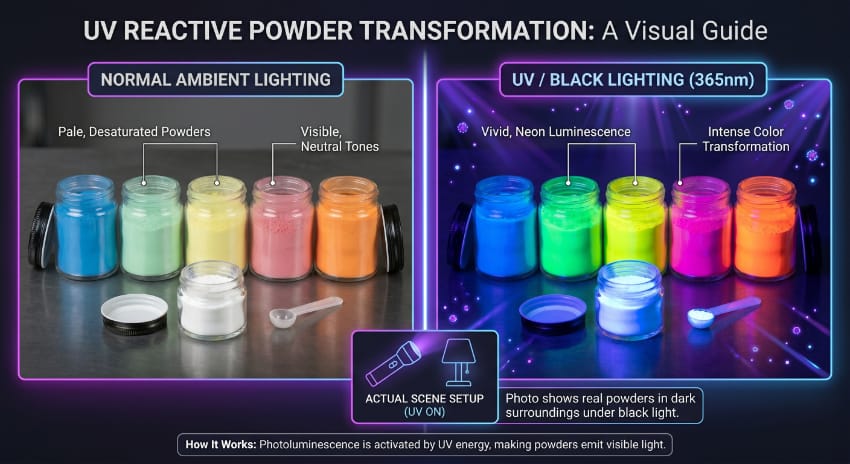
UV fluorescent powders contain fluorescent pigments that absorb ultraviolet radiation and instantly emit visible light in bright neon colours.
When UV light hits the pigment:
- The pigment absorbs ultraviolet energy
- The energy excites molecules within the pigment
- The molecules emit visible coloured light
- The glow remains visible only while UV light is present
Most UV fluorescent powders appear pale, off-white, or lightly tinted under normal daylight, but glow intensely under black light.
Common fluorescent colours include:
- Blue
- Green
- Yellow
- Orange
- Pink
- Purple
- Red
- White
UV Reactive Powder vs UV Fluorescent Powder
Many people confuse the two products because both create glowing effects, but the technology behind them is completely different.
| Feature | UV Reactive Powder | UV Fluorescent Powder |
|---|---|---|
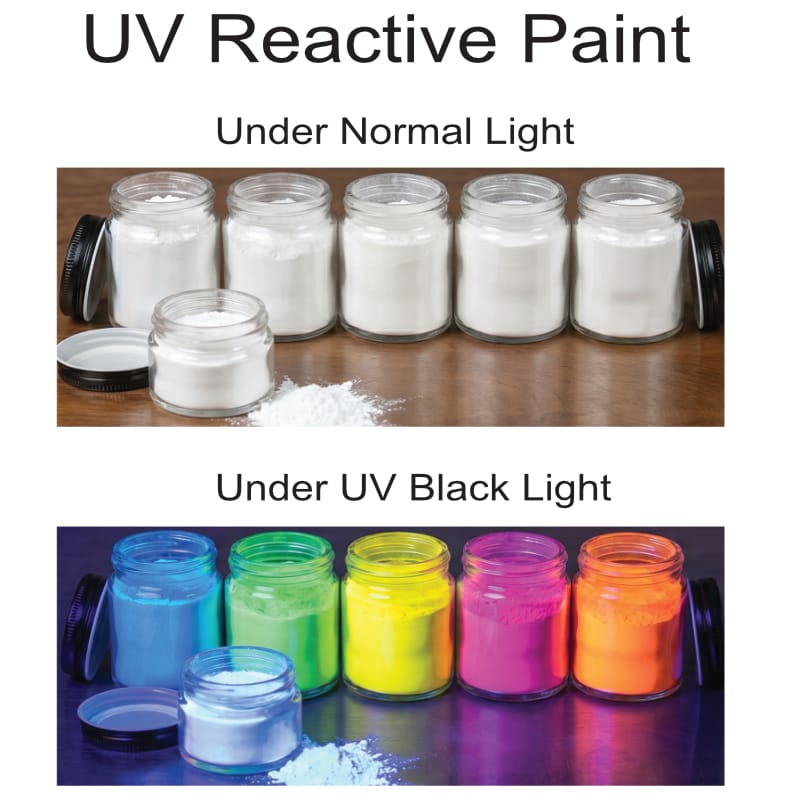
| Appearance under Normal Light | White | Different Colours |
| Appearance under UV Black Light | Different Colours | Different Colours |
| Best for | Hidden markings, UV Art | Clubs, events, neon effects |
| Typical colours | Green, Blue and more | Neon fluorescent |
| Requires UV Light | Yes | Yes |
Types of UV Reactive / Fluorescent Powder / Paint

1. Solvent-Based UV Powders
These powders are designed for use in:
- Solvent paints
- Printing inks
- Industrial coatings
- Resin systems
- Plastics
They generally provide:
- Strong fluorescence
- Excellent colour vibrancy
- Good dispersion in oil-based systems
However, many solvent-based fluorescent pigments are not suitable for direct skin application.
2. Water-Based UV Pigments
These are commonly used in:
- Water-based paints
- Craft coatings
- Educational products
- Some cosmetic formulations
Water-compatible pigments are easier to clean and are often preferred for hobby and event use.
3. Cosmetic-Grade UV Pigments
Cosmetic-grade fluorescent pigments are specially manufactured for use in:
- UV body paint
- Face paint
- Cosmetic effects
- Festival makeup
These pigments must comply with cosmetic safety regulations and skin-contact standards.
Not all fluorescent powders are cosmetic safe.
How to Make UV Reactive Paint

UV fluorescent powder can be mixed into various transparent or translucent binders to create UV reactive paints and coatings.
Common Paint Bases
- Clear acrylic medium
- Transparent solvent-based varnish
- Epoxy resin
- Polyurethane coatings
- Printing ink binders
Basic Mixing Ratio
A common starting ratio is:
- 5–20% UV powder by weight depending on desired brightness
Higher pigment loading produces stronger fluorescence but may affect:
- Paint smoothness
- Transparency
- Adhesion
For best results:
- Use clear or lightly tinted bases
- Avoid opaque white paint bases
- Mix thoroughly to prevent clumping
Using UV Powder in Resin
UV fluorescent powders are extremely popular in:
- Epoxy resin art
- Jewelry
- River tables
- Decorative castings
Resin Mixing Tips
- Add powder slowly while stirring
- Use transparent resin for maximum glow visibility
- Avoid excessive pigment loading
- Test cure compatibility before large batches
Fine particle sizes generally disperse better in resin systems.

UV Body Paint
UV body paint is widely used at:
- Music festivals
- Clubs
- Halloween events
- Stage performances
- Dance shows
Under black light, UV body paint creates dramatic glowing effects on skin.
Important Safety Information
Only use cosmetic-grade pigments specifically approved for skin contact.
Body paint products should comply with cosmetic regulations such as:
- FDA cosmetic regulations (USA)
- EU Cosmetic Regulation EC No 1223/2009
- REACH compliance in Europe
- ASEAN cosmetic directives in many Asian countries
Look for products that are:
- Non-toxic
- Skin-safe
- Heavy metal compliant
- Dermatologically tested
Avoid using industrial fluorescent pigments directly on skin.
UV Tattoo Ink
UV tattoo inks are specialty tattoo pigments that react under ultraviolet light.
These inks may appear:
- Nearly invisible under normal lighting
- Brightly fluorescent under UV black light
They are used for:
- Special effect tattoos
- Artistic highlights
- Hidden tattoo elements
- Club and performance aesthetics
Tattoo Ink Safety Standards
Tattoo inks involve significantly stricter safety concerns than body paint.
Professional UV tattoo inks should:
- Be manufactured for tattoo use
- Follow regional tattoo ink regulations
- Avoid hazardous contaminants
- Be sterilized appropriately
Relevant standards and regulations may include:
- EU REACH tattoo ink regulations
- ResAP(2008)1 recommendations in Europe
- FDA ingredient monitoring in the United States
- Local health authority compliance
Important Warning
Not all fluorescent pigments are safe for tattooing.
Industrial fluorescent powders should NEVER be mixed into homemade tattoo ink for skin injection.
Tattoo applications should only use professionally formulated tattoo pigments designed for intradermal use.
UV Reactive Powder for Printing Inks
UV fluorescent pigments are commonly used in:
- Screen printing
- Flexographic printing
- Promotional products
- Security printing
- Packaging effects
Popular applications include:
- Event posters
- Nightclub branding
- Safety graphics
- High-visibility designs
Solvent compatibility and heat resistance are important when selecting pigments for printing.
Industrial & Decorative Uses
UV fluorescent powders are also used in:
- Stage props
- Theater effects
- Escape rooms
- Glow golf environments
- Neon signs
- Amusement attractions
- Safety markers
- Decorative concrete coatings
Under UV lighting, these pigments create highly visible visual effects that attract attention immediately.

Choosing the Right UV Powder
When selecting UV fluorescent powder, consider:
1. Intended Application
Different pigments are designed for:
- Paint
- Plastics
- Resin
- Cosmetics
- Printing
2. Safety Requirements
Skin-contact applications require cosmetic-grade materials.
3. Particle Size
Smaller particles disperse more evenly in:
- Paints
- Inks
- Airbrush systems
4. UV Light Source
365nm and 395nm black lights may produce different visual intensity depending on the pigment.
Tips for Best UV Glow Performance
- Use strong UV black lights
- Apply over white or reflective surfaces
- Keep surrounding light levels low
- Use transparent binders
- Apply multiple thin layers instead of one thick layer
Final Thoughts
UV light reactive powders and UV fluorescent powders offer vibrant special effects that are impossible to achieve with ordinary pigments. Whether used in paint, resin, body art, printing, or event décor, these pigments create striking visual effects under ultraviolet lighting.
However, selecting the correct pigment for the intended application is extremely important. Industrial fluorescent powders may work well in paints and coatings, while cosmetic and tattoo applications require specially tested materials that comply with strict safety standards.
With the right materials, mixing methods, and UV lighting setup, UV fluorescent pigments can transform ordinary projects into vivid glowing creations.
Looking for more glow-in-the-dark ideas,
techniques and applications?
Explore our complete guide.